Not every room in a home or office is blessed with south-facing windows or floods of natural sunshine. Dark hallways, windowless bathrooms, basement partments, and interior office cubicles often feel impossible to decorate with living greenery. However, many tropical plant species evolved on the dense, shaded floors of rainforest understories, where sunlight rarely breaks through the upper canopy. These low light indoor plants have adapted cellular mechanisms to thrive in low-irradiance conditions, turning dim, shadowy corners into vibrant, air-purifying indoor gardens.
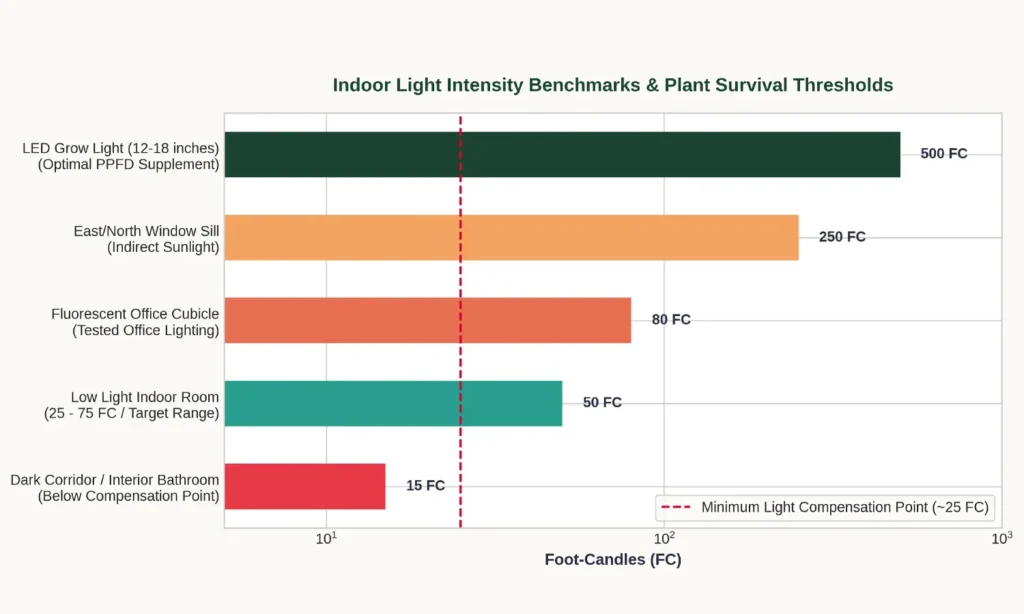
To successfully keep houseplants in dark spaces, it helps to understand what ‘low light’ actually means in plant physiology. In residential interiors, low light refers to positions receiving no direct sun and minimal indirect ambient light—typically measuring between 25 and 75 foot-candles (FC) or roughly 250 to 750 lux. Every plant possesses a light compensation point (I c ), which is the precise light intensity where energy produced through photosynthesis matches energy consumed during respiration. When ambient light drops below this threshold, the plant spends its stored carbohydrate reserves, leading to gradual decline.
The 25 Best Low Light Indoor Plants for Dark Spaces
1. Snake Plant (Dracaena trifasciata)
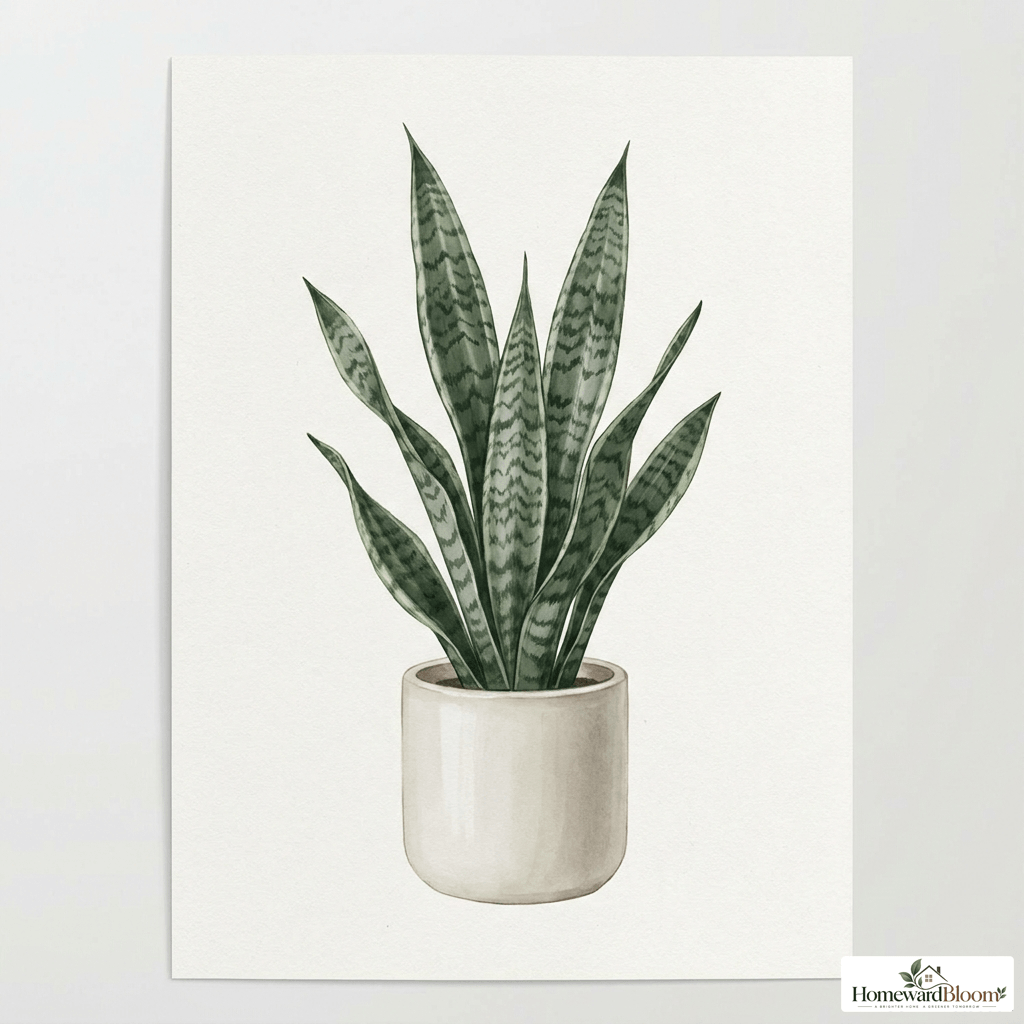
- Light Range: 25–100 Foot-Candles
- Water Requirement: Allow soil to dry 100% between waterings (every 3–4
weeks) - Pet Safety: Toxic to cats and dogs (saponins)
Arguably the most indestructible houseplant in existence, the Snake Plant
features stiff, upright sword-like foliage that adds dramatic architectural interest. It
survives extended periods in dim corridors and utilizes CAM photosynthesis to
conserve moisture.
2. ZZ Plant (Zamioculcas zamiifolia)
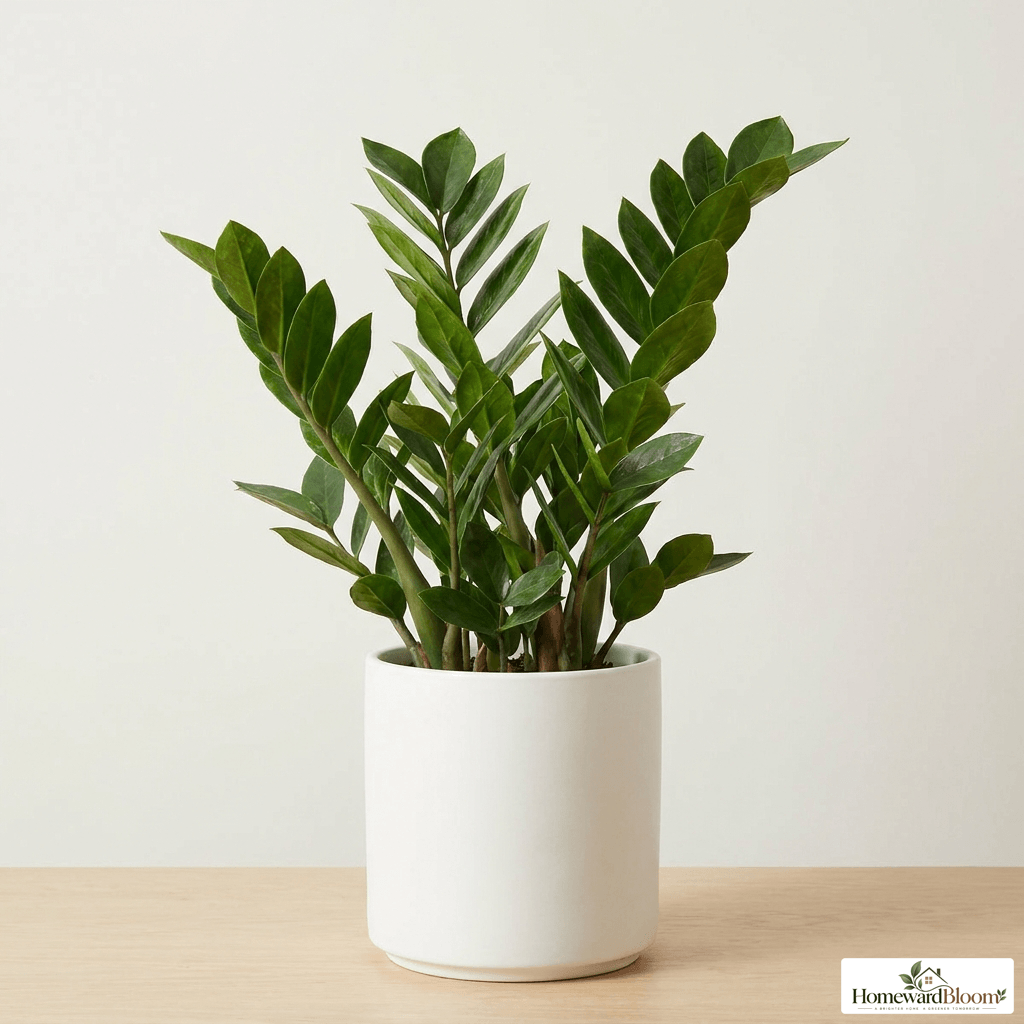
- Light Range: 25–75 Foot-Candles
- Water Requirement: Water every 3–4 weeks; allow rhizomes to dry out
completely - Pet Safety: Toxic to cats and dogs (calcium oxalates)
Research from UF/IFAS confirms that the ZZ Plant maintains foliage quality under
interior light as low as 25 FC for over a year. Fleshy underground rhizomes store
substantial water and starch reserves.
3. Pothos / Devil’s Ivy (Epipremnum aureum)
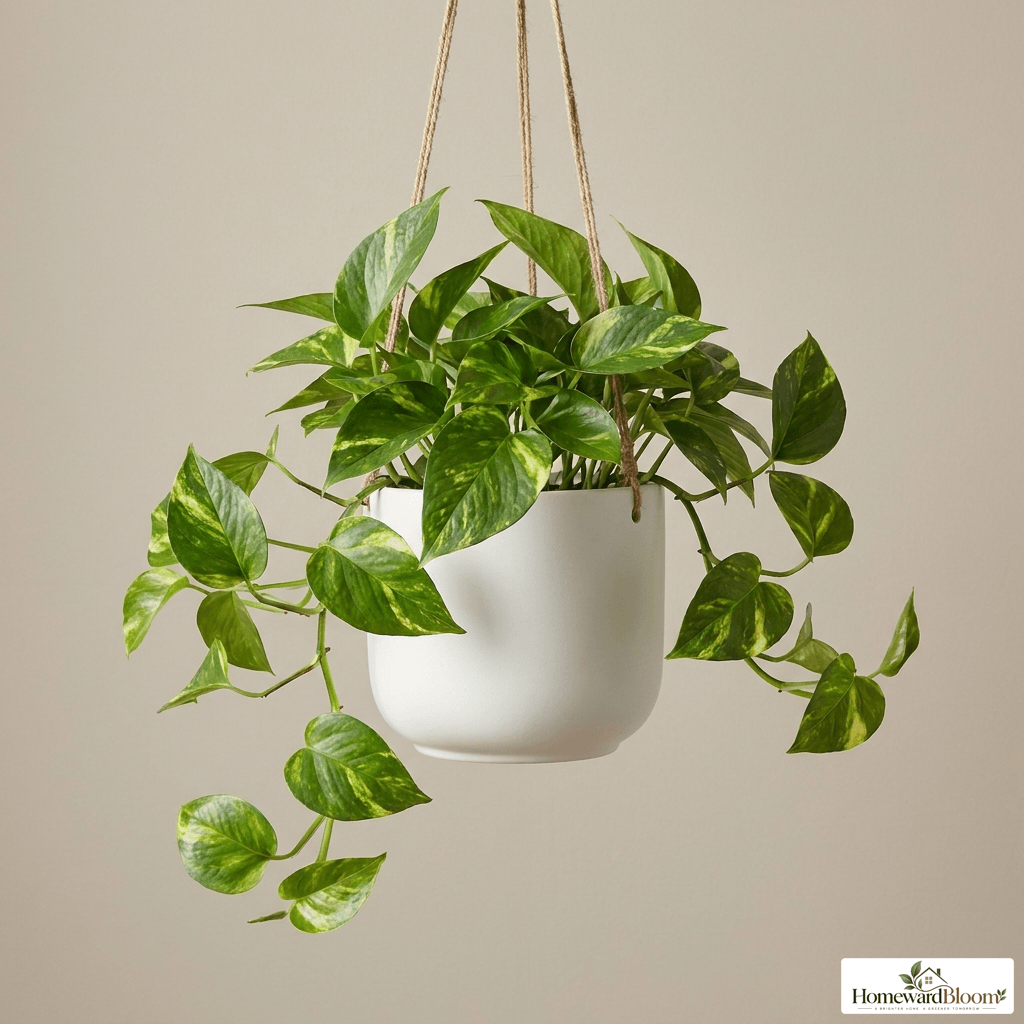
- Light Range: 30–100 Foot-Candles
- Water Requirement: Water when top 50% dry (every 10–14 days in shade)
- Pet Safety: Toxic to pets (calcium oxalates)
Classic cascading vine for bookshelves and hanging planters. All-green varieties
like Jade Pothos retain high chlorophyll density, making them superior low-light
performers compared to heavily variegated cultivars.
4. Peace Lily (Spathiphyllum spp.)
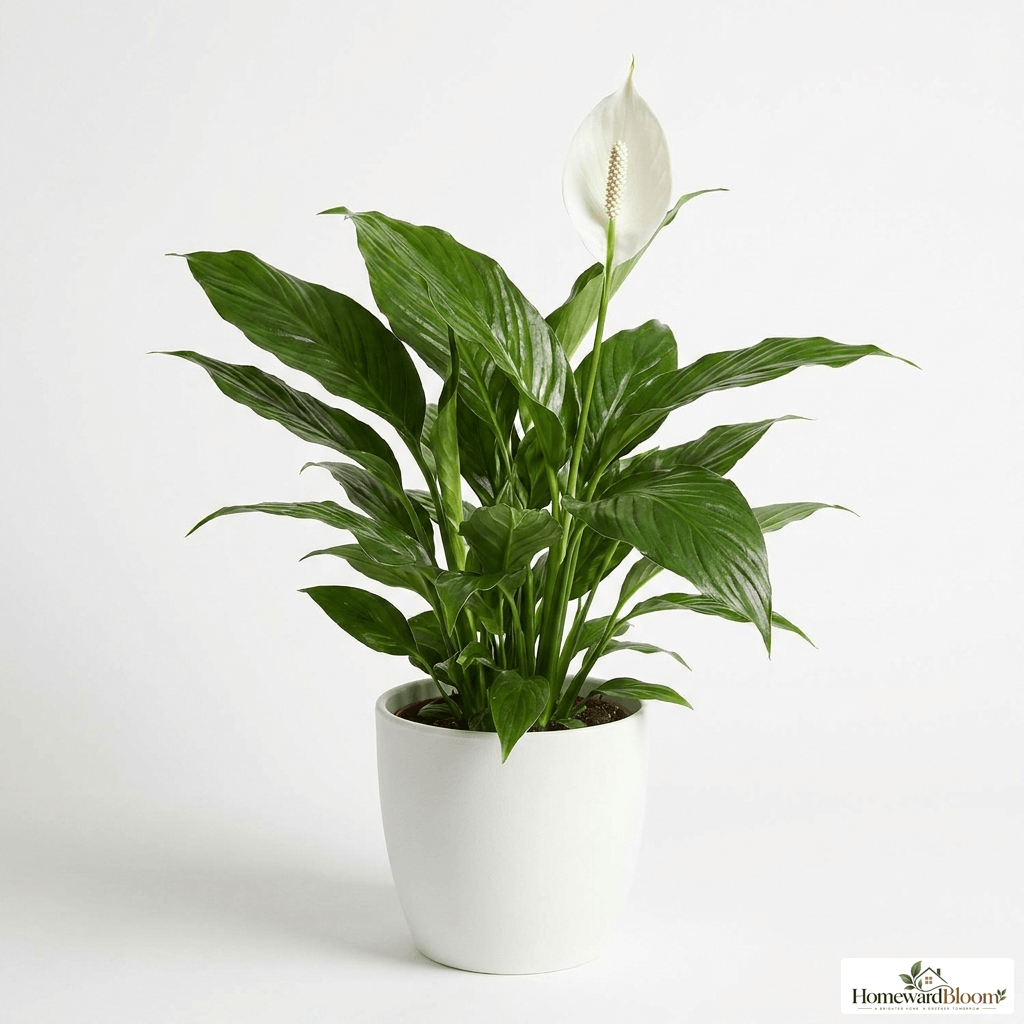
- Light Range: 40–100 Foot-Candles
- Water Requirement: Keep evenly moist; water immediately when foliage
droops - Pet Safety: Toxic to pets (calcium oxalates)
Famous for glossy dark foliage and dramatic wilting signals. Peace Lilies tolerate
40–50 FC for foliage maintenance, but require 75–100 FC to produce signature
white spathe flowers.
5. Cast Iron Plant (Aspidistra elatior)
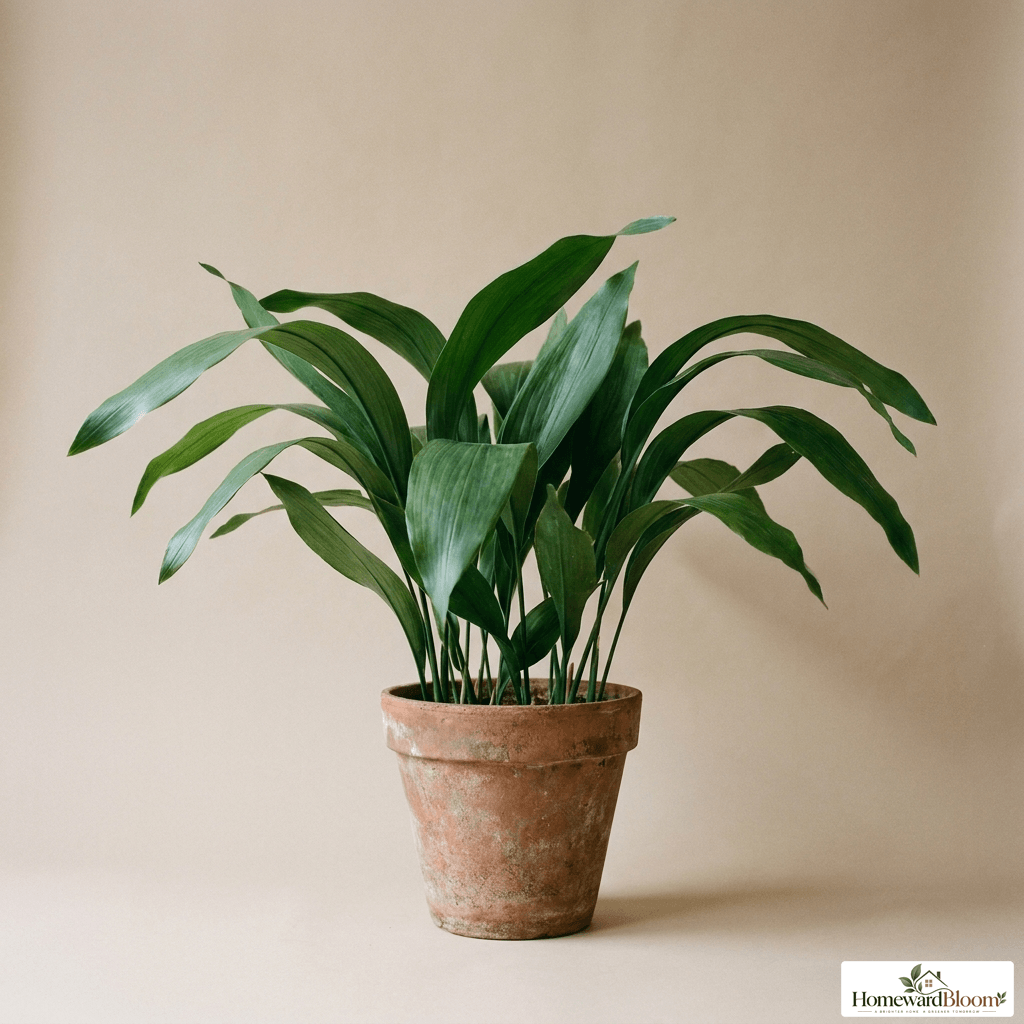
- Light Range: 10–50 Foot-Candles
- Water Requirement: Let soil dry out thoroughly between waterings
- Pet Safety: Non-toxic (Pet-Safe)
Thrives in dim, drafty hallways where almost nothing else survives. Produces
broad lanceolate leaves directly from rhizomes, making it virtually immune to
low-light stress.
6. Heartleaf Philodendron (Philodendron hederaceum)
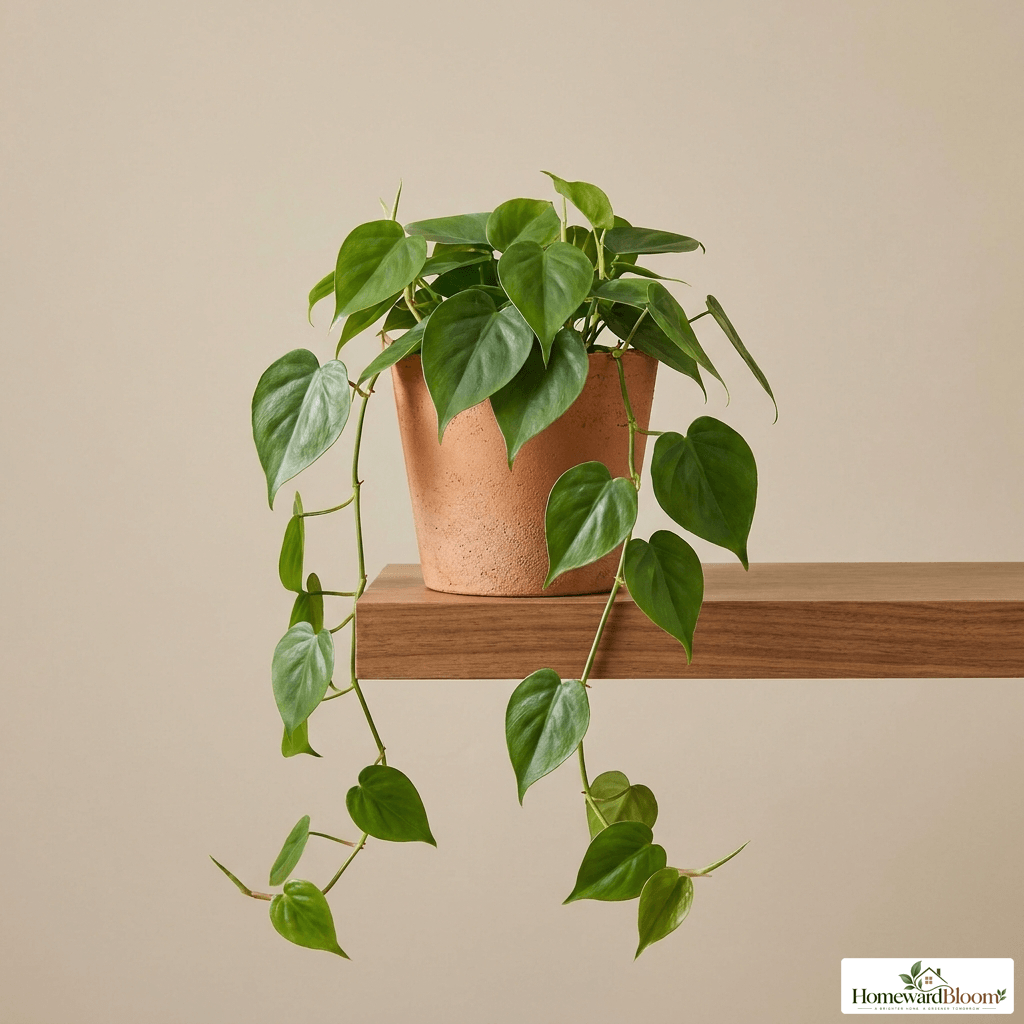
- Light Range: 30–100 Foot-Candles
- Water Requirement: Allow top 1–2 inches of soil to dry before watering
- Pet Safety: Toxic to pets (calcium oxalates)
Features soft, heart-shaped foliage on cascading stems. Increases chlorophyll
density in low light, deepening its dark green hue to absorb minimal available
photons effectively.
7. Parlor Palm (Chamaedorea elegans)
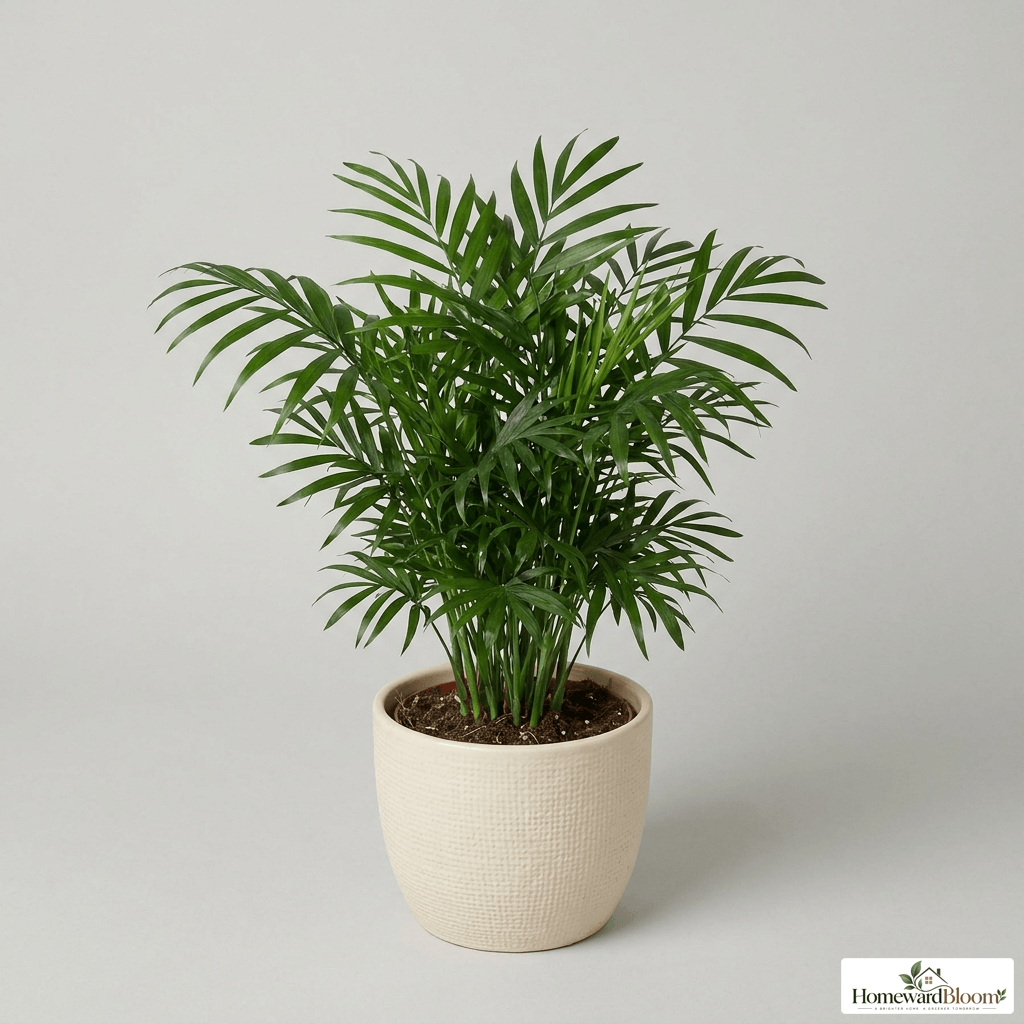
- Light Range: 40–100 Foot-Candles
- Water Requirement: Water when top inch of soil is dry; prefers slight moisture
- Pet Safety: Non-toxic (ASPCA Certified Pet-Safe)
Brings delicate tropical fronds into low-light rooms. Compact, slow-growing, highly
shade-tolerant, and completely safe for homes with pets.
8. Chinese Evergreen ‘Silver Bay’ (Aglaonema ‘Silver Bay’)
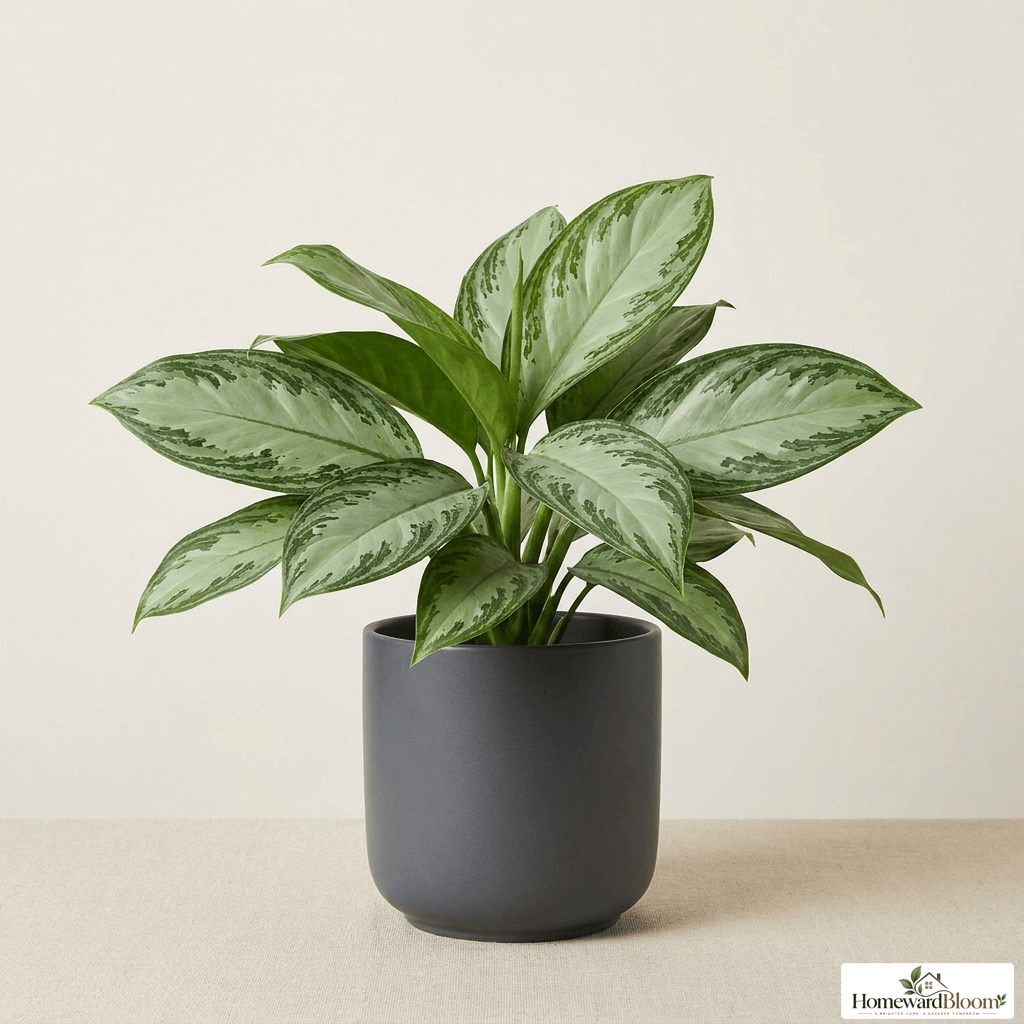
- Light Range: 10–50 Foot-Candles
- Water Requirement: Allow top 50% of potting mix to dry out
- Pet Safety: Toxic to pets (calcium oxalates)
Exhibits one of the lowest documented light compensation points (~10 FC).
Features broad, bushy foliage with grey-silver centers and dark green margins.
9. Chinese Evergreen ‘Maria’ (Aglaonema commutatum)
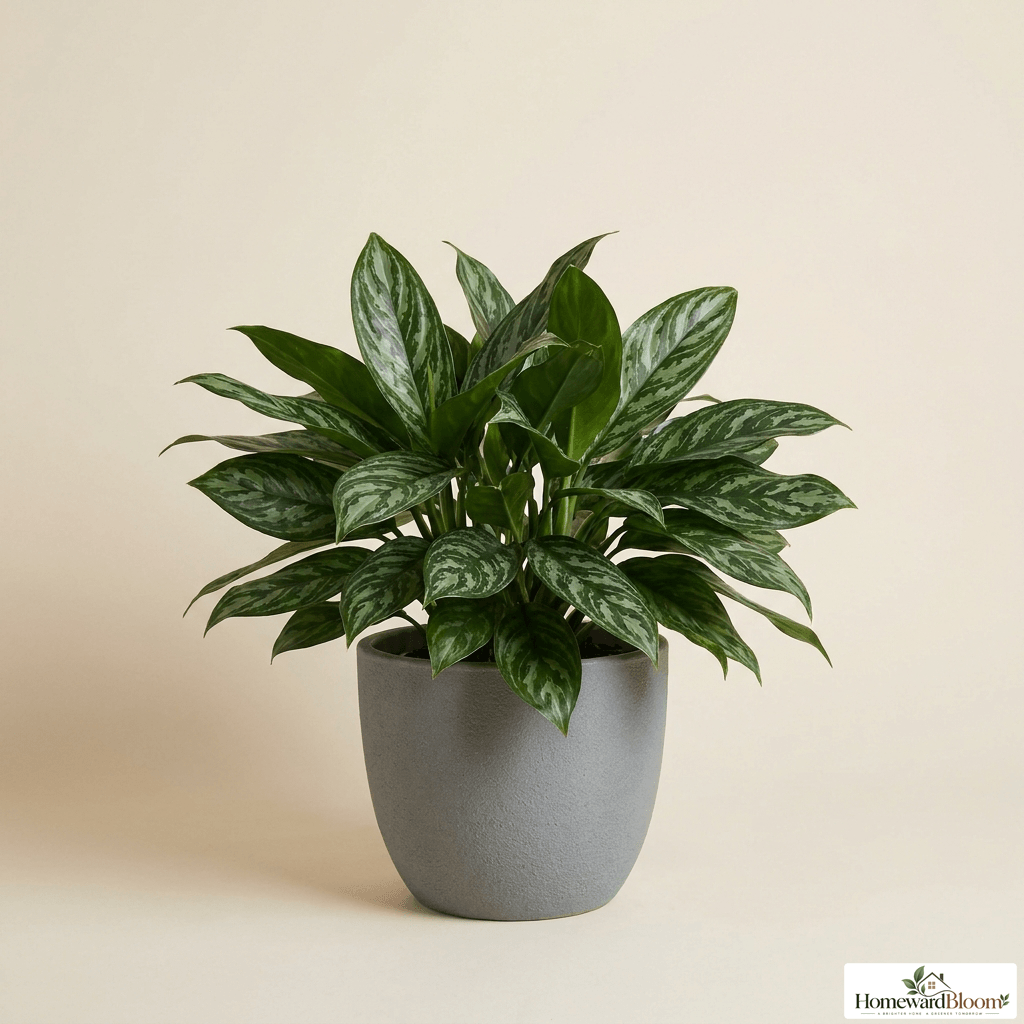
- Light Range: 10–50 Foot-Candles
- Water Requirement: Water when top 50% of soil volume is dry
- Pet Safety: Toxic to pets (calcium oxalates)
Compact, upright cultivar with dark green leaves feathered in soft silver patterns.
Dark foliage maximizes photon absorption in dimly lit environments.
10. Chinese Evergreen ‘Cutlass’ (Aglaonema ‘Cutlass’)
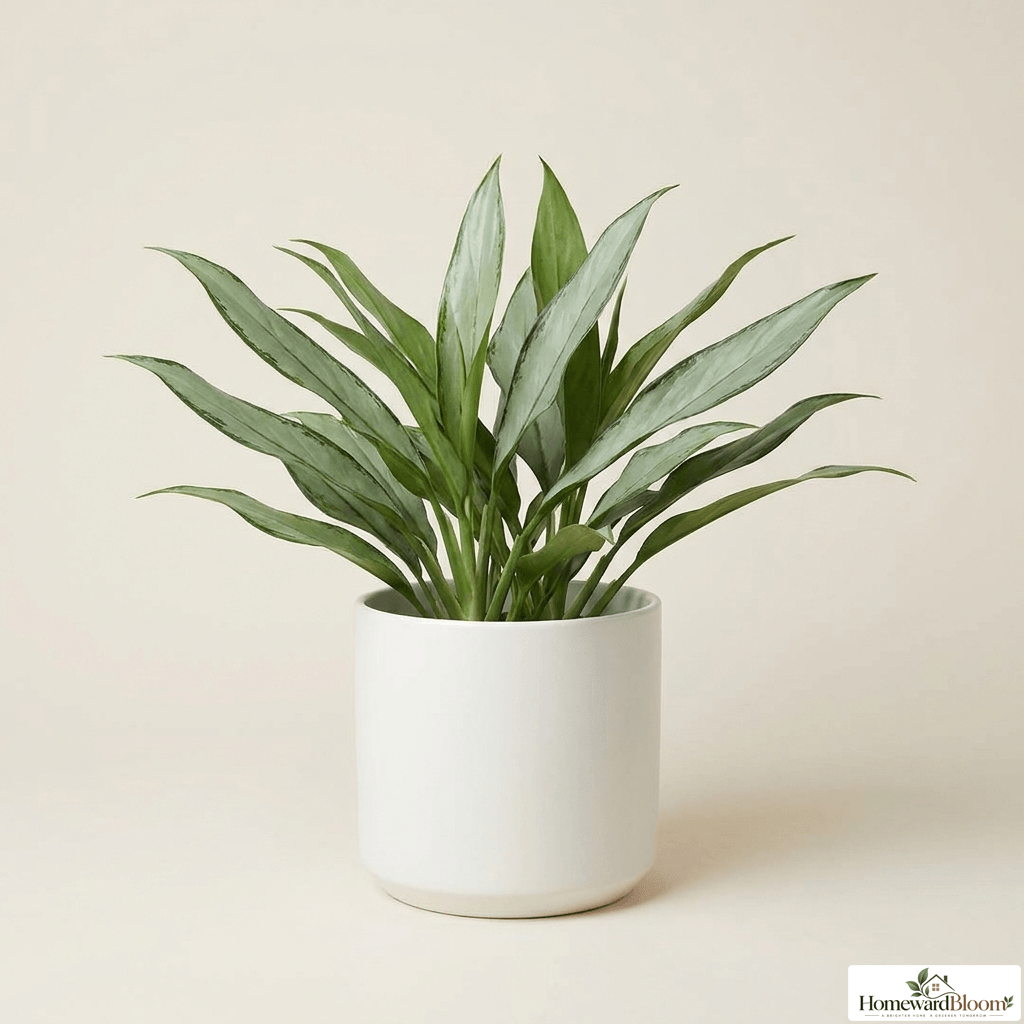
- Light Range: 20–50 Foot-Candles
- Water Requirement: Let soil dry significantly between waterings
- Pet Safety: Toxic to pets (calcium oxalates)
Named for its long, narrow, sword-like leaves. Adds fine textural variety to
low-light plant displays while maintaining high shade tolerance.
11. Chinese Evergreen ‘Emerald Bay’ (Aglaonema)
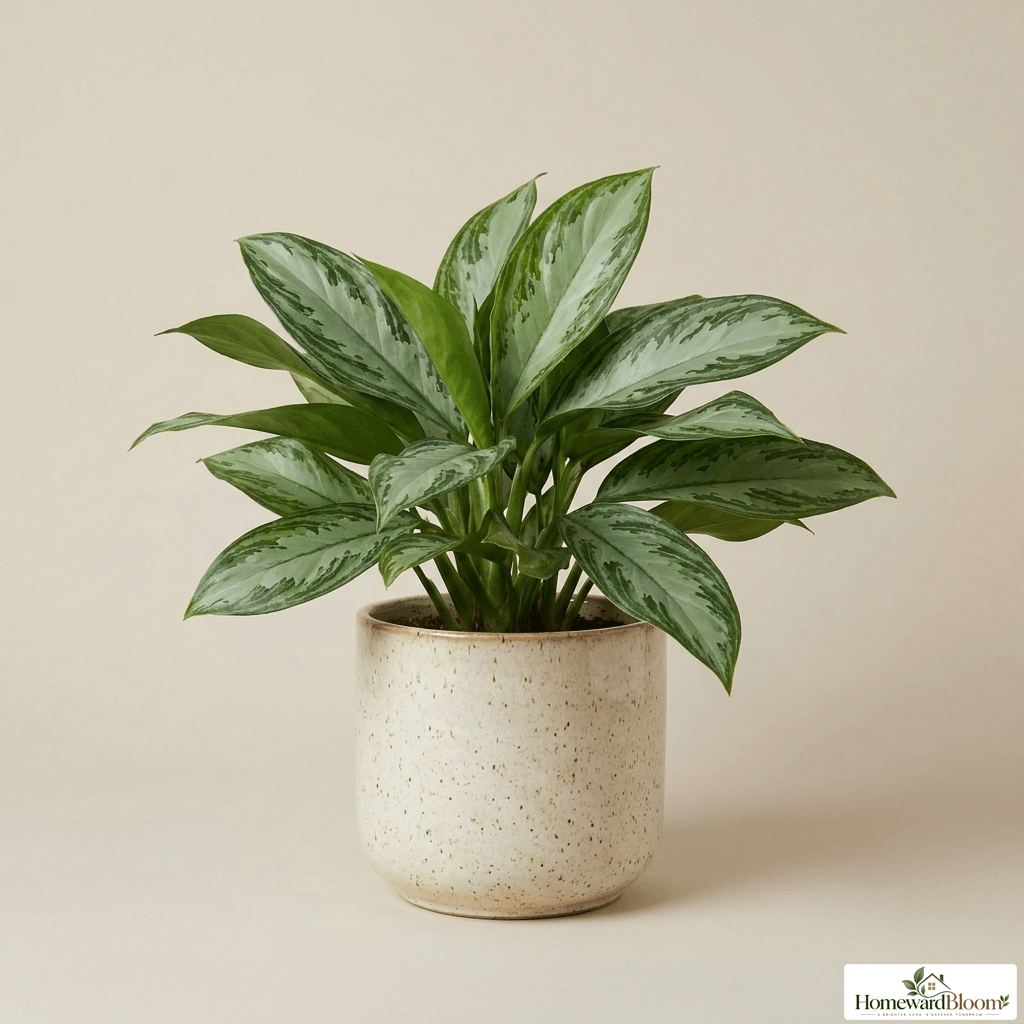
- Light Range: 20–50 Foot-Candles
- Water Requirement: Water when top half of soil dries out
- Pet Safety: Toxic to pets (calcium oxalates)
Combines gray-green center variegation with rich emerald borders, demonstrating
remarkable resilience under fluorescent office lighting.
12. Chinese Evergreen ‘Siam Aurora’ (Aglaonema)
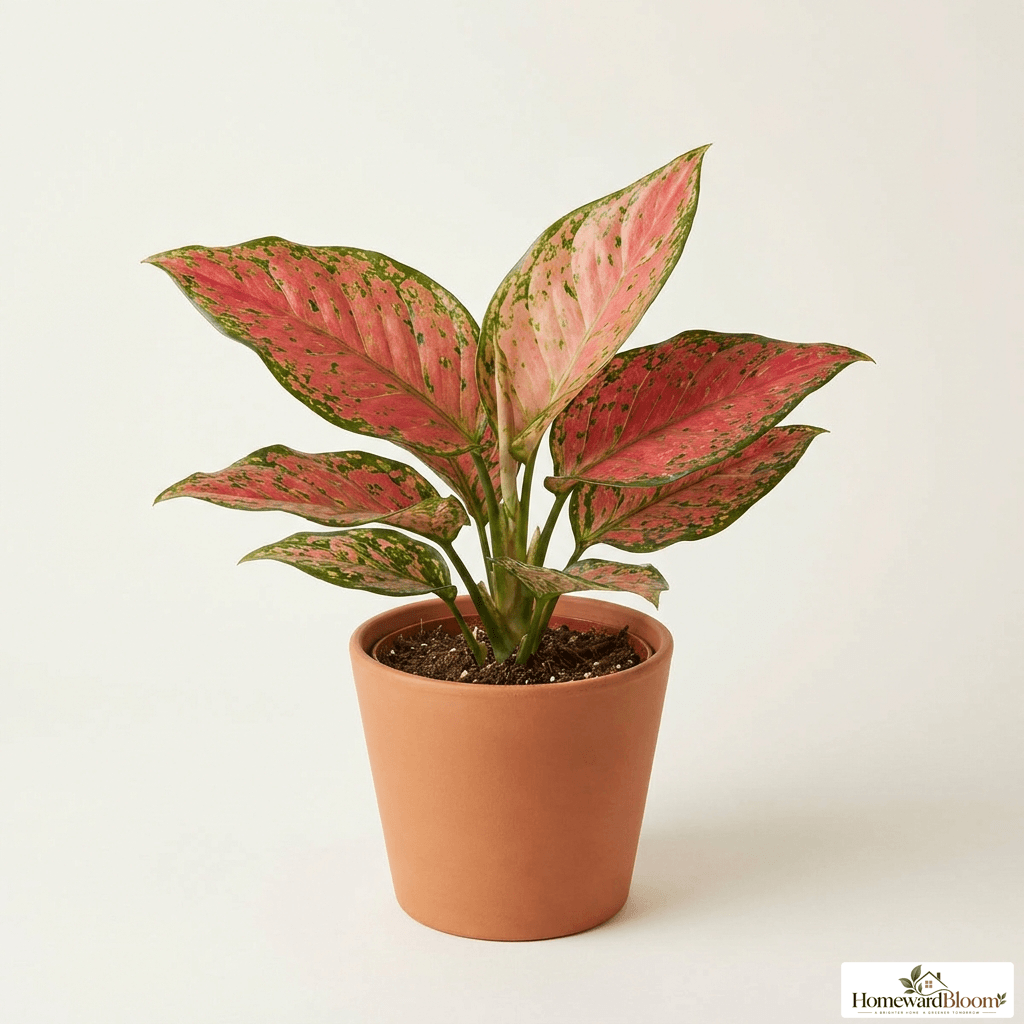
- Light Range: 50–100 Foot-Candles
- Water Requirement: Allow soil to dry 50% between waterings
- Pet Safety: Toxic to pets (calcium oxalates)
Features striking red stems and leaf margins. Brings bright color to moderate low
light spaces, though indirect light prevents pigment fading.
13. Chinese Evergreen ‘Red Valentine’ (Aglaonema)
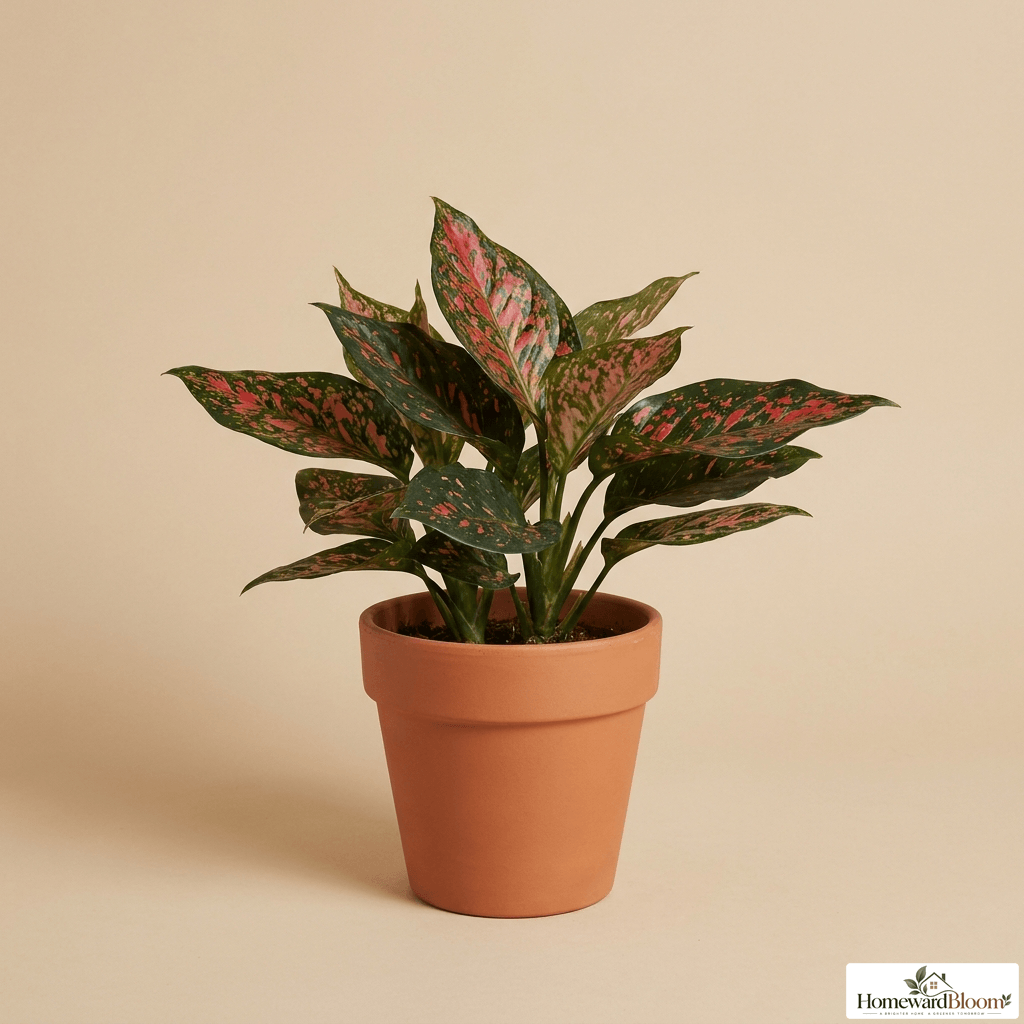
- Light Range: 40–100 Foot-Candles
- Water Requirement: Allow top 50% of soil to dry
- Pet Safety: Toxic to pets (calcium oxalates)
Splashed with pink and dark red markings across glossy green leaves. Maintains
foliage color best near indirect window light or grow lamps.
14. Chinese Evergreen ‘Sparkling Sarah’ (Aglaonema)
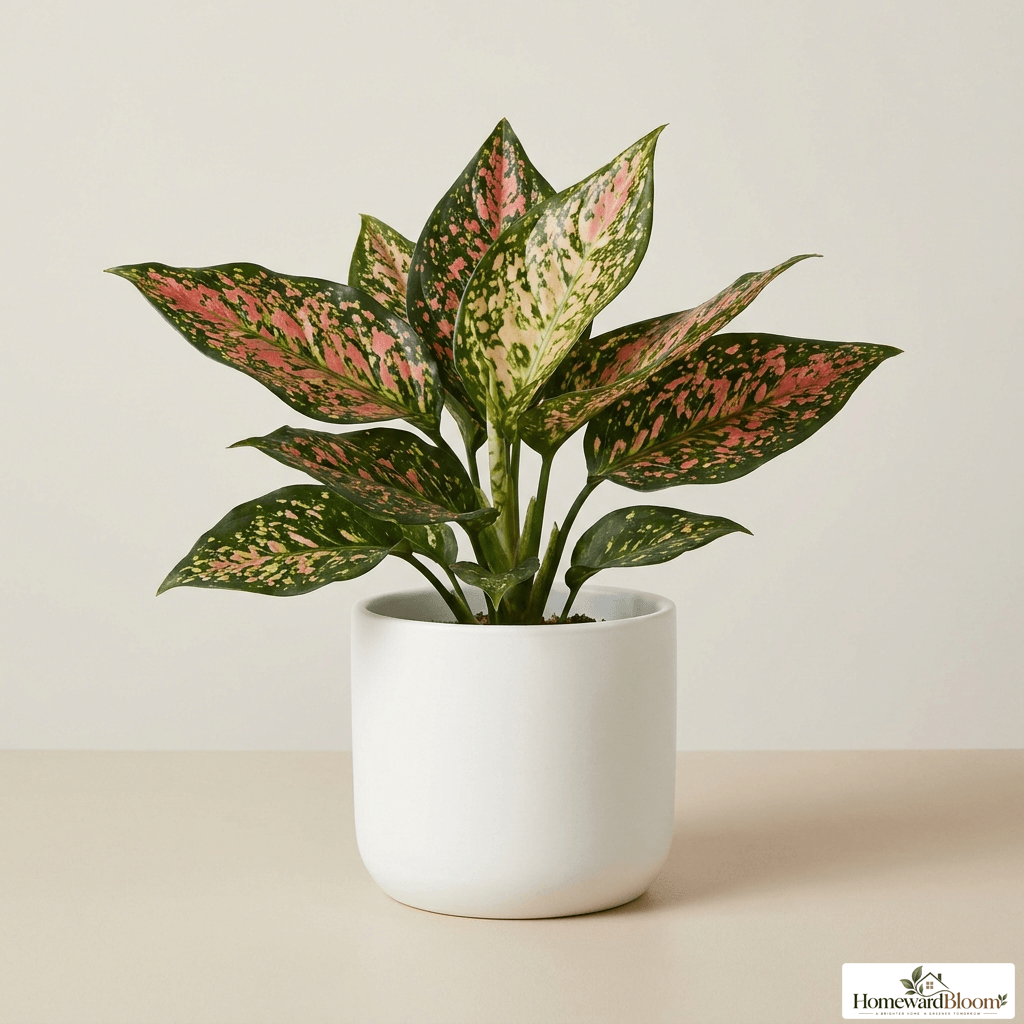
- Light Range: 40–100 Foot-Candles
- Water Requirement: Water when top soil dries
- Pet Safety: Toxic to pets (calcium oxalates)
Features pink midribs and chartreuse-flecked leaves that brighten up shadowy
shelving units.
15. Chinese Evergreen ‘Pictum Tricolor’ (Aglaonema)
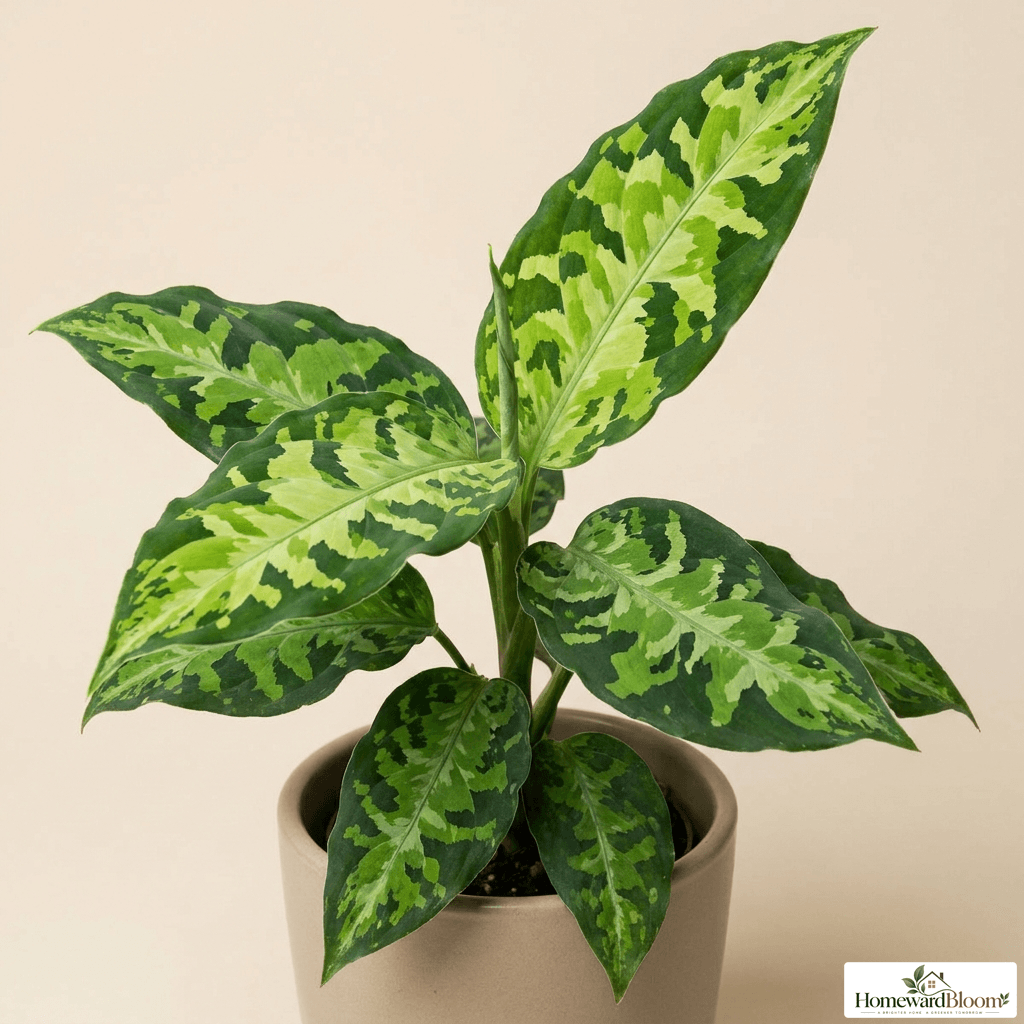
- Light Range: 50–120 Foot-Candles
- Water Requirement: Maintain gentle, even moisture; demands higher humidity
- Pet Safety: Toxic to pets (calcium oxalates)
A rare collector plant renowned for its striking three-tone camouflage pattern.
Requires high relative humidity alongside stable low-to-medium indirect light.
16. Dracaena ‘Janet Craig’ (Dracaena fragrans)
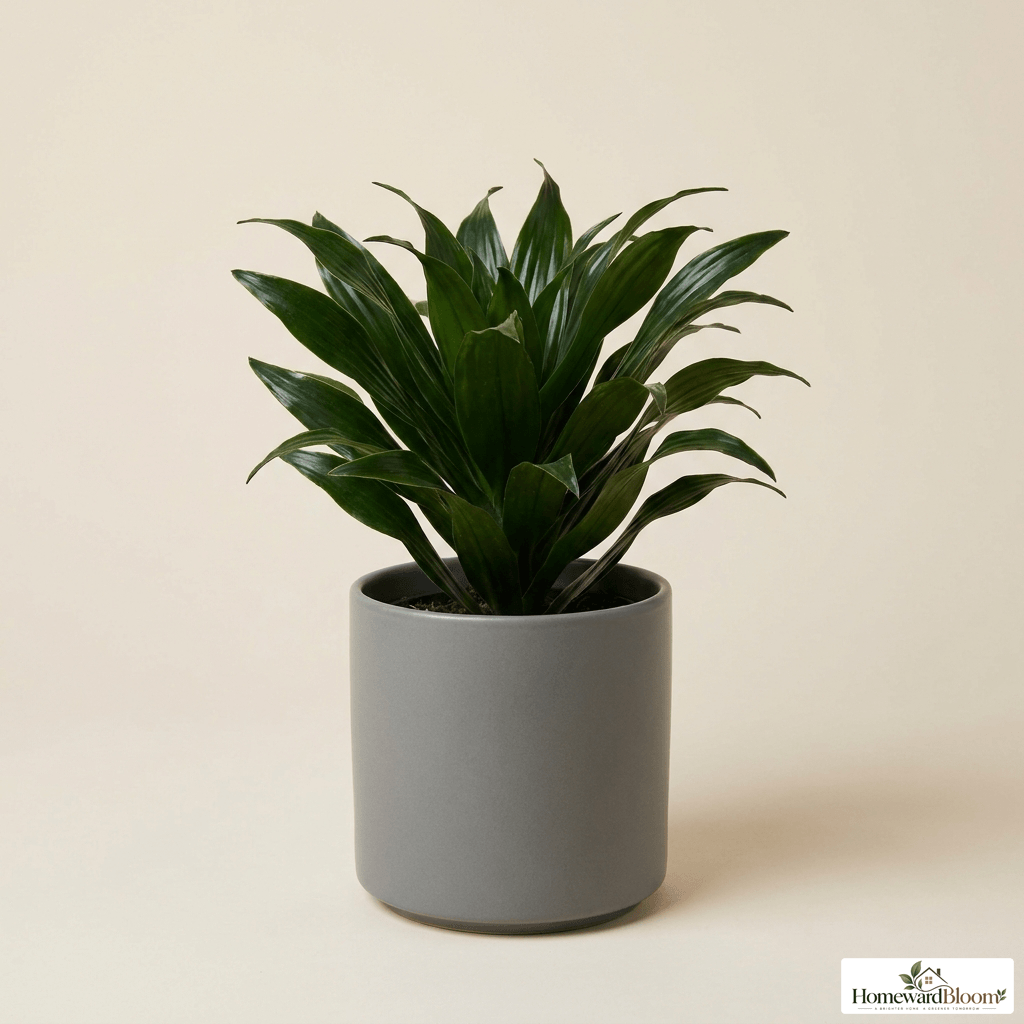
- Light Range: 25–75 Foot-Candles
- Water Requirement: Water when top 50% of soil dries; sensitive to fluoride
- Pet Safety: Toxic to cats and dogs (saponins)
With deep green sword-shaped leaves arranged on thick stems, ‘Janet Craig’ is a
classic choice for low-light commercial buildings and interior rooms.
17. Spider Plant (Chlorophytum comosum)
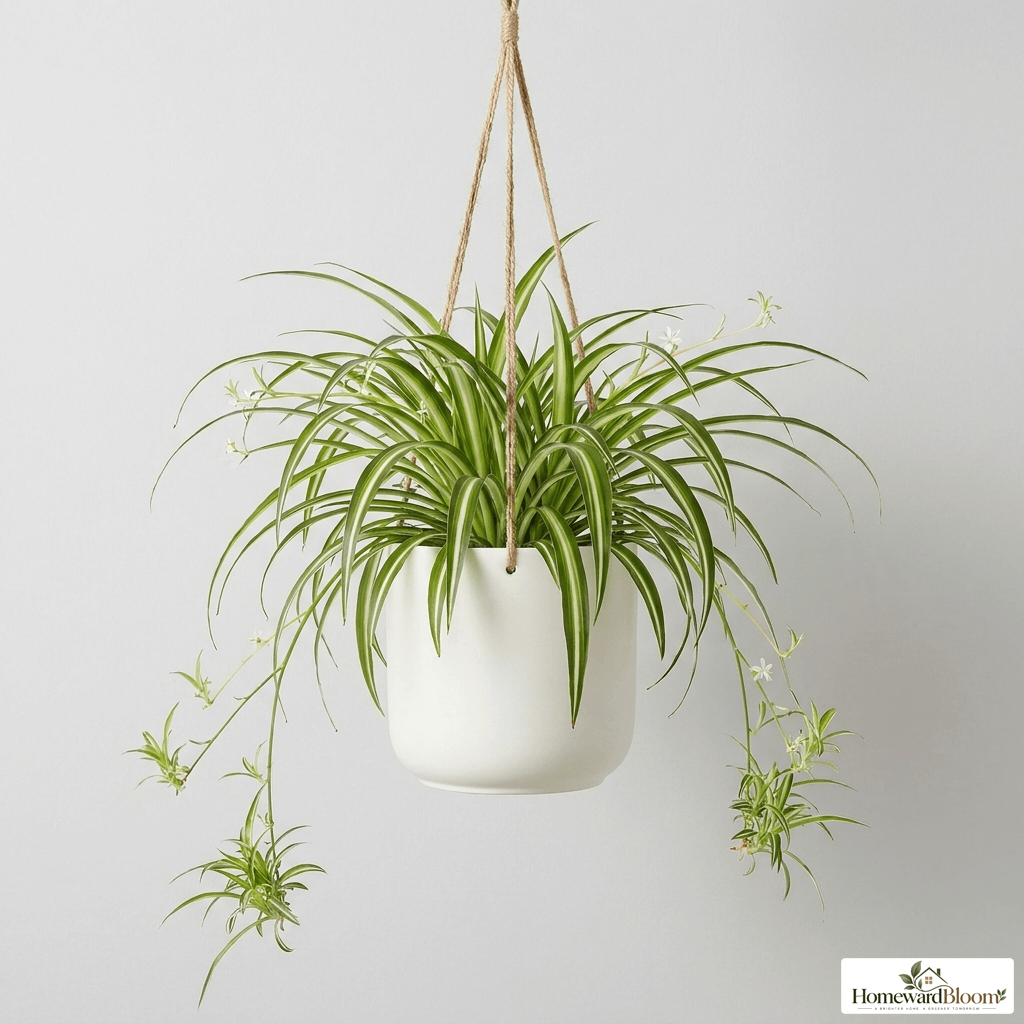
- Light Range: 50–150 Foot-Candles
- Water Requirement: Water when top half of soil is dry
- Pet Safety: Non-toxic (Pet-Safe)
Produces arching foliage and cascading plantlets. Solid green varieties maintain
higher energy efficiency in dim locations than variegated ones.
18. Philodendron ‘Pink Princess’ (Philodendron erubescens)
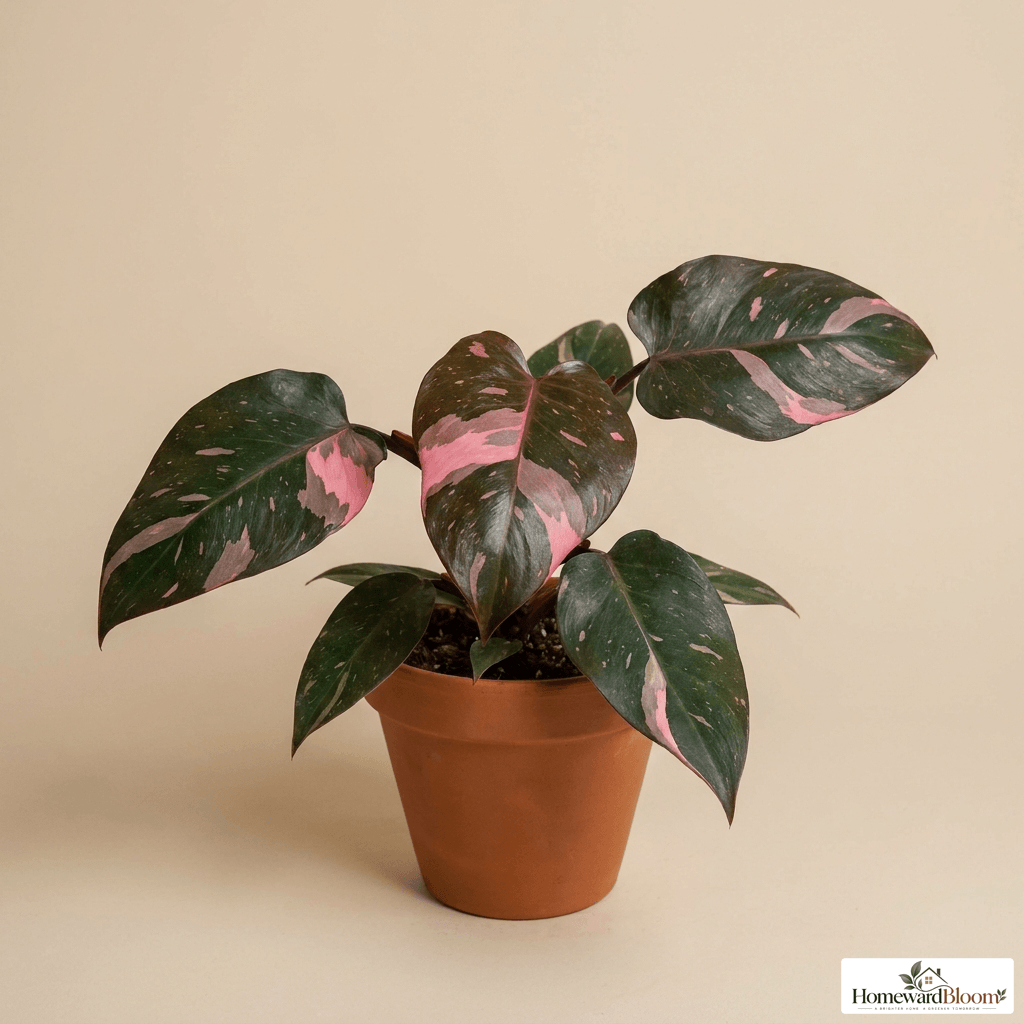
- Light Range: 75–150 Foot-Candles
- Water Requirement: Water top 50% dry; open aroid soil mix
- Pet Safety: Toxic to pets (calcium oxalates)
Exhibits flexibility across light regimes. Maintaining vivid pink variegation requires
slightly elevated photon flux (~75–100 FC).
19. Philodendron ‘White Wizard’ (Philodendron erubescens)
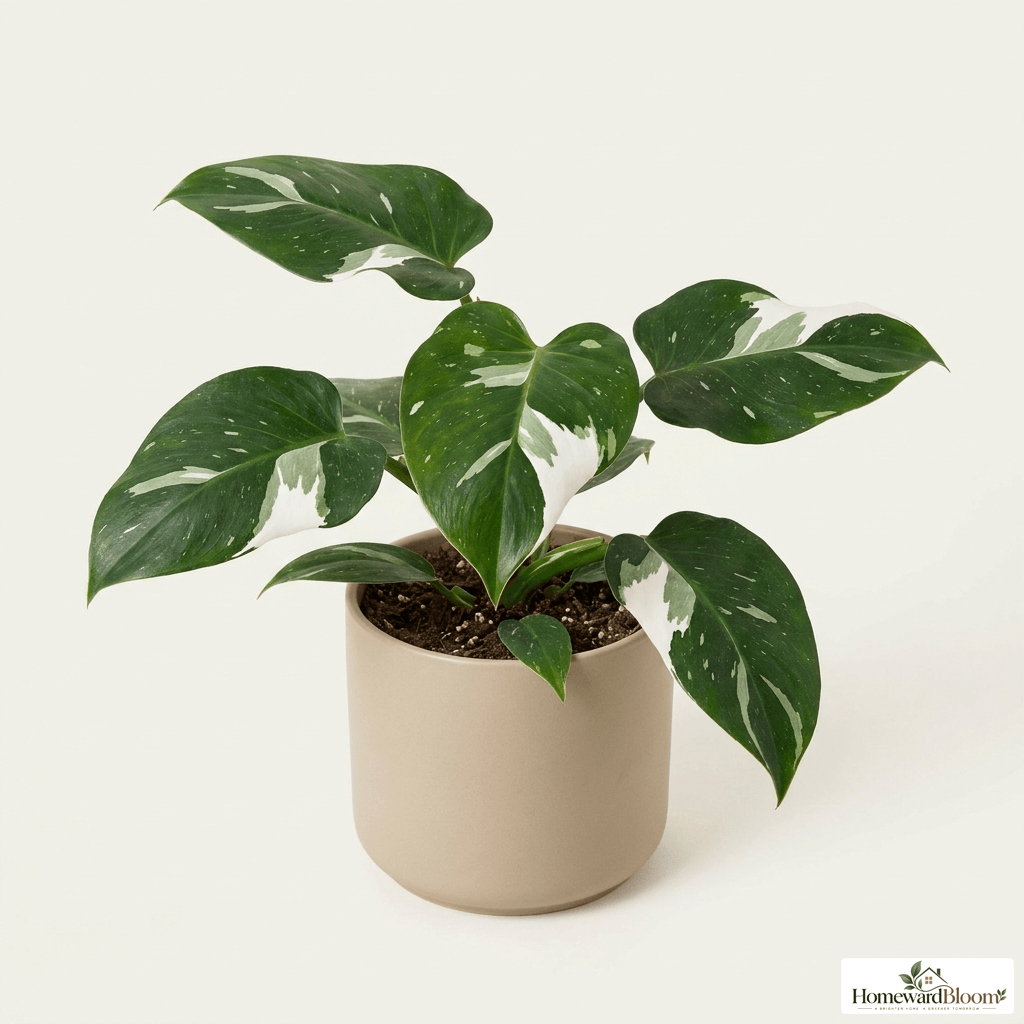
- Light Range: 75–150 Foot-Candles
- Water Requirement: Allow top 50% dry; well-draining substrate
- Pet Safety: Toxic to pets (calcium oxalates)
Featuring bold white patches on green vines, ‘White Wizard’ requires careful
placement near indirect light sources to prevent leaf browning.
20. Philodendron ‘Imperial Red’ (Philodendron erubescens)
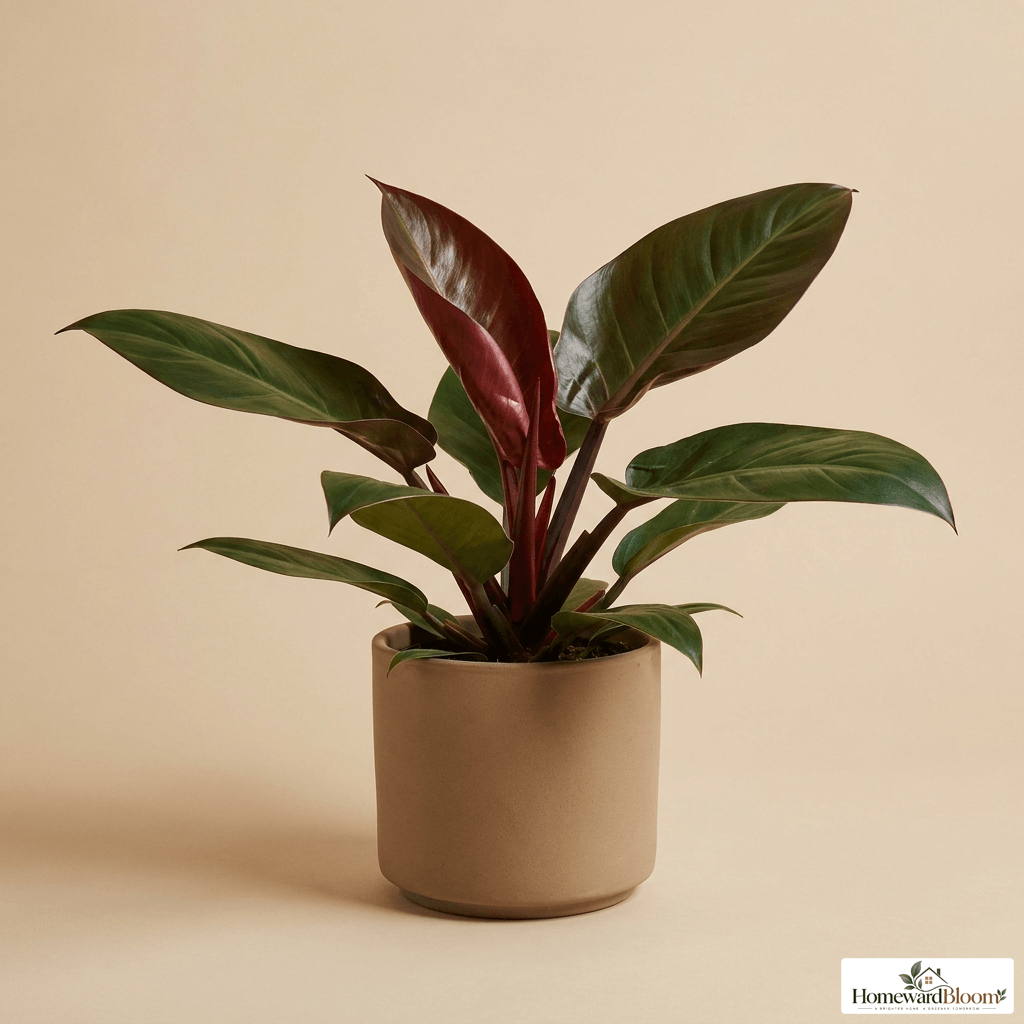
- Light Range: 50–120 Foot-Candles
- Water Requirement: Water when top 50% of soil dries
- Pet Safety: Toxic to pets (calcium oxalates)
Emits deep reddish-burgundy emerging leaves that mature to glossy dark green,
maintaining high net photosynthetic rates under indoor light.
21. Philodendron ‘Summer Glory’ (Philodendron hybrid)
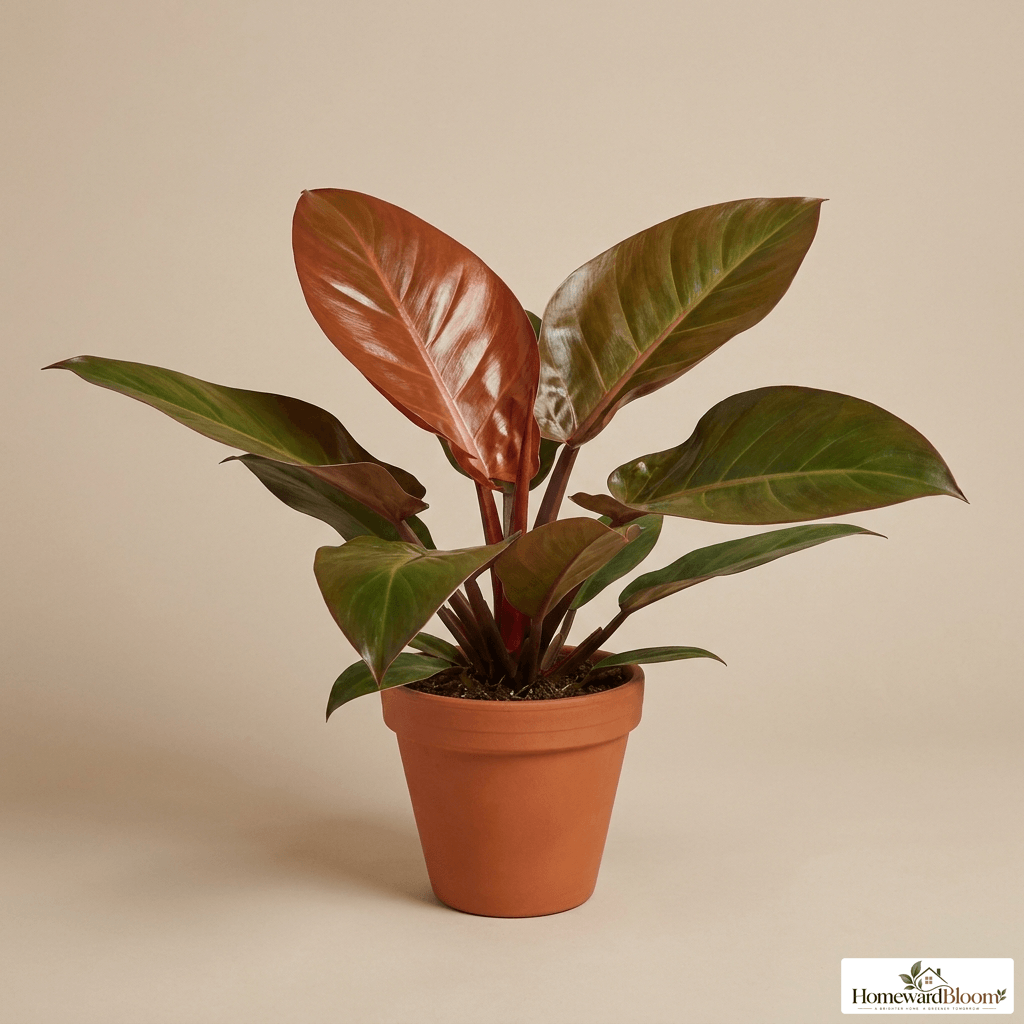
- Light Range: 50–120 Foot-Candles
- Water Requirement: Water when top inch of soil feels dry
- Pet Safety: Toxic to pets (calcium oxalates)
A sturdy hybrid featuring broad leaves with pinkish new growth, demonstrating
exceptional photosynthetic efficiency under typical interior lighting.
22. Monstera ‘Thai Constellation’ (Monstera deliciosa)
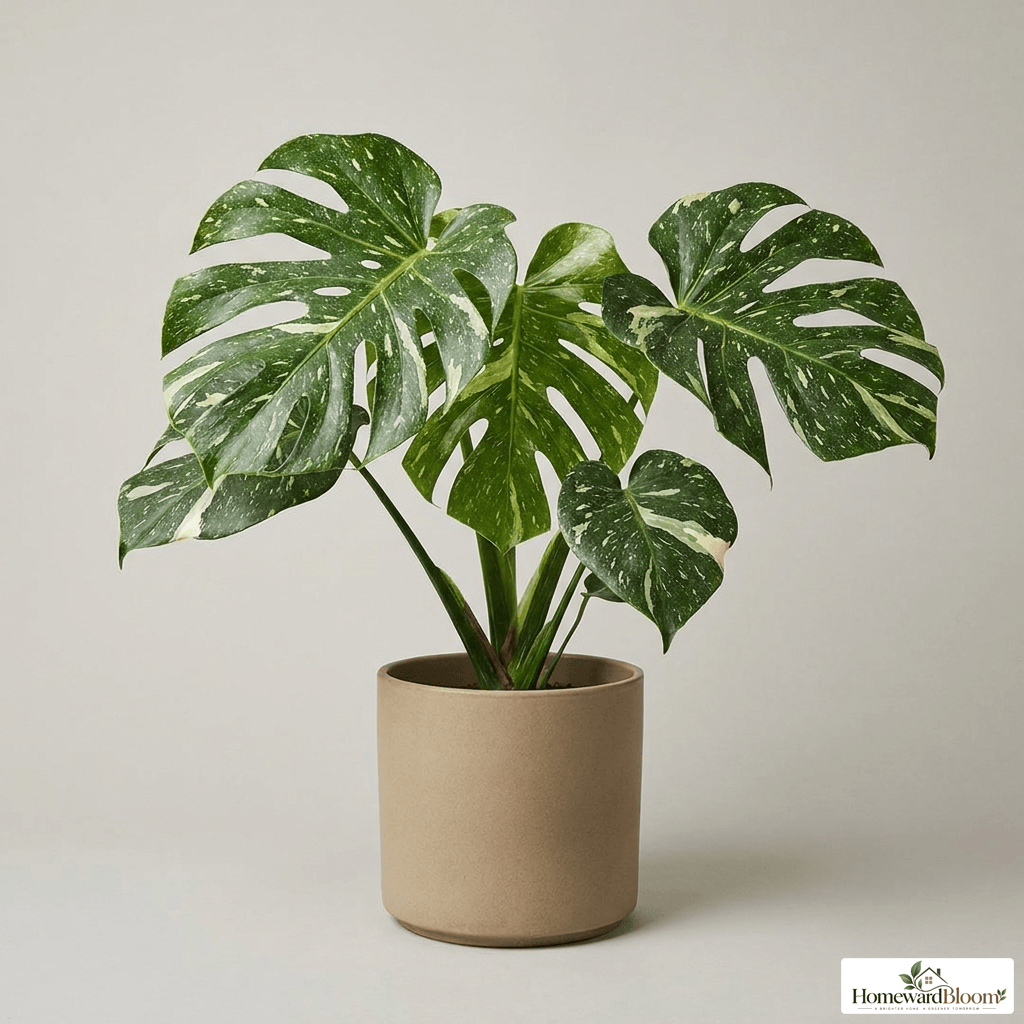
- Light Range: 100–200 Foot-Candles
- Water Requirement: Water when top 50% dry; sensitive to root rot
- Pet Safety: Toxic to pets (calcium oxalates)
Has a higher light saturation point due to cream-variegated sectors. Thrives best
with supplemental grow light coverage.
23. Syngonium ‘Gold Allusion’ (Syngonium podophyllum)
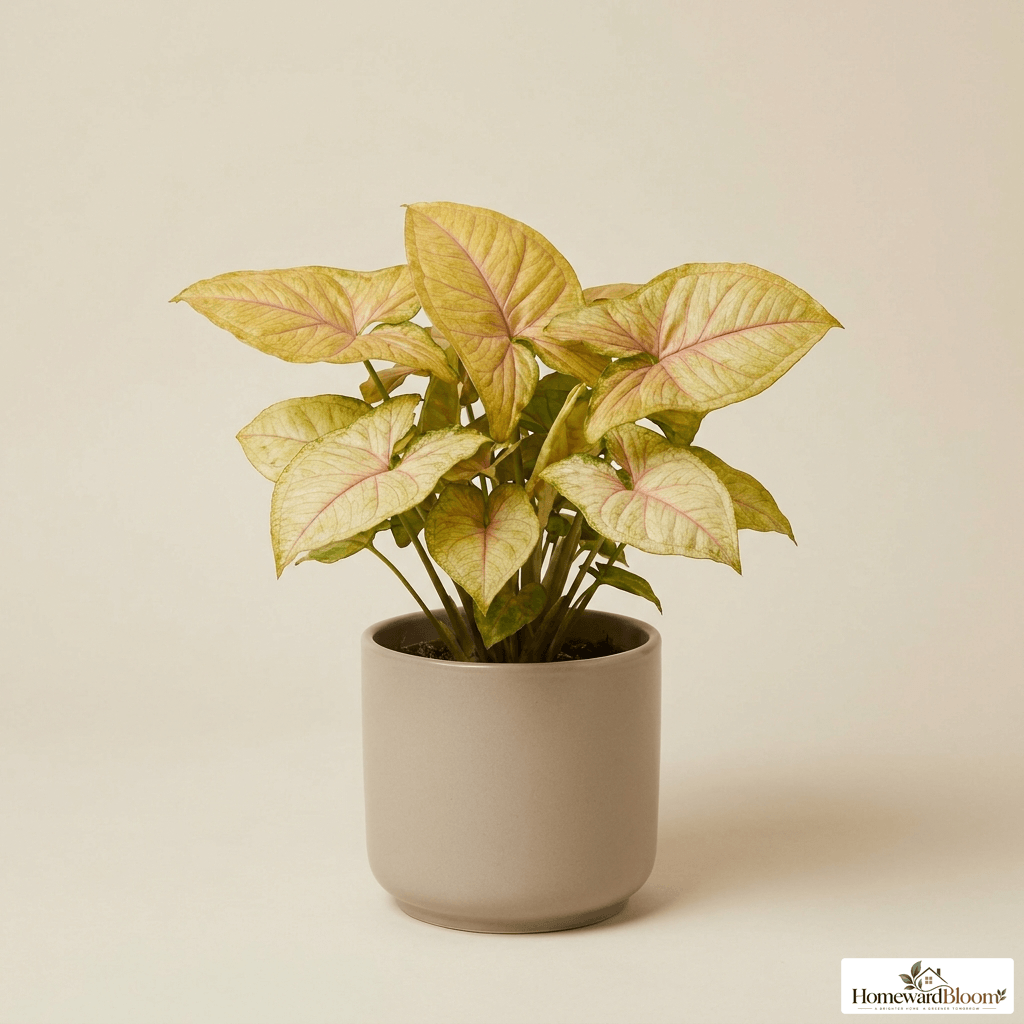
- Light Range: 50–120 Foot-Candles
- Water Requirement: Keep slightly moist; water top inch dry
- Pet Safety: Toxic to pets (calcium oxalates)
Arrowhead plants exhibit rapid assimilation rates under indirect light. Features
compact golden-green foliage with soft pink veins.
24. Goeppertia zebrina (Zebra Plant)
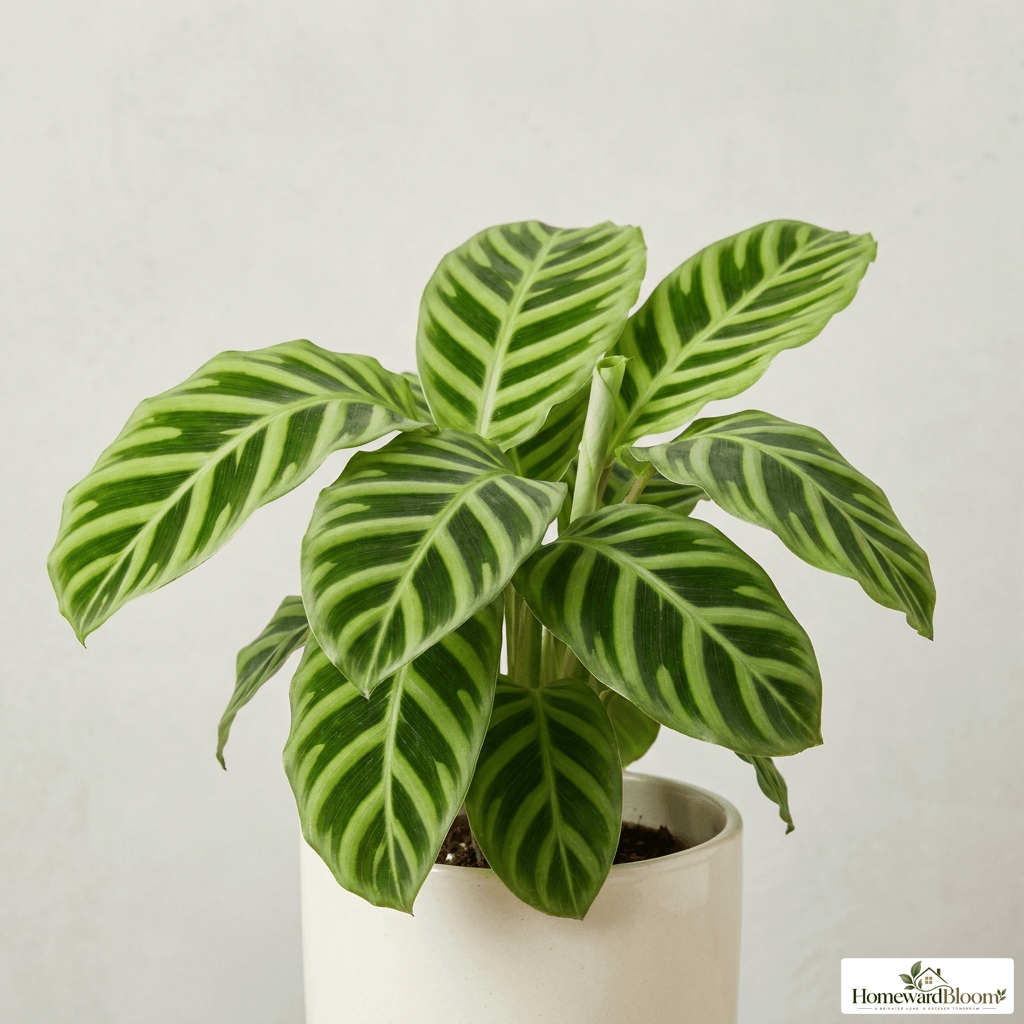
- Light Range: 30–75 Foot-Candles
- Water Requirement: Use distilled water; keep evenly moist but not soggy
- Pet Safety: Non-toxic (Pet-Safe)
Hailing from dense tropical understories, Zebra Plants feature velvety leaves with
bold dark stripes. Thrives under low photon density but requires humidity.
25. Goeppertia insignis (Rattlesnake Plant)
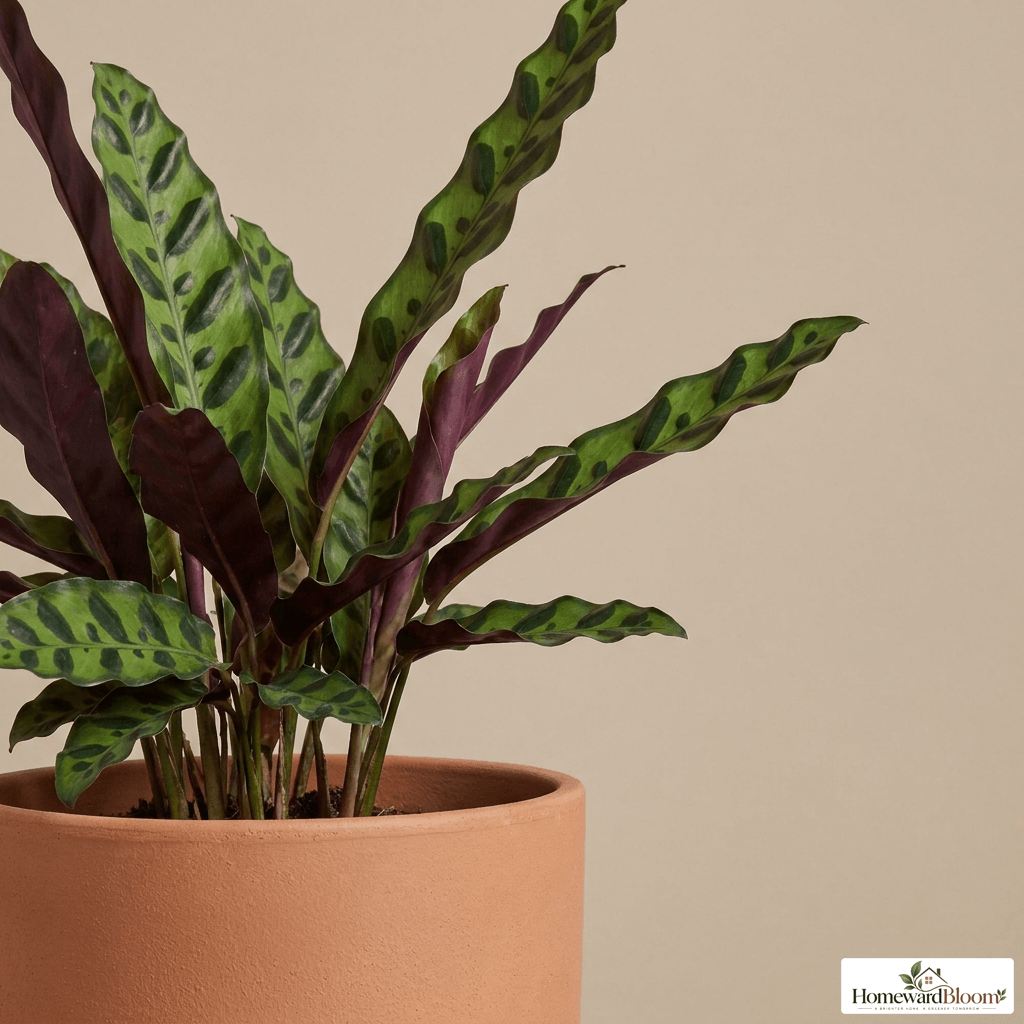
- Light Range: 30–75 Foot-Candles
- Water Requirement: Keep soil consistently damp with purified water
- Pet Safety: Non-toxic (Pet-Safe)
Features narrow wavy-edged foliage with dark green spots and purple
undersides. A stunning, pet-safe understory species for dim rooms.
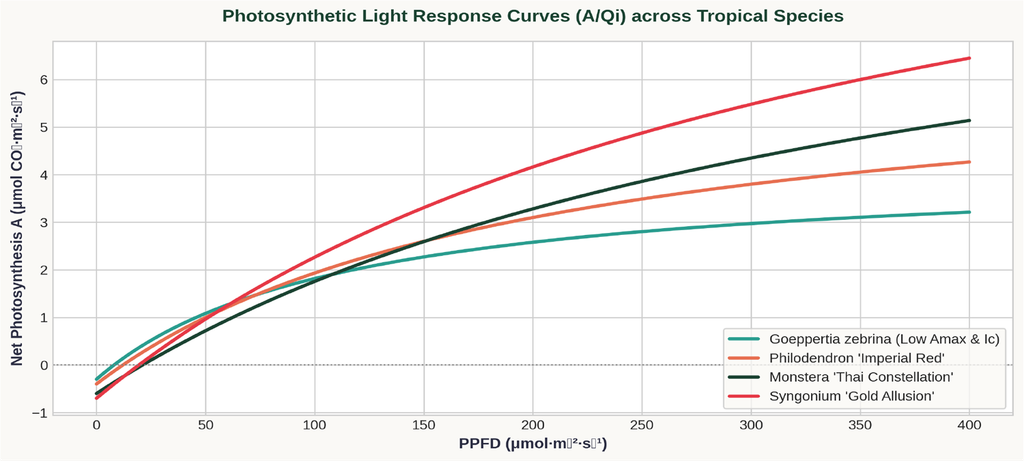
The Science of Low-Light Care & Grow Light Setup
Recognizing Etiolation: When light intensity falls below the compensation point, plants stretch (etiolate), lose
variegation, and shed lower foliage to conserve carbohydrates.
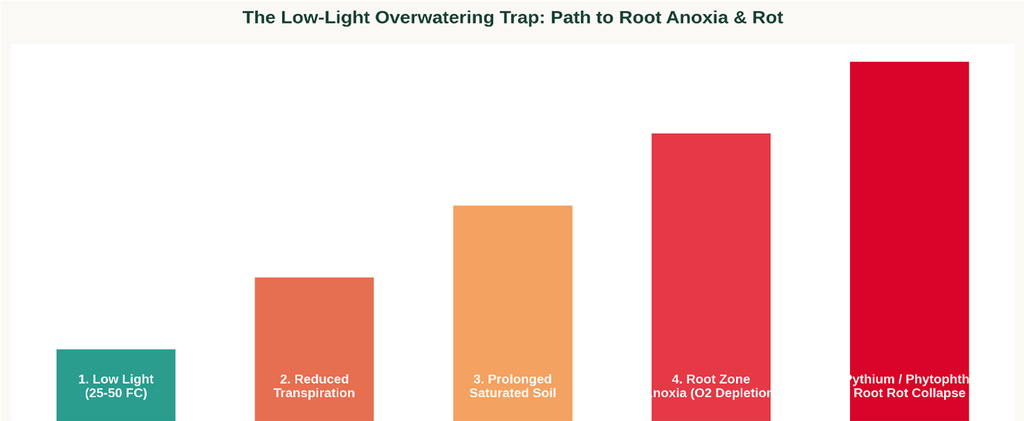
The Low-Light Overwatering Trap: Reduced light slows transpiration. Damp soil starves roots of oxygen,
inviting Pythium and Phytophthora fungi. Always reduce watering frequency by 50% in shaded locations.
Frequently Asked Questions (FAQs)
No. All plants require photons for photosynthesis. However, low-light plants can thrive under full-spectrum LED
or fluorescent office lights running 12–14 hours daily.
Key signs include yellowing lower leaves, soft black stems, soil remaining wet for over 3 weeks, and a musty
odor near the soil surface.
ASPCA-certified pet-safe options include Cast Iron Plant, Parlor Palm, Spider Plant, Zebra Plant (Goeppertia
zebrina), and Rattlesnake Plant (Goeppertia insignis).
Conclusion
Transforming dim, windowless rooms into thriving indoor oases is entirely possible when you pair
shade-adapted plant species with proper horticultural care. By selecting cultivars with low light compensation
points—such as Snake Plants, ZZ Plants, Chinese Evergreens, and shade-tolerant Philodendrons—you match
plant biology with interior environment constraints. Remember to adjust your watering routines to accommodate
lower transpiration rates, test light levels with a foot-candle meter or light app, and supplement with LED grow
lighting when natural sunlight falls short. With the right selection and care, even the darkest corners of your
home can burst with vibrant green life.