
1. Introduction: Redefining the Backyard as a Living Extension
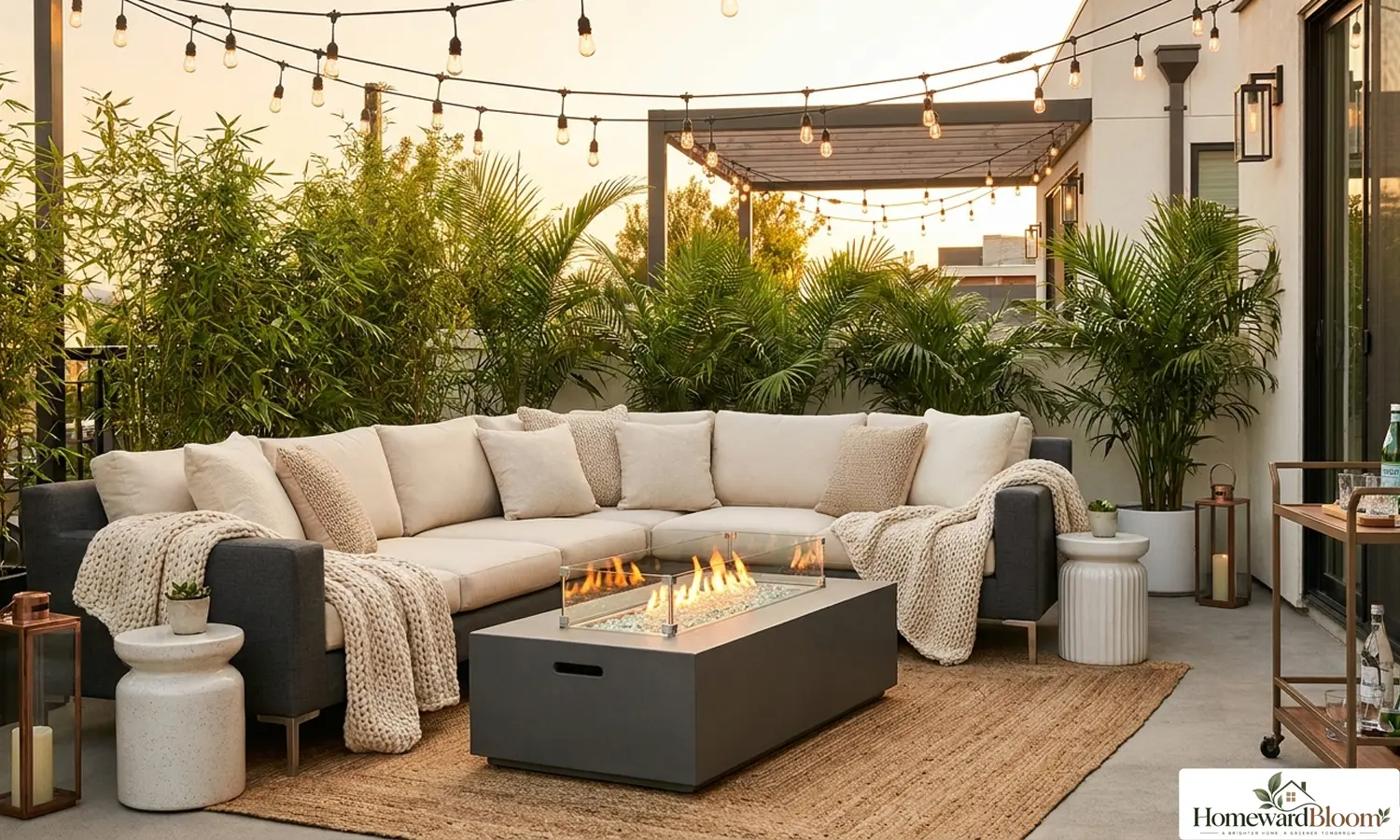
In the discipline of high-value residential design, a patio is far more than a simple outdoor surface; it is a strategic architectural extension of the home’s interior. As a Senior Landscape Architect, my objective is to “blend technology”—the structural and environmental reality of the residence—with the “natural surroundings” to create a cohesive, functional ecosystem. This approach is not merely aesthetic; it is a calculated move to enhance property value by increasing usable square footage through the “Outdoor Living Room” concept.The modern outdoor living room marks a significant shift from the uninspired concrete slabs of previous decades toward multi-functional retreats. These spaces are designed to provide the same level of microclimatic comfort and intentionality as an indoor lounge. To execute this at a professional grade, we utilize the “Base-Border-Furnish” methodology. This systematic narrative ensures that your project is anchored by sound engineering before a single piece of decor is placed, protecting your budget from the common pitfalls of impulsive design.
2. Foundations: Selecting High-Value, Low-Maintenance Hardscape Materials
The ground material is the “anchor” of your entire design. It dictates the visual weight of the space and, crucially, determines the long-term maintenance cycles and irrigation needs of the property. Selecting materials that balance durability with weather resistance is the first step in ensuring a high-performance investment.When evaluating patio ideas, consider these high-performance specifications:
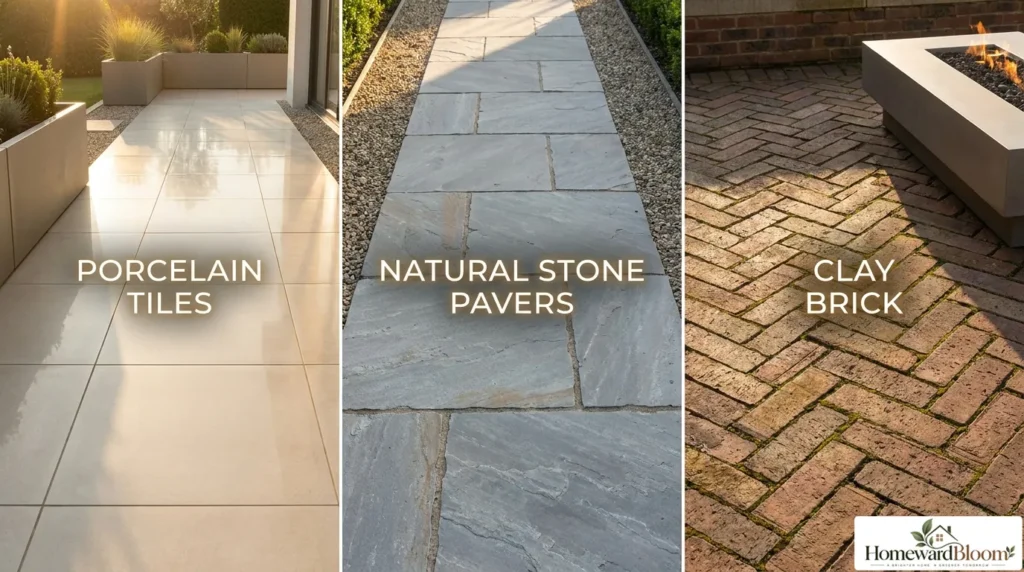
- Porcelain and High-Fired Ceramics: These represent the gold standard for low maintenance. Their exceptionally low porosity provides high freeze-thaw resistance, preventing cracks in regions with seasonal moisture and temperature flux.
- Terracotta and Natural Stone: These are superior for hot climates due to their thermal mass properties, which help stabilize surface temperatures even under direct solar exposure.
- Brick Pavers: A classic choice offering historical texture and natural slip-resistance. Properly installed, they allow for a well-worn patina that ages gracefully.
- Cement and Glass Tiles: Ideal for modern minimalist aesthetics and poolside zones. Glass resists UV fading and chlorine exposure, making it perfect for vertical accent bands.
- Terrazzo Tiles (e.g., Dolce Vita): Originally utilized in commercial outdoor spaces, exterior-grade terrazzo offers robust surface wear and high abrasion resistance, standing up to the constant movement of heavy furniture.
Patio Material Comparison: Durability vs Maintenance
| Material Type | Maintenance Level | Weather Resistance | Best Use Case |
|---|---|---|---|
| Porcelain | Low (Annual power wash) | High (Freeze-thaw rated) | Modern, minimal upkeep |
| Natural Stone | Medium (Periodic sealing) | Medium–High | Hot climates, rustic look |
| Brick Pavers | Low (Occasional weeding) | High (Holds color well) | High-traffic, non-slip |
| Cement/Glass | Medium (Needs sealing) | Medium (Non-freeze zones) | Poolside, modern accents |
| Terrazzo | Medium (Needs sealing) | High (Abrasion resistant) | High-traffic entertaining |
While the material provides the finish, the engineering of the “Base” determines whether your investment stays level or becomes a structural failure.
3. The Engineering of Longevity: The “Base-Border-Furnish” Methodology
In professional landscape consulting, structural preparation is the “So What?” layer of budget-friendly design. The primary reason DIY projects fail—shifting, sinking, and lateral migration—is a lack of ground preparation. Crucially, do not buy furniture until your hardscape footprint is set. Many homeowners find that once edging and drainage are installed, their usable space is narrower than planned, leaving them with furniture that doesn’t fit the site.
Technical Requirements for Stability
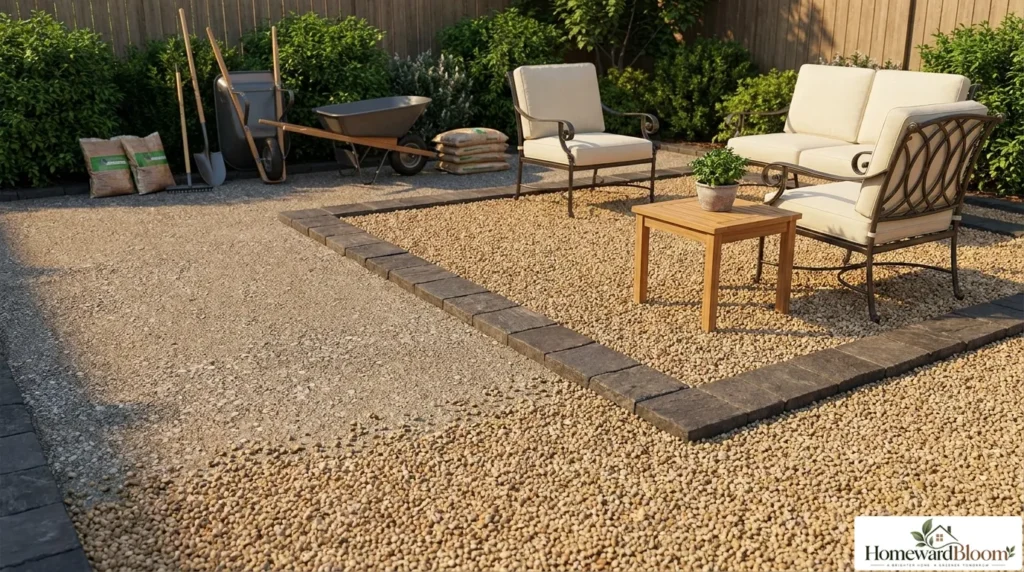
- Compacted Gravel Sub-Base: Stability is impossible on unprepared soil. You must rent a plate compactor to ensure the ground is solid before laying materials.
- The Drainage Slope: To protect the house foundation, mandate a 1/4-inch per foot slope away from the residence.
- Rigid Edging: Utilizing plastic, metal, or paver borders is essential to contain materials and prevent the “creeping” of stones or pavers into the lawn.
High-Value DIY Hardscape Ideas
- Loose Pea Gravel: At under $5 per square foot, this is the most cost-effective true patio surface. It offers superior drainage and requires no specialized cutting tools.
- Concrete Pavers: A step up in skill, these offer a professional, level finish. Budget $8 to $15 per square foot for materials, including the base layer and sand.
- Stained Existing Slabs: If a slab already exists, don’t rip it up. Upgrading with concrete-specific stain or exterior floor paint is a high-impact, low-cost strategy.
- Pallet Deck Platforms: For uneven terrain, reclaimed and sealed wood pallets can create an organic, raised platform that circumvents the cost of a traditional timber build.Once the hardscape is secured and the footprint is finalized, we move to the spatial intelligence of the layout.
4. Spatial Intelligence: Mastering Layouts and Clearances
Professional design relies on “spatial illusions”—strategic placements that make small footprints feel expansive. By defining microclimatic zones and maintaining strict movement clearances, you ensure the space remains a functional sanctuary.
- Zonal Definition with Rugs: Use light-colored, weather-resistant rugs to draw the eye outward. This creates a “room” feel even on loose gravel.
- Vertical Expansion: Reclaim floor space by utilizing slat walls and railing planters. This moves the greenery to the vertical plane, keeping the walking surface clear.
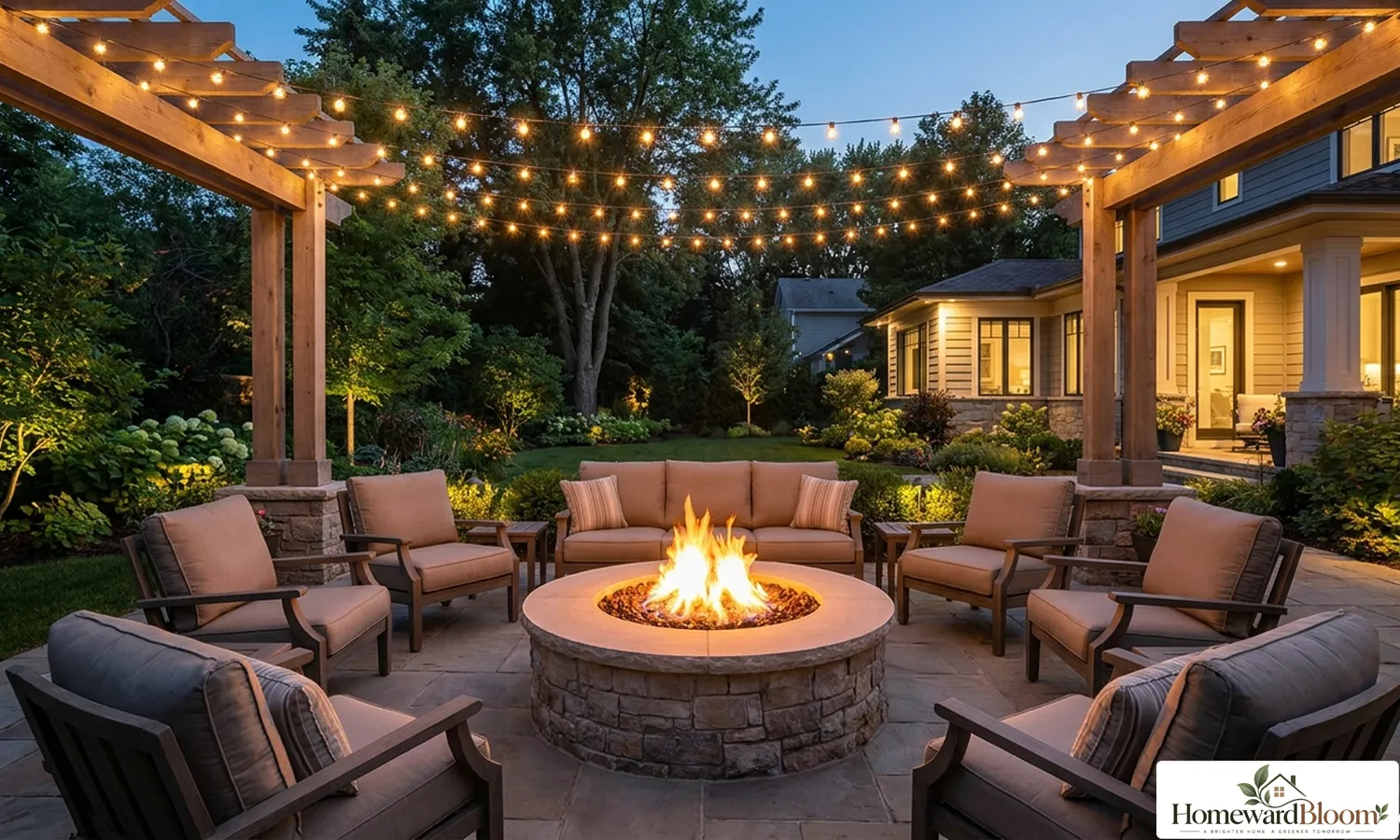
- Secondary Seating Zones: To extend the usable footprint, create separate gravel fire pit circles away from the main house. This encourages movement across the entire site.
Essential Clearance Guide for Outdoor Movement
- The Walking Path: 24 inches (minimum clear walkway).
- Coffee Table Gap: 14–18 inches (between seating and table).
- Dining Clearance: 24–36 inches (from table edge to wall or railing for chair movement).
5. Multi-Functional Furniture: The Core of Modern Utility
Modularity is the primary differentiator in professional-grade design. Every piece must “earn its keep” to maximize utility in limited square footage.
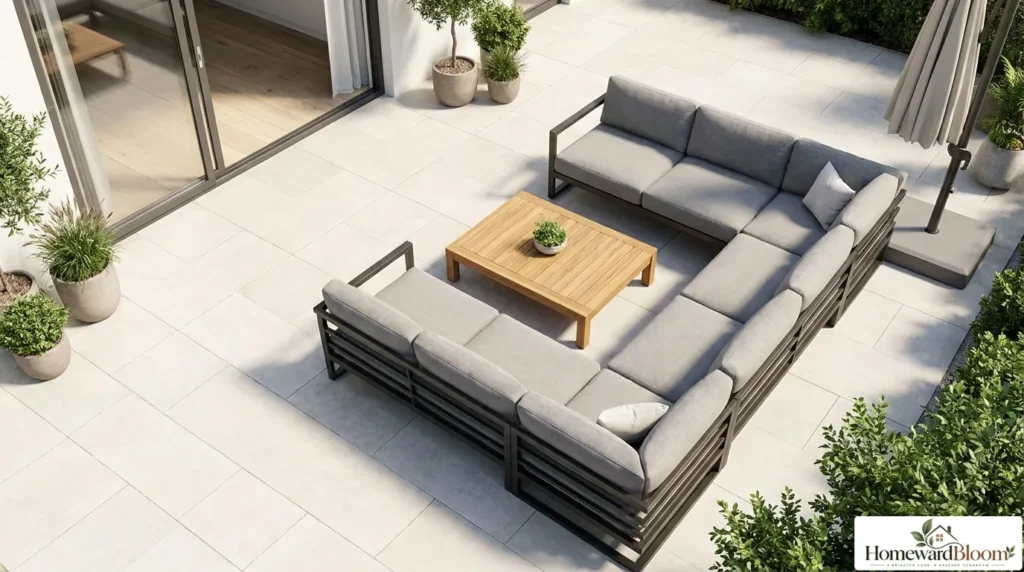
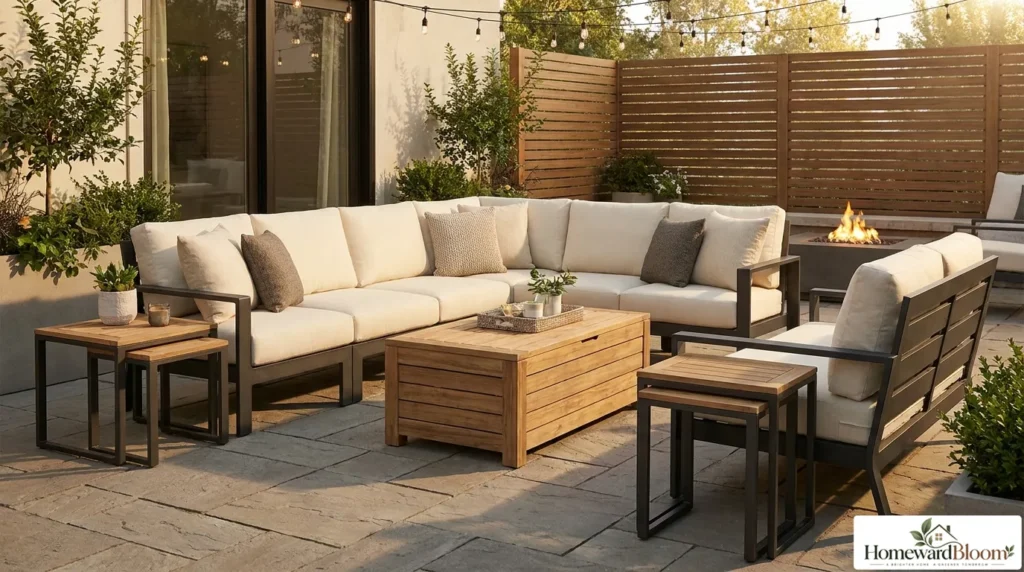
- Modular Sectionals (e.g., Pamapic Axis): These systems are indispensable. Ottomans serve as seating, footrests, or—with a tray—coffee tables, compressing three functions into one footprint.
- Stackable Dining Sets: These solve the hosting dilemma. Keep chairs neatly stacked in a corner to reclaim your space, unstacking them only when guests arrive.
- Weather-Ready Materials: Insist on PE wicker and rust-proof aluminum. These eliminate the need for indoor storage, as they can withstand the elements when paired with high-quality waterproof covers.
- Repurposed Assets: Refresh indoor wood or metal frames with a coat of exterior-rated paint and weather-resistant cushions for a bespoke, budget-friendly look.
6. The Living Screen: 12 Best Patio Plants for Privacy and Aesthetics
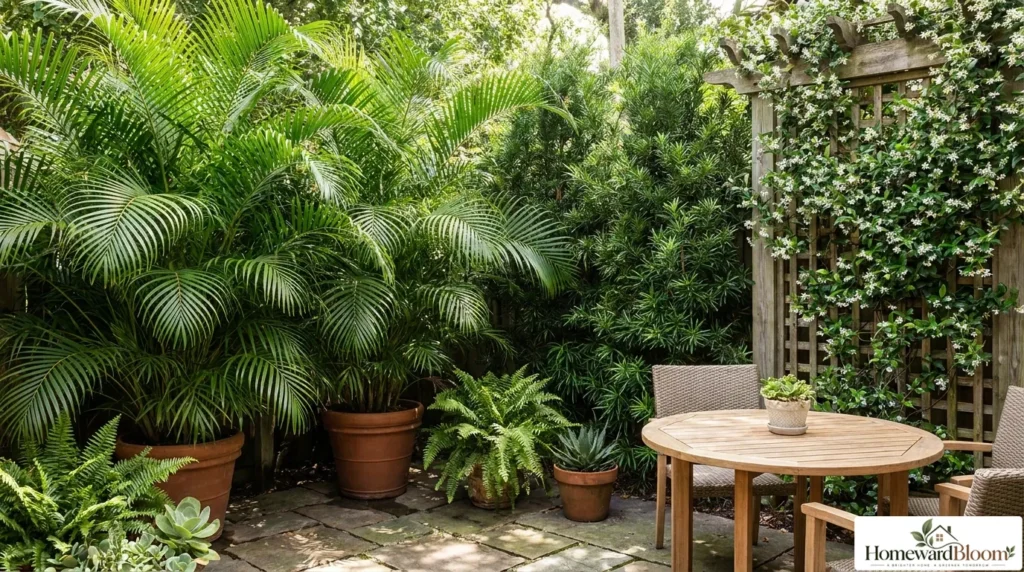
Soft boundaries—plants—are superior to hard fencing for creating a resort-like atmosphere. They provide height, movement, and a sense of seclusion that a static wall cannot replicate.
Species Selection by Design Intent
- Resort Vibes: Areca Palm and Bamboo Palm offer airy, non-stiff screens that fill visual gaps with feathery fronds.
- Vertical Speed: Clumping Bamboo provides rapid growth for privacy without the aggressive spreading of running varieties.
- Tailored Formality: Podocarpus creates a dense visual block, while Italian Cypress adds dramatic vertical lines.
- Fragrance and Color: Star Jasmine (scented evergreen), Bougainvillea (vibrant bracts), and Mandevilla (trumpet blooms) add sensory layers.
- Cold-Weather Resilience: Arborvitae offers year-round density, and Camellia provides glossy foliage in shaded spots.
- Refined Lines: Ficus Alii brings willow-like elegance to modern designs.
- Cautionary Design: Oleander is a hardy screen, but the entire plant is highly toxic ; it must be avoided if pets or children utilize the space.Pro-Tip: For low-maintenance container care, use bottom-heavy pots for wind resistance. A professional secret is to place a “nursery pot” inside a larger decorative pot; this allows for easy plant swaps and prevents the decorative pot from holding stagnant water.
7. Atmospheric Layers: Lighting, Warmth, and Weatherproofing
Layered lighting and heating extend the patio’s utility into the “fourth season,” making it a year-round asset.
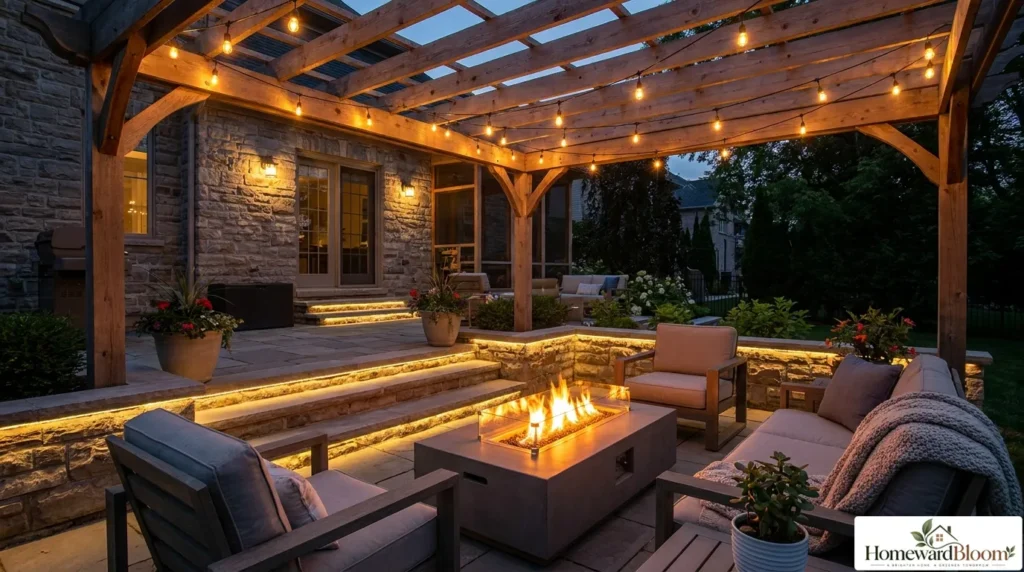
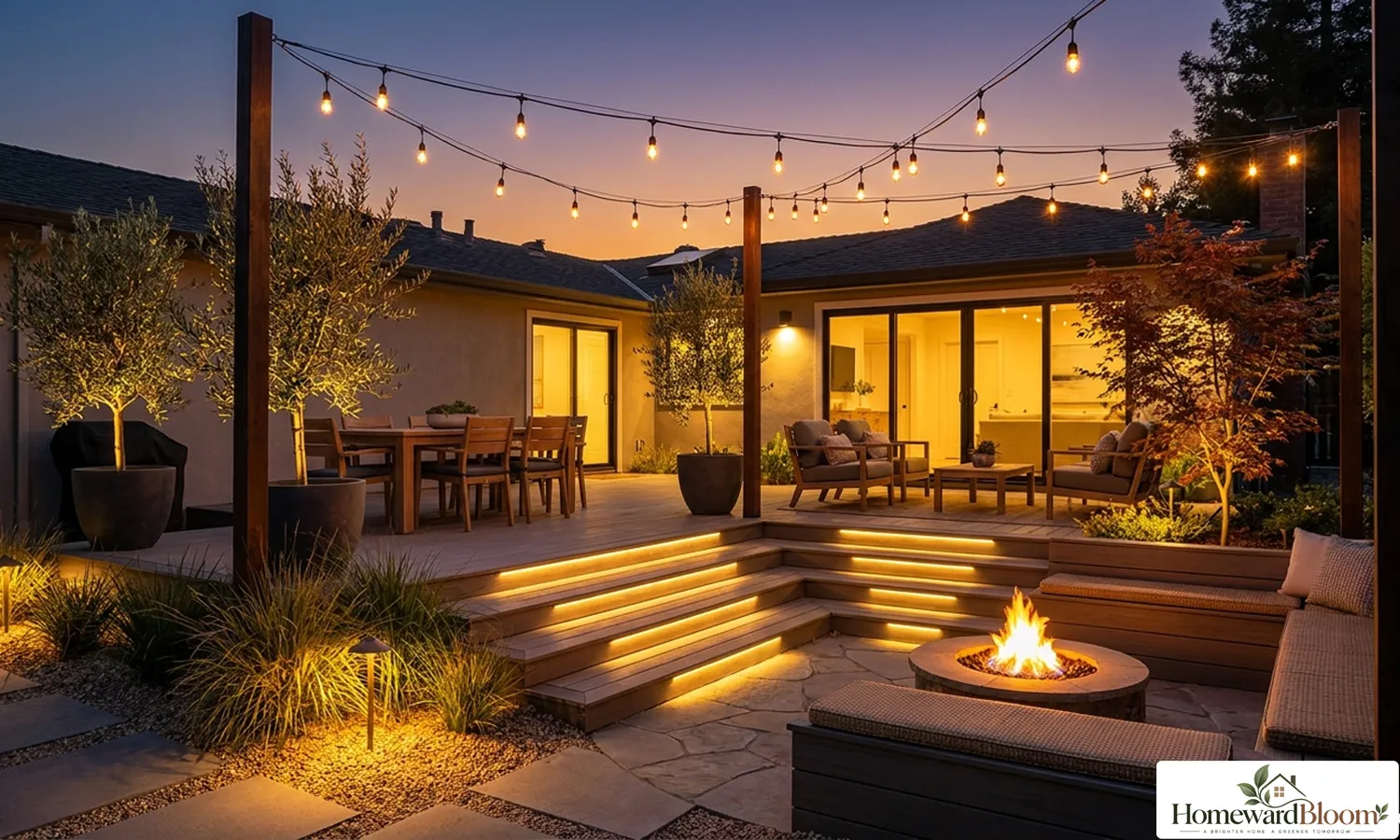
- Layered Lighting: Combine overhead string lights (mounted on repurposed posts) with solar-powered wall lanterns. This creates a warm glow without occupying floor space.
- Compact Warmth: Propane tabletop heaters (like the Pamapic Pyra Mesa ) are superior to large fire pits in small spaces, providing warmth while serving as a drink ledge.
- Flexible Shade: UV-rated shade sails are a cost-effective alternative to permanent pergolas, adding a structural art element to the backyard.
- Privacy Screens: DIY slatted screens made from reclaimed wood allow for airflow while blocking direct sightlines from neighbors.
8. Artistic Principles: The Professional Designer’s Secret
High-value design is the interaction of art and science. By applying these principles, you can elevate a DIY project into a professional masterpiece:
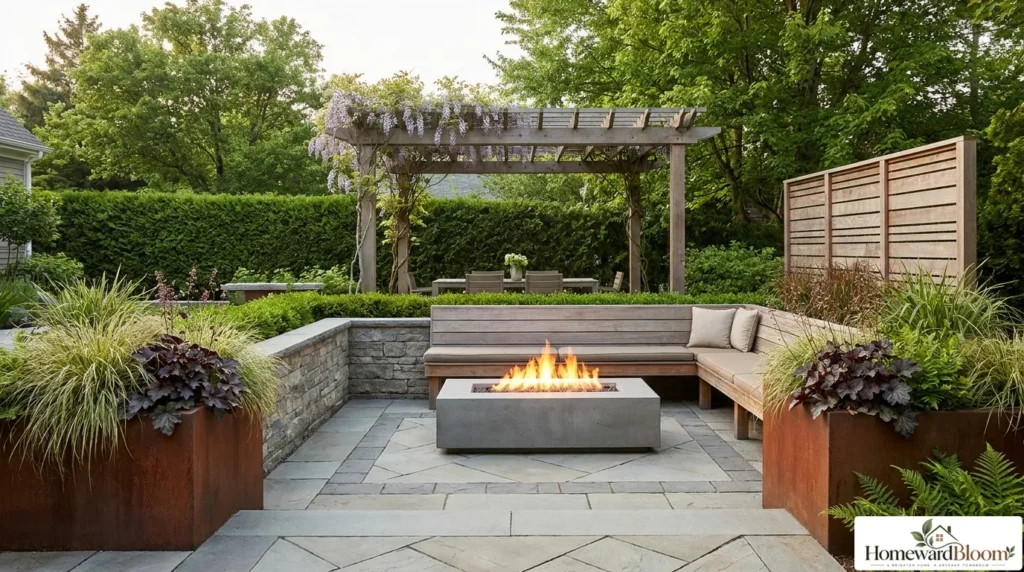
- Color Theory: Use warm tints (reds, whites) to advance an area toward the observer, making a space feel active. Use cool, dark shades (blues, blacks) to make areas recede, adding depth and a restful feeling.
- Balance: Choose between Symmetrical balance (mirror-image formality) and Asymmetrical balance (using different forms and textures to achieve an equal visual attraction).
- Transition: This is the 3-dimensional perspective of your composition. Lead the eye by arranging plants from coarse to fine textures , or heights from tall to short, to frame a specific view.
- Focalization: Direct attention toward a central feature. Straight radial lines create a strong focalization that forces the eye to a point quickly, whereas curved or free-flowing lines create a more progressive, relaxing feeling.Ultimately, Simplicity —the reduction of detail to its simplest functional form—is the hallmark of expert design, as it reduces both cost and maintenance.
9. Conclusion: Your Roadmap to an Elevated Outdoor Sanctuary
A professional-grade patio is the result of smart sequence and spatial planning, not a massive budget. By strictly following the “Base-Border-Furnish” method, you protect your investment from the ground up. Start with a thorough site analysis , secure an accurate plat of the house , and map out your bed forms before making any purchases. With these 25 ideas as your guide, you are ready to build a high-value sanctuary that serves as a seamless extension of your home.
10. FAQ: Expert Answers for Patio Design
Focus on verticality. Use hanging plants and slat walls to keep the floor clear. Incorporate light-colored, weather-resistant rugs to define the zone and draw the eye outward, creating an illusion of expansive space.
The most budget-friendly method is installing loose pea gravel over a compacted sub-base. This typically costs under $5 per square foot and is the only “true” patio surface that requires no specialized cutting tools or professional-grade saws.
Prioritize all-weather materials like PE wicker and rust-proof aluminum. Invest in high-quality, waterproof covers and ensure cushions have weather-resistant fabrics. These materials are designed to remain in situ year-round.
This depends entirely on your local municipality codes and HOA regulations. At-grade gravel or paver patios under a certain square footage often don’t require one, but you must check your local building department before breaking ground.
Materials for a DIY concrete paver patio generally range from $8 to $15 per square foot . This estimate includes the essential compacted gravel sub-base, leveling sand, and the pavers themselves.
Also read :
Backyard Ideas: 30 Beautiful Ways to Transform Your Outdoor Space
Comment on “25 Patio Ideas That Will Turn Your Backyard Into an Outdoor Living Room”