1. Introduction: The Power of Petite Plots
Small-space gardening is a transformative practice that offers profound psychological and physical benefits. A 2022 review published in Environmental Research confirms that access to outdoor green spaces, including balcony gardens, is consistently associated with reduced stress levels and improved psychological well-being. Beyond the mental health benefits, container gardening provides a controlled environment where you can provide precise soil quality, eliminate traditional weeding labor, and ensure accessibility for those with limited mobility.
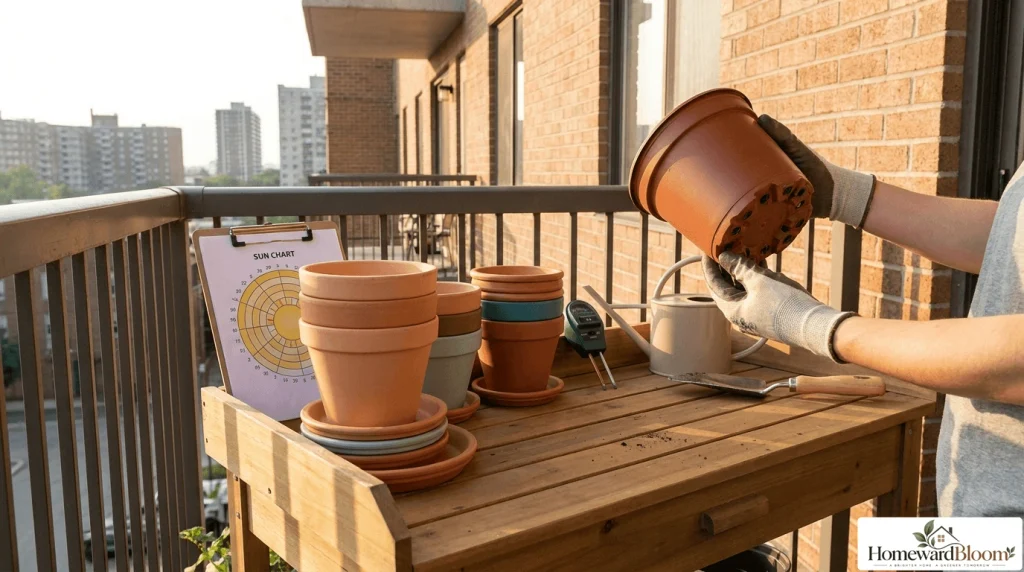
The technical foundation of any successful small-space garden begins with the “Observation Day.” Before purchasing a single plant or bag of soil, you must spend a full day watching your space. As a specialist, I mandate checking the area at exactly 9 a.m., noon, and 3 p.m. to document sun movement and shadow patterns. Note how the wind swirls; on higher floors, wind velocity increases, leading to significantly faster desiccation (drying out) of your plants. Matching the right specimen to your specific microclimate prevents months of expensive frustration.
Understanding your orientation dictates your plant palette. Light and wind are the two non-negotiable variables in a container environment.
2. Essential Pre-Planting Preparation
Balcony Orientation and Plant Selection
- South-Facing: The premium position in the Northern Hemisphere, receiving 6+ hours of direct sun. Ideal for “high-energy” crops like tomatoes, peppers, and Mediterranean herbs.
- West-Facing: Characterized by intense, warm afternoon sun. Excellent for heat-loving basil and succulents, though shade-sensitive plants may scorch without protection during peak summer.
- East-Facing: Receives bright morning sun but remains cooler in the afternoon. Perfect for leafy greens, chives, and ornamentals that struggle with heat stress.
- North-Facing: The most challenging orientation, receiving little to no direct sunlight. Focus on shade-tolerant foliage like ferns, hostas, mint, and lettuce.
Knowing Your Limits: Weight and Rules
Physics is the ultimate arbiter of a balcony garden. Most residential balconies are rated for 40–60 pounds per square foot. While a dry pot seems light, a 10-gallon ceramic container filled with saturated soil can exceed 100 pounds. Prioritize lightweight materials like fabric grow bags or resin. Additionally, check building covenants; many HOAs have strict rules regarding railing attachments or specific planter colors for street-side uniformity.
Weight Comparison: Lightweight vs. Heavyweight Containers
| Container Material | Weight Category | Pros | Cons |
|---|---|---|---|
| Fabric Grow Bags | Lightweight | Aerates roots, prevents circling, easy storage. | Dries out rapidly; utilitarian aesthetic. |
| Plastic/Resin | Lightweight | Superior moisture retention, inexpensive. | Can become brittle; low-end versions lack style. |
| Fiberglass | Mid-weight | Extremely durable, professional sleek look. | High initial cost. |
| Wood (Cedar/Redwood) | Mid-weight | Natural insulation for roots, rot-resistant. | Heavy when wet; requires untreated wood for food. |
| Ceramic/Glazed | Heavyweight | Very stable in high wind, high aesthetic value. | High weight; prone to frost cracking. |
| Terracotta | Heavyweight | Breathable, classic look. | Fragile, heavy, and wicks moisture away from soil. |
3. Choosing the Right Growing Medium and Nutrition
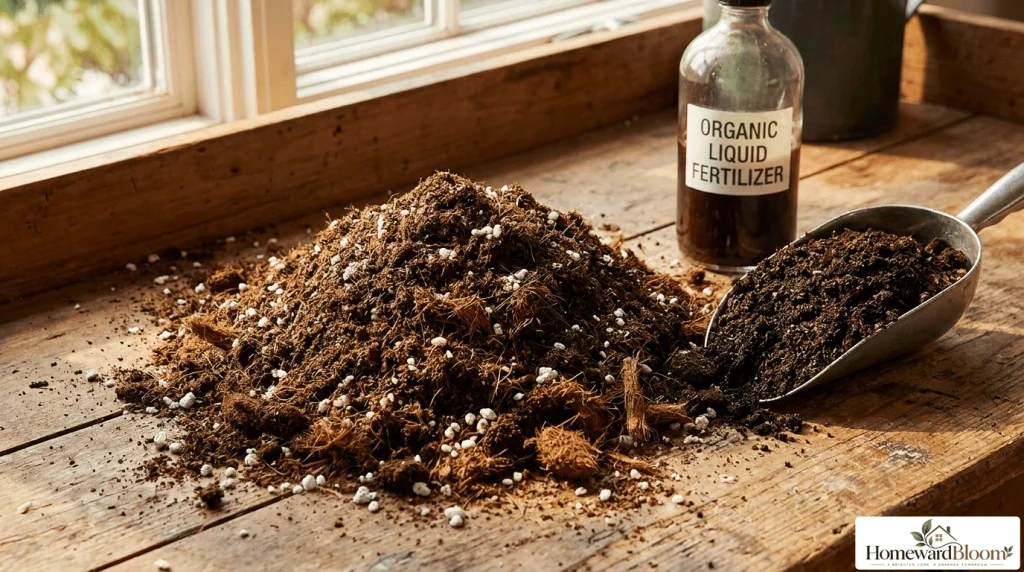
In container gardening, “garden soil” is strictly forbidden. It is too heavy and compacts easily, but more importantly, it introduces pathogens, pests, and weed seeds into what should be a sterile, controlled environment. Instead, use a “soilless” potting mix.
The Ideal Soilless Mix
A professional-grade soilless mix provides the oxygenation and drainage required for confined root systems. It typically contains:
- Peat Moss or Coconut Coir: Moisture retention and structural base.
- Perlite: Volcanic glass for drainage and preventing compaction.
- Vermiculite: A mineral additive that aids in nutrient and water holding.
Nutrition and Fertilization
Containers act as “leaching” environments; every watering flushes nutrients through the drainage holes.
- Organic Options: Mix blood meal (nitrogen) and bone meal (phosphorus) into the mix at planting. Supplement with water-soluble fish emulsion or kelp during the peak growing season.
- Synthetic Options: Use a slow-release granular fertilizer with a 3:1:2 N-P-K ratio (e.g., 18-6-12). High-phosphorus fertilizers are unnecessary and contribute to runoff pollution. Crucial Tip: For continuous production, reapply your slow-release fertilizer in late July to sustain plants through the autumn harvest.
4. 25 Clever Small-Space Gardening Ideas
1. Raise Pots on Bricks
Stack reclaimed bricks to create a multi-level display. This adds immediate vertical interest and allows larger background pots to serve as a visual foil for smaller, colorful plants in the foreground.
2. Table-Top Centerpiece Rotation
Use decorative kitchenware, like old pans or ceramic dishes, as seasonal showstoppers. Specialist Tip: To drill drainage holes in ceramic without cracking, place a cross of masking tape over the spot to prevent the drill bit from skidding, and let the weight of the drill do the work.
3. Summer-Flowering Bulbs
Plant Oriental or Calla lilies in containers in May. They thrive in well-drained pots, and because they are in containers, you can easily move them to a frost-free area for overwintering once dormant.
4. The Pot Wreath
Double up wire wreath frames to support the weight of small pots attached with twine. Fill with resilient annuals like pelargoniums (zonal geraniums) to create a vertical living focal point that handles harsh balcony wind.
5. Baskets as Pot Covers
Achieve a “cottagecore” aesthetic by placing standard plastic pots inside repurposed indoor baskets. To prevent the basket from rotting, line it with an old plastic soil sack or use a hidden internal saucer.
6. The Patio Veg Patch
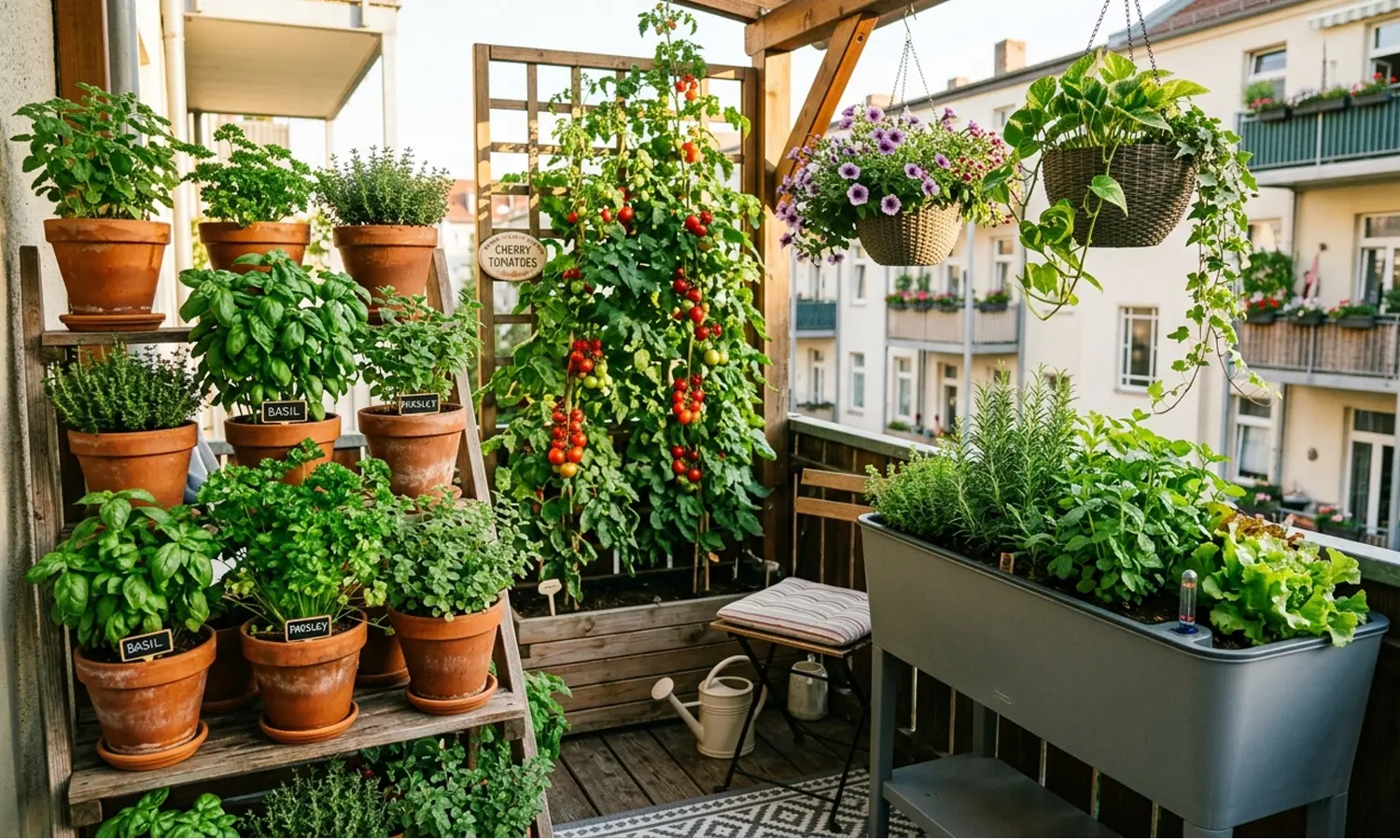
Dedicate your space to compact cultivars like ‘Patio’ tomatoes or bush beans. These varieties are specifically bred for heavy yields within the restricted root volume of a container.
7. Kinetic Spinners
Insert silver-toned wind spinners into your planters to add movement without occupying floor space. Using a consistent metallic tone keeps the space looking sophisticated rather than cluttered.
8. Showstopper Accent Plants
Incorporate compact breeders like Clematis ‘Elpis’. It is hardy in Zones 4–9, grows only 3–4 feet high, but produces massive 5-inch blooms that offer a high-impact centerpiece for small balconies.
9. Container Solar Fountains
Transform a drainage-free succulent pot into a micro-water feature with a floating solar fountain. This provides soothing ambient sound and a drinking station for urban birds at a fraction of the cost of a formal feature.
10. Hanging Baskets for Hummingbirds
Utilize tubular flowers like petunias in eye-level hanging baskets. The nectar-rich, bright blooms are difficult for other pollinators to reach, ensuring a dedicated food source for visiting birds.
11. The DIY Planter Bench
Construct a wooden seat with circular cut-outs that fit over the rims of two substantial, matching planters. This dual-purpose furniture maximizes utility in narrow footprints.
12. High-Contrast Boundaries
Place ultra-matte white planters against dark-stained (Slate Behr) fences. This creates an optical illusion that draws the eye to the greenery, making the physical boundaries of a small space seem to disappear.
13. The Terracotta Herb Hub
Group Mediterranean herbs (rosemary, thyme, sage) in porous terracotta. The clay mimics their native dry environments by allowing the roots to breathe, preventing the rot common in plastic pots.
14. Vertical Pocket Systems
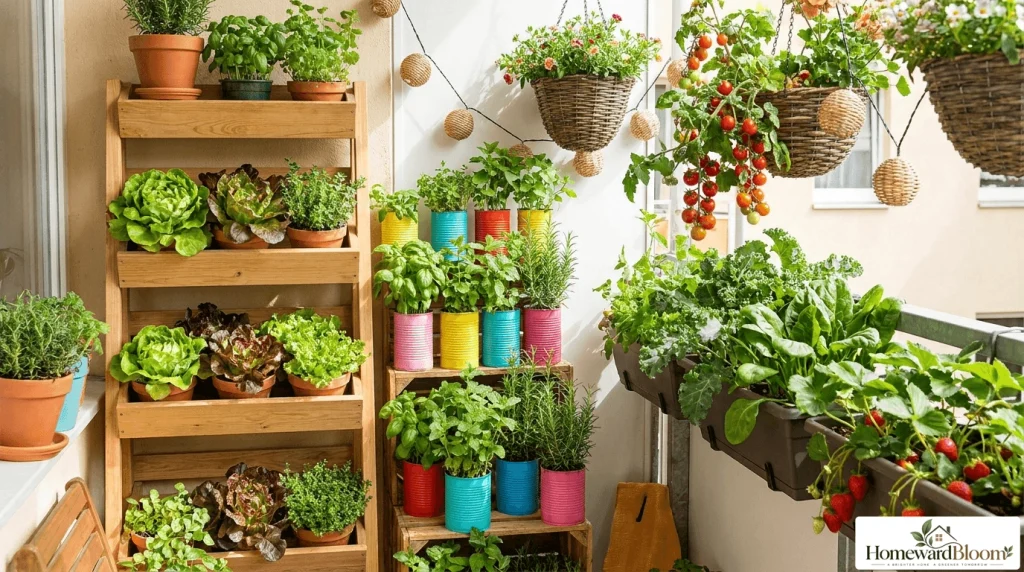
Use wall-mounted fabric pockets to save floor space for seating. These are ideal for shallow-rooted herbs, succulents, and salad greens, turning a bare wall into a living tapestry.
15. Dwarf Buddleia for Butterflies
Plant ‘Chrysalis Cranberry’ butterfly bush. It reaches only 2 feet in height, is hardy in Zones 5–9, and produces 6-inch pollinator-magnet blooms all summer long.
16. Faux-Mosaic Painted Pots
Unify mismatched containers using weatherproof acrylics to paint geometric “mosaic” patterns. A consistent paint palette across different pot materials creates a cohesive, designer-led appearance.
17. Sensory Touch Pots
Plant Lamb’s Ear (‘Helene Von Stein’) near seating areas. The large, velvety leaves provide tactile therapy, making your outdoor space feel more like an immersive living room.
18. The “Spiller” Ground Pot
Instead of hanging baskets, use trailing petunias or calibrachoa in low, wide bowls on the floor. This “spiller” effect creates a lush mound of color that softens the hard edges of concrete or decking.
19. Resin Composite Styling
Choose charcoal-toned resin pots (such as the PSW collection) to match modern patio features like a BBQ. These are made from recycled plastic and stone powder, offering the look of heavy stone without the weight.
20. Slug-Free Strawberries
Grow everbearing strawberry varieties in elevated hanging baskets. This physical elevation keeps the fruit away from slugs and soil-borne pests, ensuring a clean, easy harvest.
21. The Bold Palette Strategy
Use warm-toned annuals (red, pink, and orange pelargoniums) to draw the eye. Selecting one leader color and supplementing with adjacent tones on the color wheel creates a professional, lush aesthetic.
22. The Sand-Filled Candle Pot
Fill a planter two-thirds full with silica sand for a stylish taper candle holder. Specialist Tip: Give the sand a quick water first; the moisture helps stabilize the tapers so they remain upright in the breeze.
23. Columnar Fruit Trees
Grow apples or peaches that only reach 2–3 feet wide. While the trees stay narrow, the fruit is full-sized. Note that these require at least a 15-gallon container (20-inch diameter) to thrive.
24. The Ladder Rung Stand
Repurpose an old wooden stepladder as a rustic shelving unit. This provides multiple vertical levels for small pots and herbs, utilizing height to multiply your growing area.
25. Constricted Root Perennials
Plant Agapanthus (Lily of the Nile) in tight pots. Hardy in Zones 7–11, these plants actually flower more prolifically when their roots are slightly constricted—a rare instance where “pot-bound” is a benefit.
5. Technical Spotlight: DIY Wicking Self-Watering Pots
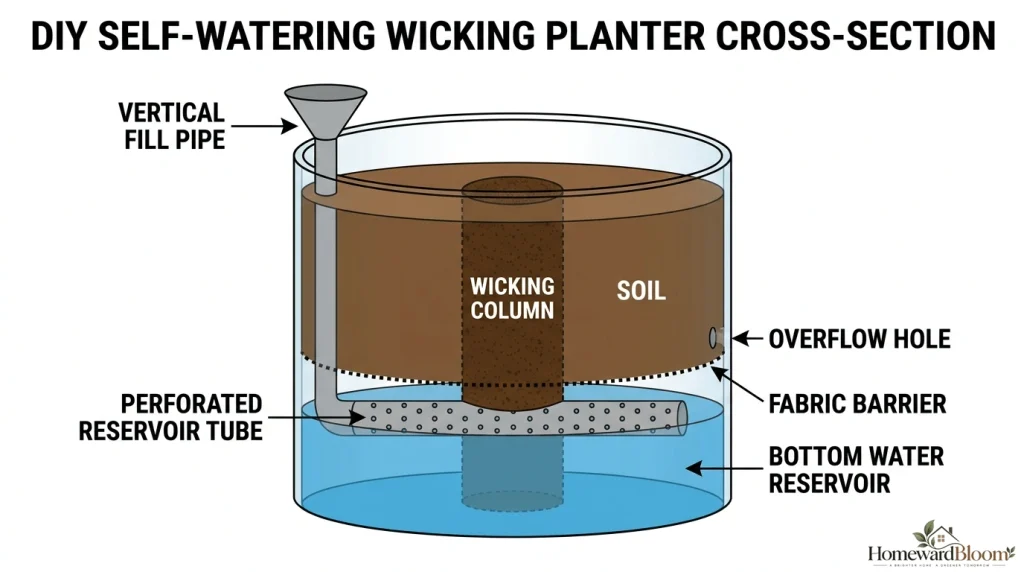
Wicking pots use a reservoir to provide consistent moisture, which is vital on windy balconies.
- Construct the Reservoir: Fill the bottom 25%–30% of a sturdy outer container with perforated drainage pipe or small, sturdy perforated pots.
- Drill the Overflow: Drill a hole in the side of the container exactly at the top level of the reservoir. This prevents the “drowning” of roots during heavy rain.
- The Wicking Chamber: Place one small, highly perforated pot in the center, reaching to the bottom. Pack this tightly with potting mix; it acts as the “wick” to draw water up.
- Fill Tube: Install a plastic tube vertically from the reservoir to above the soil line for refilling.
- Separator Layer: Cover the reservoir pipes with geotextile fabric (cut holes for the wick and tube) to keep soil from clogging the water area.
- Soil and Water: Fill with soilless mix. Safety Warning: Never put liquid fertilizer in the reservoir; it will become murky and “mankey.” Water fertilizer in from the top only.
6. Choosing Your Crops: Dwarf Varieties and Tomato Types
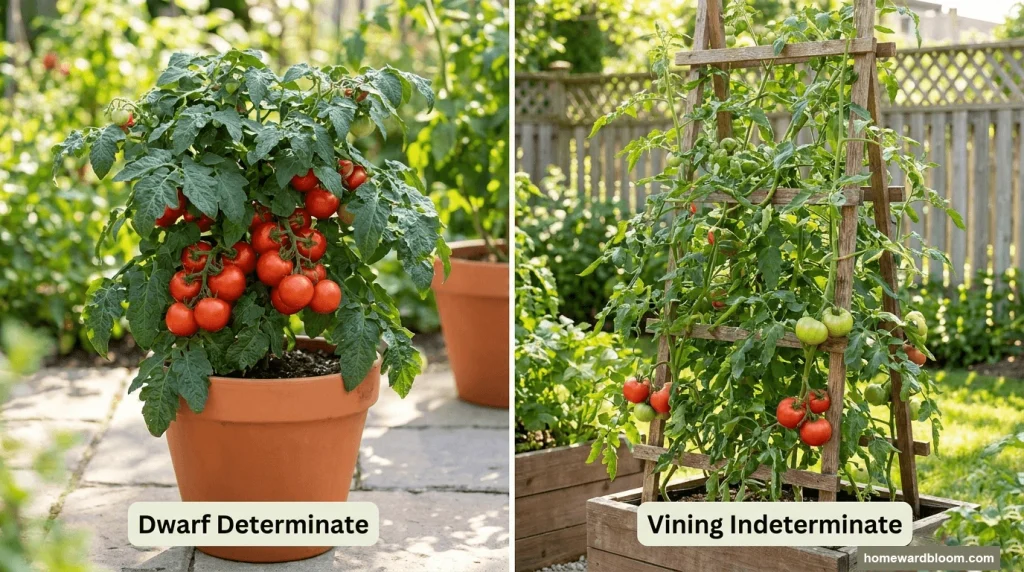
Determinate vs. Indeterminate
- Determinate (Bush): These grow to a fixed height and fruit all at once over a month. They are vastly superior for containers as they require minimal support.
- Indeterminate (Vining): These vines grow until frost and require massive trellises. Avoid these unless you have significant vertical room.
Recommended Dwarf Varieties
- Tomatoes: ‘Tiny Tim’, ‘Patio’, ‘Tumbling Tom’.
- Cucumbers: ‘Patio Pickle’, ‘Spacemaster’.
- Carrots: ‘Little Finger’, ‘Thumbelina’.
- Melons: ‘Sugar Bush’ watermelon, ‘Minnesota Midget’ muskmelon.
7. Pest Prevention and Climate Management
The Top 5 Pests & Organic Solutions
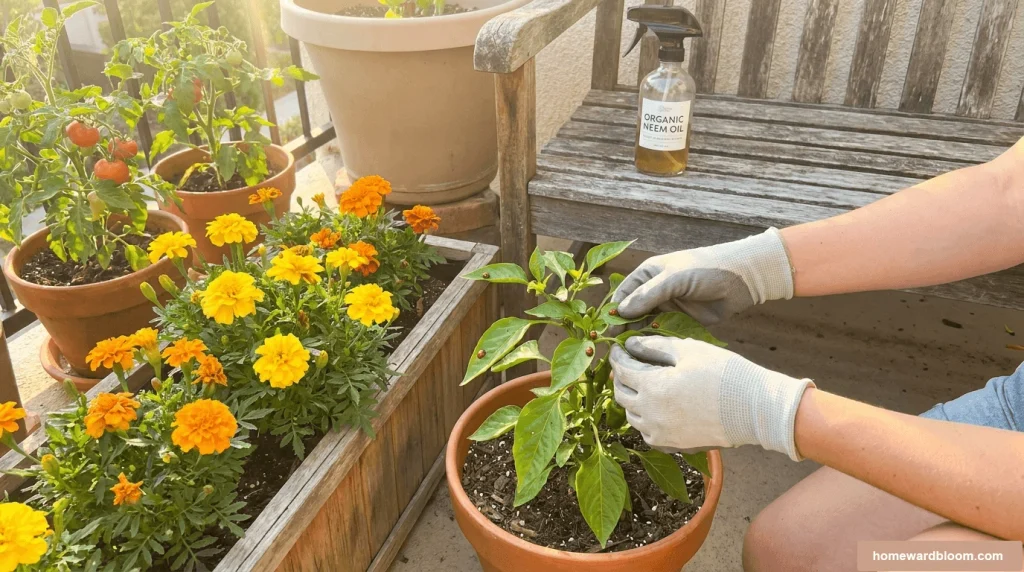
- Aphids: Use insecticidal soap or a high-pressure water stream.
- Whiteflies: Apply organic soap sprays or an apple cider vinegar/dish soap/peroxide mix.
- Fungus Gnats: Allow the top 2 inches of soil to dry. Use yellow sticky traps or ACV/soap traps.
- Spider Mites: Increase humidity and use diluted insecticidal soap.
- Slugs: Move plants to hanging baskets or use elevated stands to create a barrier.
Wind-Resistant Strategies
- Cluster Pots: Grouping creates a high-humidity microclimate and allows plants to shield one another.
- Weighted Bases: Place heavy stones or cinderblocks inside or under lightweight pots.
- Windbreaks: Install a mesh railing cover to buffer the strongest gusts.
8. Container Size Quick-Reference Guide
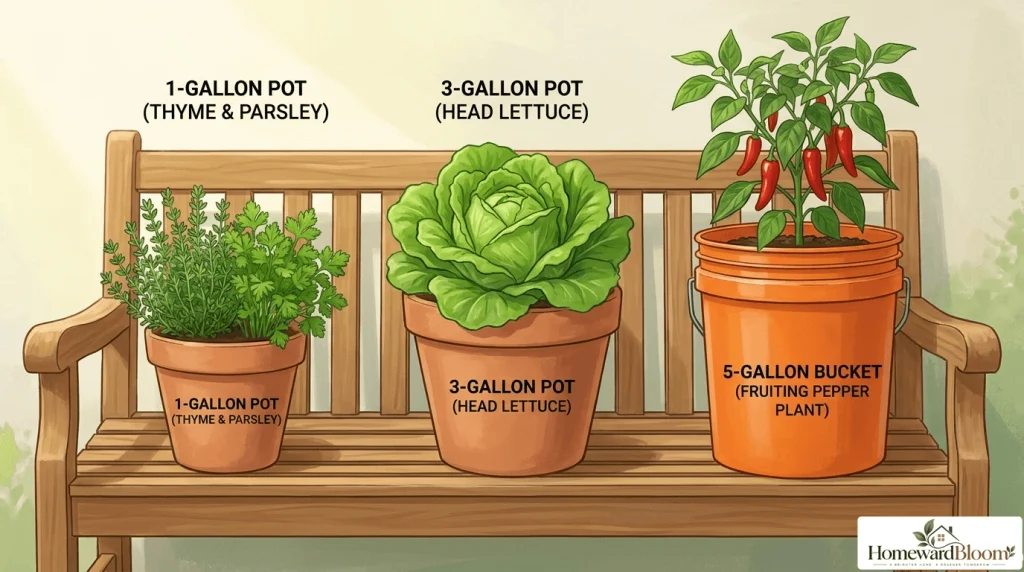
| Vegetable | Min. Pot Size | Min. Soil Depth | Plants per Pot |
|---|---|---|---|
| Tomato (Bush) | 5 Gallon | 18-24″ | 1 |
| Broccoli | 5 Gallon | 12-18″ | 1 |
| Cucumber | 5 Gallon | 12-18″ | 2 |
| Peppers | 3 Gallon | 12-18″ | 1 |
| Beans (Bush) | 2 Gallon | 8-10″ | 3 |
| Lettuce | 1 Gallon | 6-8″ | 3-4 |
| Carrots | 1 Gallon | 12-18″ | 3-4 |
9. FAQ: Common Small-Space Gardening Questions
Focus on leafy greens (spinach, arugula), mint, parsley, and ferns. Fruiting plants like tomatoes will fail here due to low light.
Check daily. Stick a finger 1 inch into the soil; if dry, water until it runs out the bottom. High-wind balconies may require twice-daily watering.
Avoid planting the same vegetable family in the same soil (crop rotation) to prevent disease buildup. If you must reuse, refresh with compost and new slow-release fertilizer.
Drape netting over a frame made of upside-down furniture. For a less visible solution, wrap fishing line around furniture or stakes at close intervals; birds dislike the invisible barrier.
10. Conclusion: Your Living Extension
Your balcony or patio is not a storage area; it is a sun-drenched, naturally ventilated extension of your home. By choosing dwarf varieties, monitoring your sun patterns, and utilizing vertical techniques, you can transform a concrete rectangle into a thriving retreat.
Start with one pot. Then another. Go from there.
11. External References and Links