
1. Introduction: The Power of the Indoor Oasis
For many, the dream of a lush garden is often thwarted by the realities of urban living and limited square footage. However, as a horticulturalist, I view indoor gardening as a “superpower”—a unique ability to dissolve the boundaries between our living rooms and the natural world. By introducing living texture, vibrant color, and a sense of “magical” beauty, we transform static spaces into breathing sanctuaries.
The secret to a thriving indoor oasis isn’t found in a bottle of fertilizer, but in the art of matching a plant’s biology to your personal lifestyle. Whether you are a frequent jetsetter or a homebody with a dedicated routine, success begins with understanding your home’s light levels and moisture patterns. When we choose correctly, our homes become more than just aesthetically beautiful; they become fundamental pillars of our health and well-being.
2. The Science of Fresh Air: NASA’s Air Purification Insights
The beauty of indoor plants is far from skin-deep. Research conducted by NASA has demonstrated that houseplants are our primary defense against Volatile Organic Compounds (VOCs)—pollutants that “off-gas” from furniture, carpets, and cleaning products. The EPA identifies indoor air pollution as one of the top threats to public health, but the solution is literally growing in our pots.
Dr. Bill Wolverton, the lead NASA scientist on these studies, emphasizes a visual heuristic for air quality: “The longer and leafier the plant, the better.” To effectively purify your space, he recommends a density of 2 to 3 plants (in 8–10 inch containers) for every 100 square feet.
Common Household Toxins and Their Botanical Filters
| Toxin | Common Sources | Effective Plant Filters |
|---|---|---|
| Formaldehyde | Fabricated wood, carpets, upholstery | Areca Palm, English Ivy, Rubber Plant, Spider Plant |
| Benzene | Glues, paints, detergents | Snake Plant, Peace Lily, Pothos, Chinese Evergreen |
| Xylene | Printed materials, leather, rubber | English Ivy, Areca Palm, Anthurium, Spider Plant |
| Trichloroethylene | Varnishes, adhesives | Bamboo Palm, Peace Lily, Snake Plant, English Ivy |
| Toluene | Stains, finishes, cleaners | Philodendron, Spider Plant, Chinese Evergreen |
3. The “Unfussy Beauties”: Low-Maintenance Champions
For those who travel or simply prefer a “set it and forget it” approach, these architectural survivors offer maximum beauty with minimum effort.
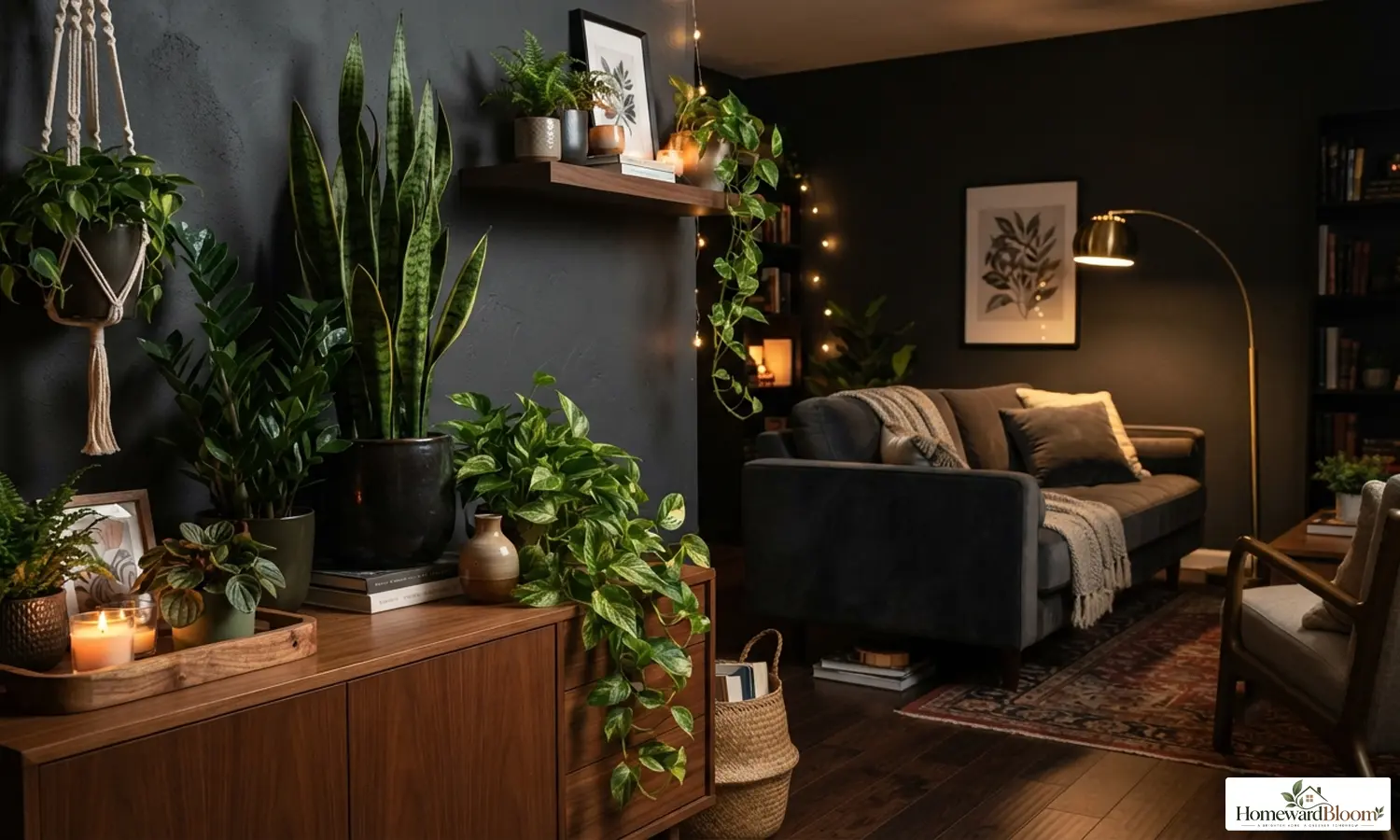
- Snake Plant (Sansevieria): Recently reclassified as Dracaena trifasciata, this is the quintessential pick for travelers. It features sword-like leaves that are an “architectural dream” for modern decor.
- Care: Drought-tolerant; water once a month. Handles low to bright light.
- Pothos (Epipremnum aureum): Known for its “jungle vibes,” specifically cultivars like Beautifall® Summer Nights™ with its marbled green and gold foliage.
- Pro Tip: This plant “talks” to you; wait for the leaves to droop before watering. To propagate, simply place a cutting with root nodes in water.
- ZZ Plant (Zamioculcas zamiifolia): Its polished, symmetrical, glossy leaves reflect light in the dimmest rooms. It is the gold standard for windowless offices.
- Cast Iron Plant (Aspidistra elatior): Truly nearly indestructible, this plant thrives in the dim corners where others fail.
- Jade Plant (Crassula ovata): A succulent that mimics a miniature tree with woody branches. It stores water in its fleshy leaves, making it highly forgiving of missed waterings.
4. Bold and Dramatic: Tropical Statement Pieces
When your home requires a focal point, these tropical varieties provide dramatic scale and lush foliage.
- Monstera Deliciosa: Iconic for its “fenestrations” (natural holes), this plant is a staple of boho-chic decor. It is a fast grower that can reach 8 feet tall and is remarkably resilient to care lapses.
- Xanadu Philodendron: A lush, fast-growing piece that spreads wide rather than tall.
- Watering Note: Unlike the 2-inch rule for many plants, the Xanadu requires watering once the top one inch of soil is dry.
- Swiss Cheese Vine (Monstera adansonii): A vining cousin of the Deliciosa. For cultivars like Mysteria® Adansonii™, add orchid bark to your soil mix to ensure the high drainage these climbers crave.
- Areca & Bamboo Palms: These palms are “dual-threat” specimens—they are top-tier air purifiers and natural humidifiers, adding essential moisture to dry, heated winter air.
- Weeping Blue Ginger: A “jack-of-all-trades” that moves seamlessly from the indoor living room to the patio. It is exceptionally tolerant of dry air and drought.
5. Dim Space Specialists: Thriving in Low Light
Evolution in the rainforest understory has prepared these plants to flourish in the darker corners of your home.
- Chinese Evergreen (Aglaonema): A master of artificial light. Look for the Igneous™ Ruby Crab™ variety, which features irregular splashes of ruby pink and cream.
- Peace Lily (Spathiphyllum): A rare gem that flowers in low light. It acts as a powerful “living filter” for benzene and trichloroethylene.
- English Ivy (Hedera helix): This classic climber is exceptionally effective at removing airborne xylene and formaldehyde.
- Prayer Plant (Calathea louisae): Known for the Color Full® Freddie cultivar, its leaves fold upward at night like “praying hands.” Note: coloring may fade if light is too low.
- Velvet Calathea (Calathea rufibarba): The Color Full® Lancelot™ variety offers tactile beauty with furry stems and wavy, dark-green leaves with velvety reddish undersides.
- Stromanthe (Socialite® Triostar): An Amazonian native with lance-shaped leaves featuring splotches of pink, red, and creamy white against reddish-purple undersides.
6. Texture and Pattern: Ferns, Begonias, and Specialty Foliage
These varieties are selected for their intricate veining and distinctive growth habits.
Comparing the Lace: A Fern Breakdown
| Feature | Mother Fern (Living Lace® Parvati) | Bird’s Nest Fern (Living Lace® Hurricane) |
|---|---|---|
| Texture | Dark-green, thick, and waxy sheen | Shiny, thick, and wavy-edged |
| Growth Habit | Sturdy, delicate “lace” appearance | Swirling “eye of a hurricane” center |
| Need | High humidity; North-facing light | High humidity; indirect window light |
- Iron Cross Begonia (Criss Cross™): Features a striking burgundy cross pattern on bright-green, hairy leaves.
- Expert Advice: If the plant becomes “leggy” or colors fade, it is likely stretching for more light.
- Rock Begonia (Crystalline Sparkle™): Offers heart-shaped olive leaves with a velvety texture and deep maroon fuzzy undertones.
- Drop Tongue Plant (Art Deco™ Rivera): A conversational focal point with ice-green markings and a rippled texture on leaves that drape downward elegantly.
- Arrowhead Vine (Falling Arrows® Ruby Reign™): Starts with heart-shaped leaves that transform into a trailing habit as it matures.
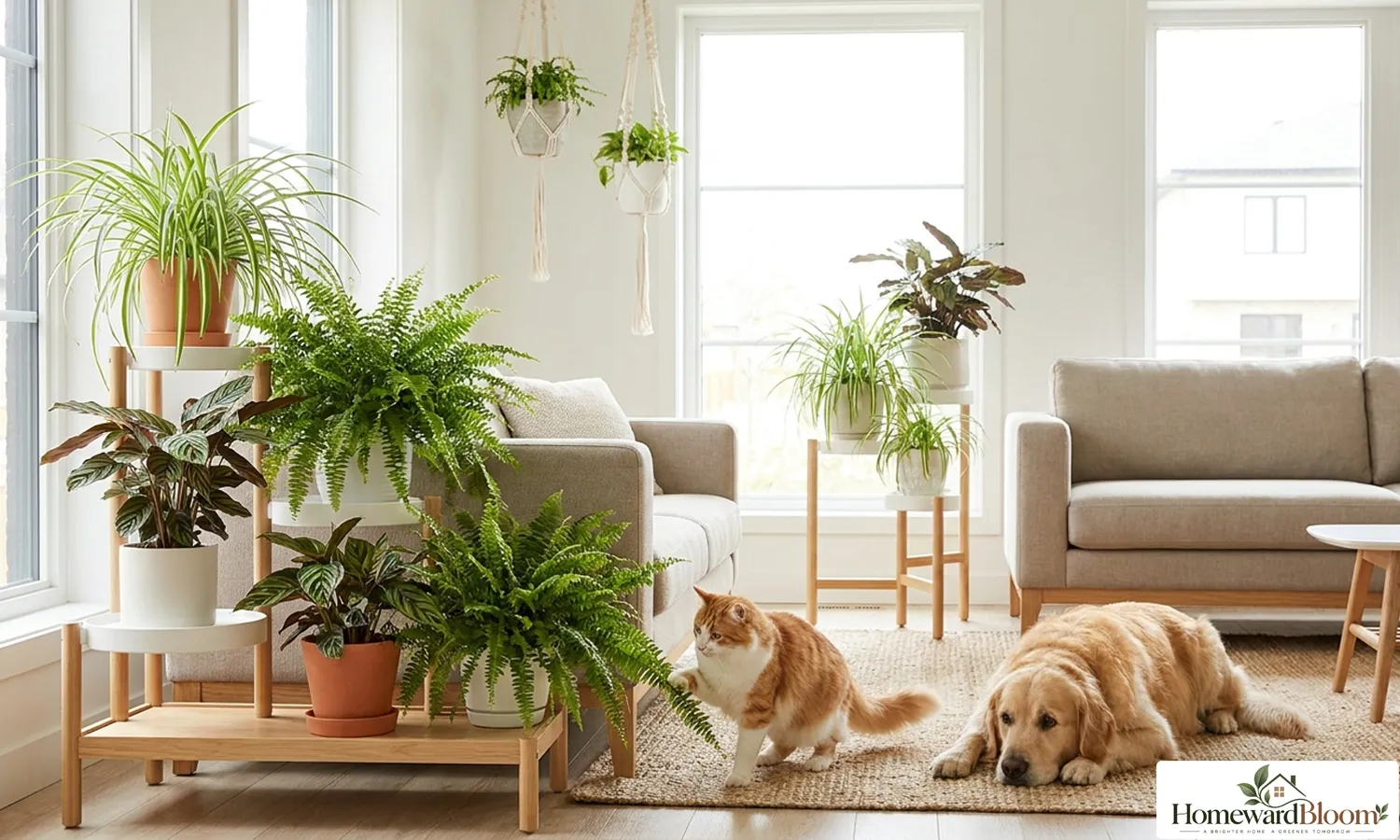
- Spider Plant: Famous for its “spiderettes,” it is one of the few flowering indoor plants that is entirely pet-safe.
- Nerve Plant (Network News™): A low-creeping variety with intricate white or red veining, perfect for tabletops or terrariums.
- Aloe Vera: A rosette-shaped beauty that serves two purposes: modern aesthetic appeal and a medicinal gel for soothing skin.
7. Mastering the Essentials: Water, Light, and Nutrition
To graduate from a plant owner to a horticulturalist, you must master the fundamental signals of life.
The “Two-Inch” Rule vs. Specific Triggers While the general rule is to water when the top two inches of soil are dry, remember the exceptions: The Xanadu Philodendron needs water at one inch of dryness, while the Pothos will signal you with a visible droop.
The Overwatering Warning Overwatering is the #1 killer of houseplants. Look for yellowing leaves and a failure to thrive. Ensure your pots have drainage holes, and never let a plant sit in a tray of standing water.
Organic vs. Synthetic Fertilizer: Pros and Cons
| Feature | Organic (Compost/Manure) | Synthetic (Chemical) |
|---|---|---|
| Nutrient Release | Slow-release; improves soil health | Immediate; readily available |
| Soil Impact | Builds structure and microbial life | Can harm beneficial soil organisms |
| Yield | Long-term soil fertility | Faster growth and higher yields |
Sustainable Practices
- Vermicompost: Use worm castings to create a nutrient-dense, microbe-rich soil amendment.
- Homemade Nutrients: Repurpose household waste like eggshells and coffee grounds.
- Self-Watering Planters: Minimize water waste and ensure consistent moisture levels.
- Eco-Friendly Pots: Choose breathable terracotta or ceramic over plastic to reduce environmental impact.
8. Safety First: The Pet-Friendly Guide
Not all beauty is safe for our furry friends. As a sustainable educator, I recommend keeping these specific non-toxic plants if you have pets:
- Spider Plant
- Bird’s Nest Fern
- Mother Fern
- Nerve Plant
- Calathea (Prayer Plant/Velvet Calathea)
Warning: The Rubber Plant (Ficus elastica) is a powerhouse at removing formaldehyde, but it contains a milky sap/latex that is toxic if swallowed. Keep it on high shelving away from pets.
9. Frequently Asked Questions (FAQs)
“Legginess” is a cry for more sunlight. Move your plant to a brighter location and prune back the weak, elongated stems to encourage a bushier, healthier habit.
Indoor heating is notoriously drying. Use a room humidifier, mist your foliage regularly, or place pots on a tray filled with pebbles and water (ensuring the pot sits above the waterline).
While some like the ZZ plant are tolerant, no plant thrives in total darkness. Use artificial LED grow lights to provide the necessary spectrum for long-term health.
Only fertilize during the active growing season (spring and summer). Cease fertilizing entirely during the winter when the plant’s metabolism naturally slows down.
10. Conclusion
The journey toward a “green thumb” is simply the journey of observation. By selecting the right 25 plants that align with your lifestyle—from the “neglect-loving” Snake Plant to the dramatic Monstera—you are doing more than just decorating. You are creating a healthier, stress-reducing environment that purifies the air and grounds your spirit. A beautiful home is a healthy home; start your indoor oasis today and watch your quality of life grow alongside your plants.