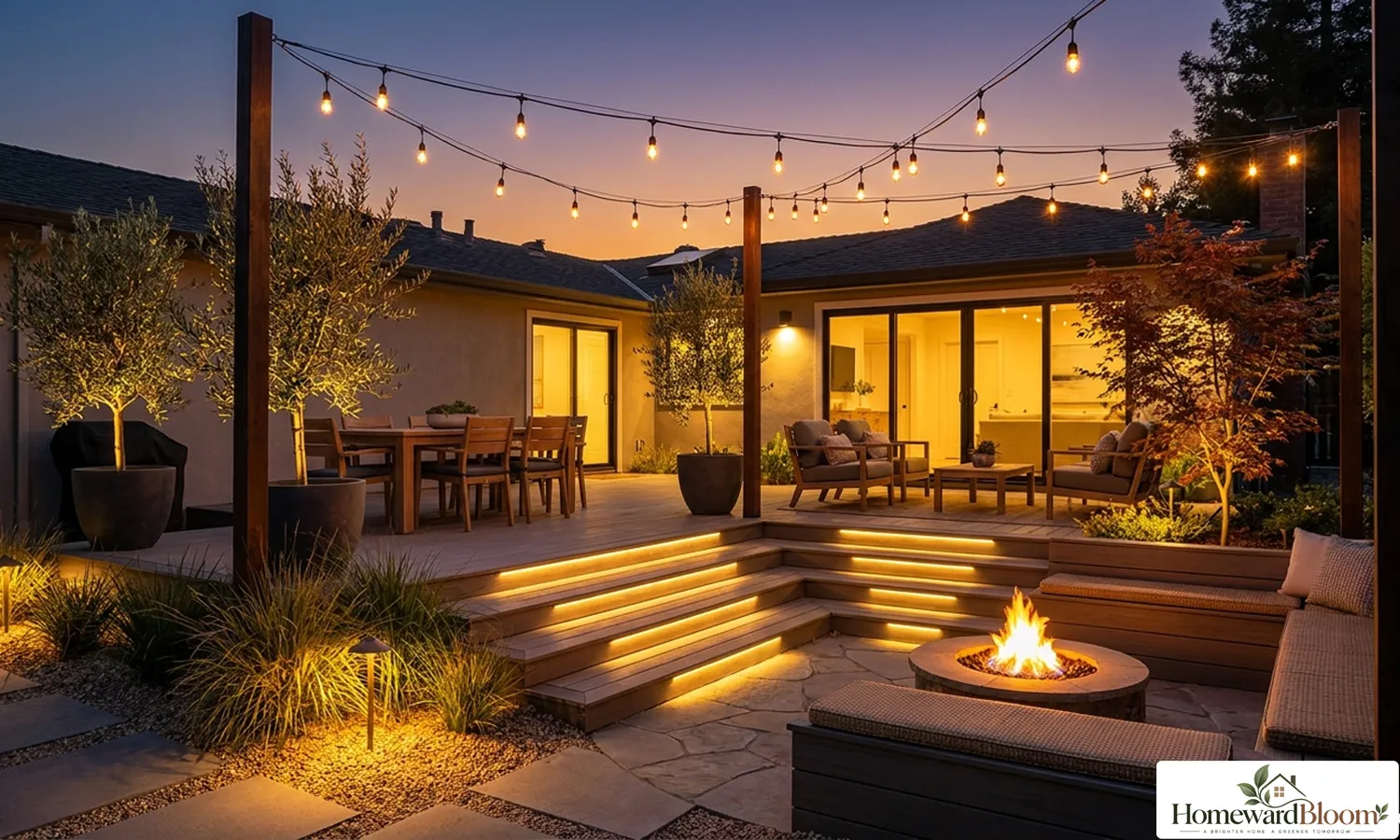
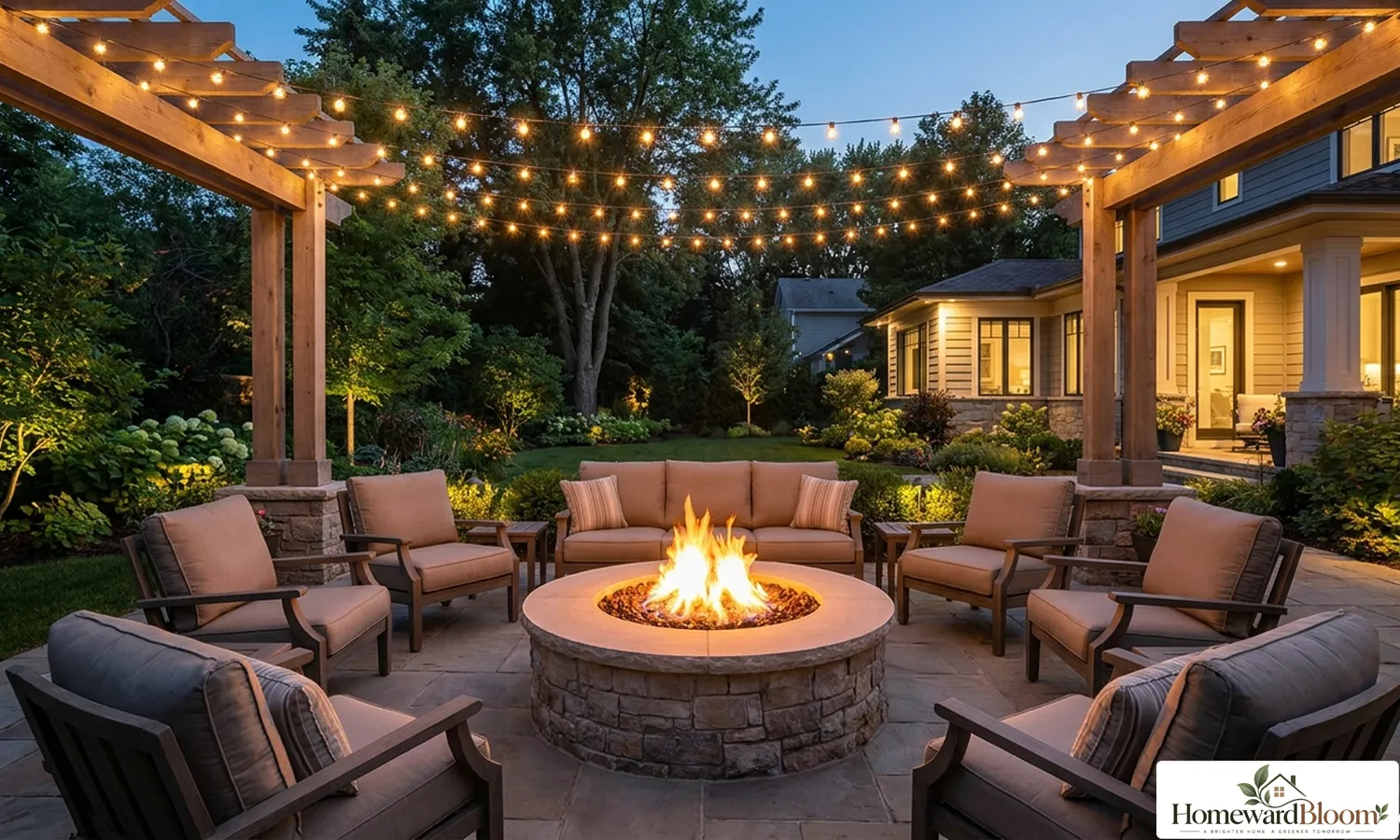
Adding an outdoor fire feature transforms a plain yard into a year-round gathering space for family and friends. Market research indicates that 38% of homeowners plan to add outdoor heaters or a backyard fire pit to extend their outdoor living season. Choosing the right feature requires balancing fuel choices, surface safety, local fire codes, and seating layouts.
This comprehensive guide covers hands-on testing data, safety codes, and design strategies to help you choose, install, and enjoy the ideal fire feature for your home.
Key Takeaways
• Smokeless double-walled pits use secondary combustion to reburn smoke particles, reducing emissions by up to 80%.
• Propane fire pits offer instant flame control with zero flying embers, making them the safest option for combustible wood decks.
• Firewood moisture content impacts smoke production more than wood species; properly seasoned wood must stay below 20% moisture.
• Safety clearance codes mandate keeping outdoor fire features 10 to 25 feet away from structures depending on municipality regulations.
What Is the Best Fire Pit for Your Backyard?
The best fire pit for your yard depends on your budget, desire for cooking accessories, portability needs, and preferred fuel type. Hands-on testing evaluates models across heat output, smoke control, material durability, and ease of cleanup.
| Model Name | Primary Fuel | Key Material | Weight | Best Feature |
| Breeo Y Series | Tri-Fuel (Wood/Pellet) | 304 Stainless | 31 lbs | Best Overall |
| Solo Stove Bonfire 2.0 | Wood | 304 Stainless | 23.3 lbs | Best Smokeless |
| Breeo X Series | Wood | Corten/Stainless | 47 lbs | Best for Cooking |
| Yaheetech 32″ Outdoor | Wood | Painted Steel | 22.8 lbs | Best Budget |
| Cuisinart Chiminea | Propane | Powder-Coat Steel | 45.5 lbs | Best Propane |
1. Breeo Y Series (Best Overall)
The Breeo Y Series delivers near-smokeless performance in a portable design featuring folding legs and adjustable burn heights. Weighing 31 pounds, it features 304 stainless steel and Corten steel construction that resists rust in harsh winter climates. It burns firewood, lump charcoal, or wood pellets, making it equally suited for backyard patios or camping trips.
2. Solo Stove Bonfire 2.0 (Best Smokeless)
The Solo Stove Bonfire 2.0 utilizes a patented double-wall construction that preheats air to burn off smoke before it exits the firebox. Weighing 23.3 pounds with a 19.5-inch diameter, this 304 stainless steel pit includes a removable ash pan for effortless cleanup. It offers a lifetime warranty against manufacturing defects.
3. Breeo X Series Grilling Bundle (Best for Cooking)
Designed for outdoor cooks, the Breeo X Series features a dual-wall smokeless firebox paired with an adjustable height post and diamond-pattern grill grate. The heavy-duty SearPlate rim swivels over flames to sear meats in under 10 minutes. At 47 pounds, it serves as a permanent, heavy-duty backyard cooking hearth.
4. Yaheetech 32″ Outdoor Fire Pit (Best Budget)
For budget-conscious buyers, the Yaheetech 32-inch traditional square bowl pit provides reliable warmth for under $80. Constructed from heat-resistant painted carbon steel, it comes equipped with a spark screen, fire poker, removable ash tray, and waterproof cover. Because it is a traditional open bowl, using dry, seasoned wood is necessary to keep smoke manageable.
5. Cuisinart Chiminea Propane Fire Pit (Best Propane)
The Cuisinart Chiminea offers push-button ignition and directional warmth without ash or smoke cleanup. Operating on a standard 20-pound propane cylinder, its 40,000 BTU burner delivers 9 to 15 hours of continuous burn time. It includes 8 pounds of lava rocks and a weather cover.
Propane vs. Wood-Burning Fire Pits: Which Is Right for You?
Propane fire pits provide instant lighting, adjustable flame controls, and zero flying sparks, while wood-burning pits offer classic campfire ambiance, crackling sounds, and intense radiant heat.
| Feature Factor | Propane Gas Models | Wood-Burning Models |
| Ignition & Shutdown | Instant push-button controls | Manual lighting; slow burn down |
| Smoke & Ash Production | Zero smoke or ash residue | Variable smoke; ash cleanup |
| Deck Surface Safety | High safety; no flying embers | Requires spark screen & barriers |
| Ongoing Fuel Needs | Tank refills ($15–$25 per tank) | Firewood stockpiling & seasoning |
Propane models require continuous access to fuel tanks or direct gas line connections. However, their lack of airborne embers makes them easier to supervise on wooden decks and near outdoor furniture. Wood-burning pits cost less upfront but require dedicated dry storage space for split logs.
How Do You Safely Install a Fire Pit on a Wood Deck?
Installing a fire pit on a wood deck is safe when you choose a deck-approved model, place a heat-resistant barrier beneath the unit, and follow local clearance requirements.
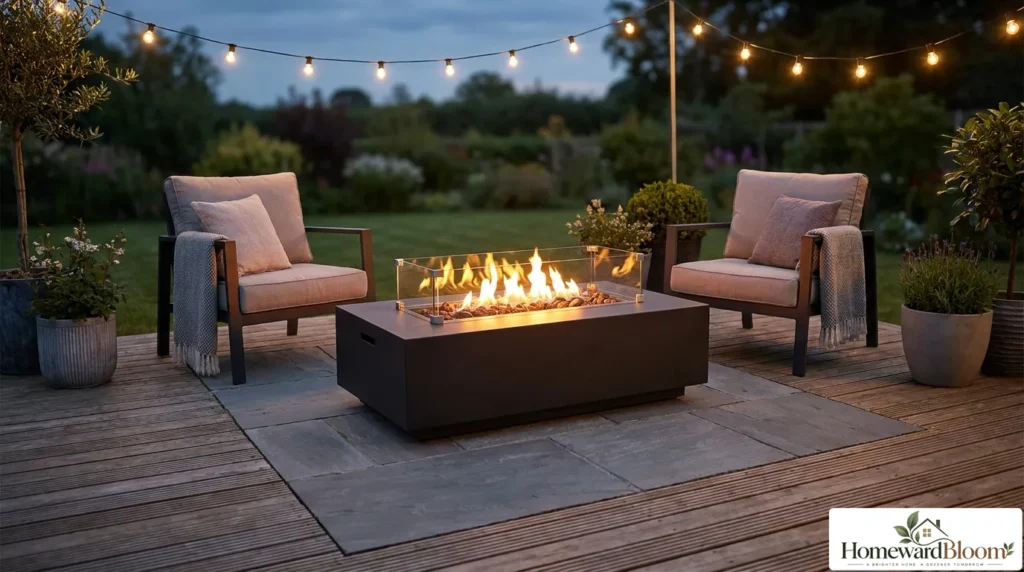
Essential Deck Safety Guidelines:
• Use Heat-Resistant Barriers: Never position a fire feature directly on combustible deck boards. Install a certified heat shield, fire-rated mat, or non-combustible stone paver pad to block heat transfer.
• Select the Right Fuel Type: Propane fire pits are preferred for wooden decks because they offer instant shutdown and eliminate flying embers. Wood-burning pits on decks require fitted spark screens and constant monitoring.
• Maintain Structural Clearances: Keep the burner at least 10 to 15 feet away from exterior walls, railings, trees, and patio curtains. Verify that you have at least 6 feet of open vertical space overhead.
• Follow Building & Fire Codes: Municipal codes set strict regulations for outdoor flames. For instance, regulations from the Loveland Fire Rescue Authority specify that open-flame cooking devices on combustible balconies must be kept 10 feet away from structures unless restricted to small 2.5-pound propane canisters. Local clearance ordinances range from 15 feet in Milwaukee to 25 feet in Wauwatosa.
Backyard Fire Pit Patio Layouts for Any Outdoor Space
Designing a functional fire pit layout requires measuring your walkable space, establishing smooth traffic paths, and picking a fire feature shape that matches your seating furniture.
| Patio Size Category | Square Footage | Seating Arrangement | Ideal Fire Pit Shape |
| Small Compact Layout | 80–150 sq ft | 2–4 Chairs or Loveseat | Round or Small Square |
| Medium Everyday Room | 150–300 sq ft | 3-Seat Sofa + 2 Armchairs | Rectangular Table |
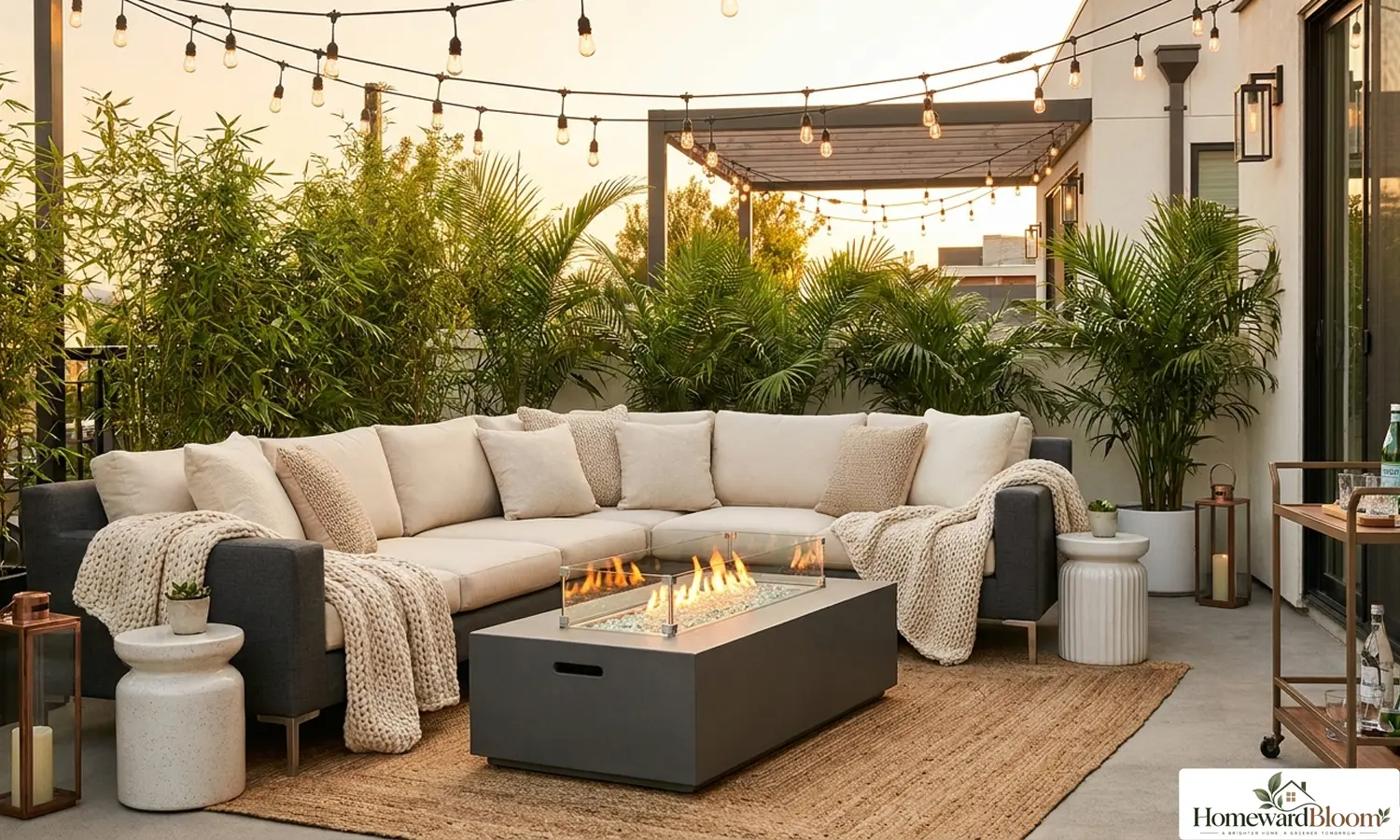
| Large Sectional Zone | 300+ sq ft | L/U Sectional + Chairs | Rectangular or Linear |
1. Small Patio Layouts (80–150 sq ft)
For tight yards or small courtyards, set up two to four lightweight, movable chairs around a compact round or square fire feature. Maintain at least 2 feet of space between seating and the edge of the pit to ensure comfortable legroom. Keep ground cover fire-safe by using pea gravel or crushed stone boundaries.
2. Medium Patio Layouts (150–300 sq ft)
A 3-seat outdoor sofa flanked by two lounge chairs creates a balanced conversation layout around a 52-inch rectangular fire pit table. Aligning the long edge of a rectangular table with the main sofa provides plenty of surface space for drinks while keeping entryways open.
3. Large Patio Layouts (300+ sq ft)
Anchor expansive backyards by positioning an L-shaped or U-shaped modular sectional around a large stone fire table. Leave the side facing the main home entrance completely open so guests can move into the seating zone without crossing close to open flames.
Which Firewood Species Burn Best with the Least Smoke?
Dense hardwoods like White Oak, Sugar Maple, and Hickory deliver maximum BTU heat output and minimal smoke when air-dried to a moisture level below 20 percent.
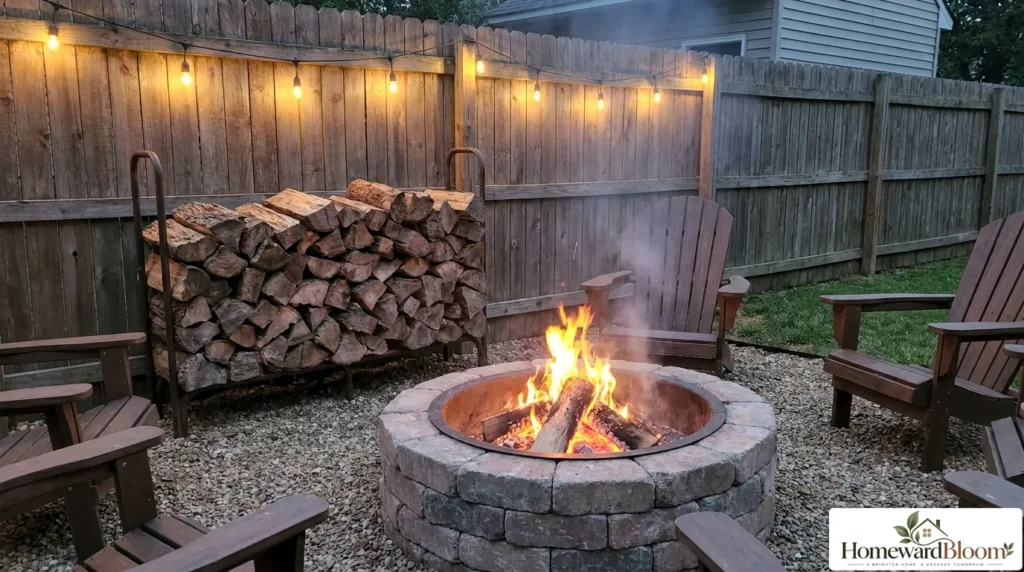
| Wood Species | BTU per Cord | Smoke Output | Seasoning Period |
| Osage Orange | 32.9 Million | Low | 12–18 Months |
| Sugar Maple | 29.7 Million | Low | 9–12 Months |
| White Oak | 29.1 Million | Low | 12–24 Months |
| Hickory | 28.5 Million | Low (Aromatic) | 12–18 Months |
| Ash | 24.2 Million | Low | 6–8 Months |
| Eastern White Pine | 17.1 Million | High (Kindling) | 3–6 Months |
Top Firewood Hardwoods:
• White Oak: The top-rated hardwood for outdoor fire pits, delivering 29.1 million BTUs per cord and long, clean burns. Oak requires 12 to 24 months of air-drying to season properly.
• Sugar Maple: Generating 29.7 million BTUs per cord, Sugar Maple burns with a steady, predictable flame and minimal sparking.
• Hickory: Producing 28.5 million BTUs per cord, Hickory provides intense heat accompanied by a rich, aromatic smoke ideal for evening gatherings.
• Ash: Burning at 24.2 million BTUs per cord, Ash ignites quickly and reaches full combustion rapidly, making it the best choice for brief fires under 90 minutes. It seasons in just 6 to 8 months.
• Apple: Generating 26.5 million BTUs per cord, Apple wood yields a sweet, mild aroma with exceptionally low smoke levels.
Moisture Content & Smokeless Pit Preparation: Freshly cut green wood contains 50% to 60% moisture. When burned, energy is wasted boiling off internal water, dropping combustion temperatures below the 1,100°F threshold required for secondary air jets to burn off smoke particles. Double-walled secondary combustion systems cut smoke emissions by up to 80% when burning fuel under 20% moisture. Perform the ‘knock test’ to verify wood dryness: strike two logs together; a sharp ringing crack indicates dry wood, while a dull thud signals trapped water.
Woods to Never Burn: Never burn pressure-treated lumber, as it releases toxic chemical fumes containing copper arsenate. Avoid painted or stained wood, sea-driftwood, household rubbish, and logs covered in poison ivy vines. Do not rely on softwoods like pine or cedar for primary fuel, as their high resin content causes heavy smoke, popping sparks, and creosote buildup.
How to Build a DIY Cinder Block Backyard Fire Pit on a Budget
Building a cinder block fire pit is an easy, beginner-friendly weekend project that costs around $100 in materials and takes 3 to 4 hours to complete.
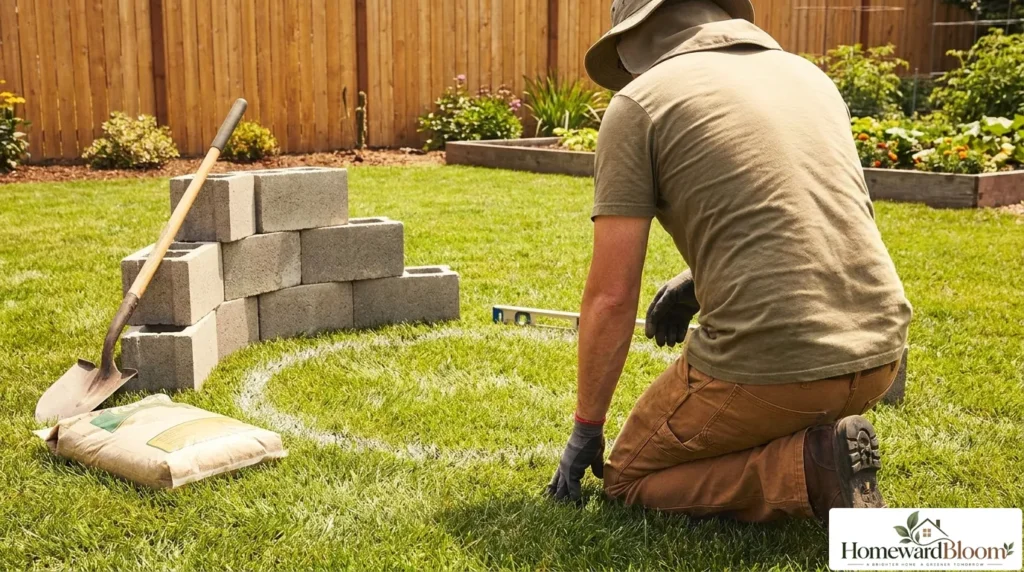
Step 1: Mark the Layout — Select a level site away from overhanging trees, fences, and structures. Use landscape spray paint to trace a 4-foot diameter circle.
Step 2: Excavate the Base — Use a spade shovel to dig out grass and topsoil within the 4-foot circle to a depth of 1 foot.
Step 3: Set the First Ring — Lay concrete cinder blocks end-to-end with corners touching and open holes facing upward along the perimeter of the excavated ring.
Step 4: Stack Second & Third Tiers — Place a second tier of cinder blocks on top of the first ring, centering each block over the joint seams of the layer below to stagger the vertical joints. Repeat this process for a third tier.
Step 5: Fill Internal Base — Pour pea gravel across the bare dirt floor to create a drainage layer, then fill the interior three-quarters full with lava rock.
Step 6: Install Heavy Grate — Set a heavy-duty steel fire grate or steel wire mesh over the top ring of cinder blocks to hold firewood logs.
How to Winterize Your Outdoor Fire Pit for Off-Season Protection
Winterizing your fire pit prevents moisture penetration, rust, and freeze-thaw damage, ensuring a smooth startup when spring arrives.
| Maintenance Component | Off-Season Action Required |
| Burner & Pan | Clear ash/leaves; cover burner with protective metal lid |
| Propane Cylinder | Disconnect cylinder; store outdoors in dry, level area |
| Enclosure & Vents | Clean drain holes; keep free of standing water |
| Protective Cover | Secure a heavy-duty fitted vinyl cover over the entire pit |
• Clear Organic Debris: Remove ash, twigs, and leaves from the burner pan, fire bowl, and interior air vents to prevent pest nesting and moisture traps.
• Disconnect Gas Lines: For natural gas units, shut off the primary supply valve according to owner manual instructions. For propane models, turn off the tank valve, disconnect the cylinder, and store the tank outdoors on a flat surface away from direct heat sources. Never store propane tanks in a basement, home interior, or attached garage.
• Protect Electronic Components: Inspect wiring leads, clear drainage openings, and make sure ignition control modules do not sit in standing water.
• Apply Weather Covers: Place a fitted metal burner cap directly over the fire media, then secure a heavy-duty weatherproof cover over the entire unit.
Frequently Asked Questions
A propane fire pit with a certified heat-resistant barrier pad placed beneath it is the safest option for a wood deck. Propane features generate clean flames without producing the flying sparks or hot falling embers typical of wood fires.
Smokeless fire pits reduce smoke emissions by up to 80% through secondary combustion channels. However, they still produce brief smoke during initial startup until the internal firebox temperature reaches approximately 1,100°F.
Residential fire codes generally require placing outdoor fire features 10 to 25 feet away from combustible walls, fences, and structures. Always consult your local municipality or fire department guidelines before choosing an installation location.
White Oak is the best overall wood for outdoor fire pits because it burns at 29.1 million BTUs per cord, produces minimal smoke, and yields long-lasting coals. Ash is an excellent choice for short fires under 90 minutes because it ignites quickly.
No, never store propane tanks indoors, in a basement, or inside an attached garage. Disconnect the tank and store it outside on a flat, stable surface in an open, well-ventilated area away from direct heat sources.
Standard manufactured portable fire pits, fire tables, and chimineas under 3 feet in diameter do not require burn permits for recreational use at one- and two-family homes. However, larger open burning piles and bonfires require municipal permits.
Conclusion
Choosing the right backyard fire pit comes down to matching your fuel preference, surface safety needs, and patio layout to a model that fits your outdoor lifestyle.
Read More:
25 Patio Ideas That Will Turn Your Backyard Into an Outdoor Living Room
Backyard Ideas: 30 Beautiful Ways to Transform Your Outdoor Space