Bathrooms often feel cold, sterile, and overly functional due to hard ceramic tile, polished glass, stone countertops, and metallic fixtures. Incorporating thoughtful bathroom plant decor ideas breathes organic life into these hard spaces, softening sharp architectural angles, introducing vibrant color, and creating a tranquil, spa-like sanctuary. However, decorating a bathroom with live foliage presents environmental challenges unlike any other living area in your home.
Bathrooms experience rapid moisture spikes, fluctuating temperatures, limited counter space, and frequently lack strong natural sunlight. Choosing species that naturally adapt to high relative humidity and shade ensures your indoor greenery remains healthy rather than struggling. By matching specific plants to your room’s actual light and spatial layout, you can style counters, floating shelves, mirrors, windowsills, and empty corners effortlessly.
Key Takeaways
- Assess Room Conditions First: Measure your bathroom’s light in footcandles and evaluate humidity before buying foliage.
- Select Shade and Humidity Champions: Top-performing bathroom species include snake plants, ZZ plants, pothos, Boston ferns, and peace lilies.
- Utilize Vertical Space: Small bathrooms benefit immensely from trailing shelf plants, wall-mounted pots, and ceiling hanging baskets.
- Manage Soil Moisture Carefully: Always allow the top 1–2 inches of potting soil to dry out between waterings to prevent root rot and soil mold.
What Are the Best Environmental Conditions for Bathroom Plants?
The ideal environment for indoor bathroom foliage combines bright indirect light, relative humidity levels above 50%, and steady ambient temperatures between 60°F and 85°F. Assessing these environmental factors beforehand prevents plant stress and ensures long-term survival.
Before selecting plants, evaluate three fundamental environmental factors: light availability, atmospheric moisture, and spatial layout. Light is the primary limiting factor for plant growth. According to research published by University of Tennessee Extension specialists, light intensity is measured in footcandles (f.c.). A standard room requires specific minimum and optimum footcandle ranges to sustain healthy photosynthesis.
Relative humidity also plays a vital role. Tropical understory plants thrive when relative humidity stays above 50%. Hot daily showers create transient humidity spikes ranging from 60% to 90%, replicating a natural rainforest microclimate that prevents crispy leaf tips. However, temperature consistency is equally essential. Most tropical houseplants prefer daytime temperatures of 70°F to 80°F and nighttime temperatures of 65°F to 70°F. Exposure to cold drafts or winter temperatures below 50°F can trigger chill damage, foliage yellowing, and leaf drop.
Which Species Thrive Best in Humid, Low-Light Spaces?
Species that thrive best in steamy, low-light bathrooms include tropical understory plants such as snake plants, ZZ plants, pothos, Boston ferns, and peace lilies. These hardy plants naturally tolerate shade and absorb ambient air moisture without requiring constant maintenance.
Selecting proven, resilient houseplants ensures your greenery stays lush even in challenging indoor locations.
1. Snake Plant (Dracaena trifasciata / Sansevieria trifasciata)
The snake plant features rigid, architectural upright leaves that resist rot due to a waxy leaf coating. It survives extended low-light periods and requires watering only every 3 to 4 weeks in humid bathroom conditions.
2. ZZ Plant (Zamioculcas zamiifolia)
Known for glossy, dark green leaflets, the ZZ plant stores moisture inside underground rhizomes. It tolerates deep shade, fluctuating humidity, and minimal care, making it ideal for low-maintenance decor.
3. Pothos (Epipremnum aureum)
Pothos is a versatile trailing vine with heart-shaped leaves. The solid-green ‘Jade’ cultivar handles low light better than variegated varieties like ‘Marble Queen’, which lose their pattern in dark rooms.
4. Boston Fern (Nephrolepis exaltata)
Famous for feathery, cascading fronds, the Boston fern thrives on shower steam. According to guidelines from the Royal Horticultural Society (RHS), it requires consistently damp potting soil and indirect lighting to maintain full growth.
5. Peace Lily (Spathiphyllum wallisii)
Featuring dark foliage and elegant white blooms, the peace lily enjoys warm, humid air. It signals thirst by drooping visibly, perking back up quickly after thorough watering.
6. Spider Plant (Chlorophytum comosum)
Spider plants adapt easily to bathroom humidity, producing graceful arching leaves and dangling offshoot ‘pups’ that can be propagated in water.
7. Heartleaf Philodendron (Philodendron hederaceum)
A shade-tolerant vining plant that drapes beautifully over floating shelves or mirror edges, handling humidity spikes with ease.
8. Cast Iron Plant (Aspidistra elatior)
Living up to its name, this virtually indestructible plant tolerates shade, drafty temperature swings, and neglect while providing broad, dark green leaves.
9. Bird’s Nest Fern (Asplenium nidus)
An epiphytic tropical fern featuring broad, wavy bright green fronds that emerge from a central rosette. It thrives on warm air steam when watered directly at its base.
10. Air Plants (Tillandsia cyanea)
Soilless epiphytes that absorb moisture directly through their leaves from shower steam, making them perfect for mounted displays or small wall holders.
Real Plants vs. Artificial Plants for Windowless Bathrooms
Windowless bathrooms present extreme darkness where real plants cannot perform photosynthesis without supplemental lighting. While shade-tolerant species survive temporary low-light periods, long-term survival in zero-light rooms requires electric grow lights or high-quality artificial plants.
If your bathroom lacks windows, installing a 20-to-40 watt full-spectrum LED grow light strip mounted 12 to 24 inches above your plants provides 10 to 30 times more usable light than standard overhead fixtures. Running an LED grow light on an automatic timer for 12 to 14 hours daily allows shade-loving foliage to flourish in completely dark spaces. Strategically placing a large mirror opposite your primary light fixture further doubles available light through reflection. Alternatively, choosing matte-finish faux foliage provides evergreen visuals without lighting demands.
20 Creative Bathroom Plant Decor Ideas for Every Space
Executing stylish bathroom plant decor ideas involves choosing functional placements that soften hard fixtures without obstructing daily hygiene routines.
1. Soften Hard Surfaces with a Single Hero Plant
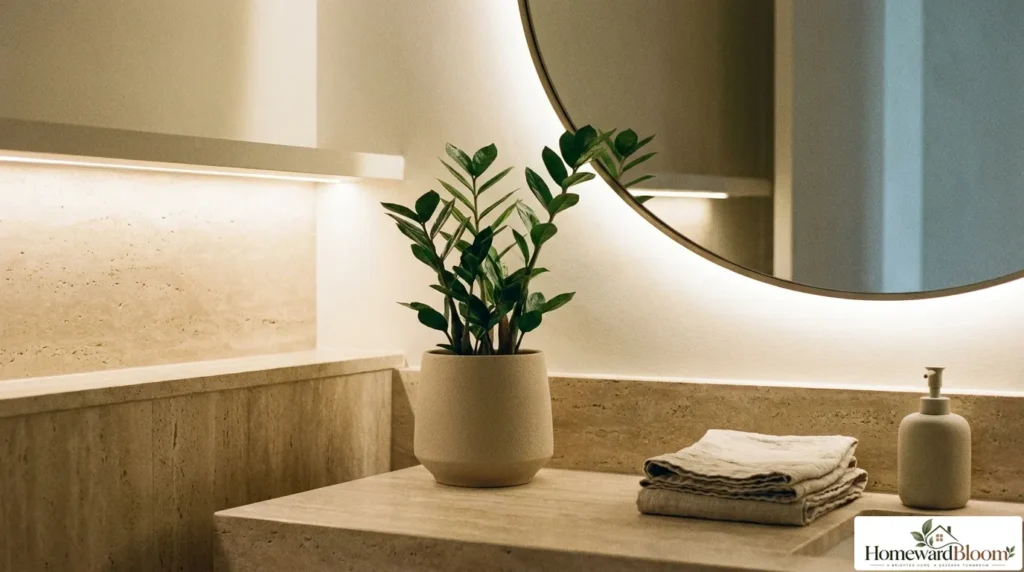
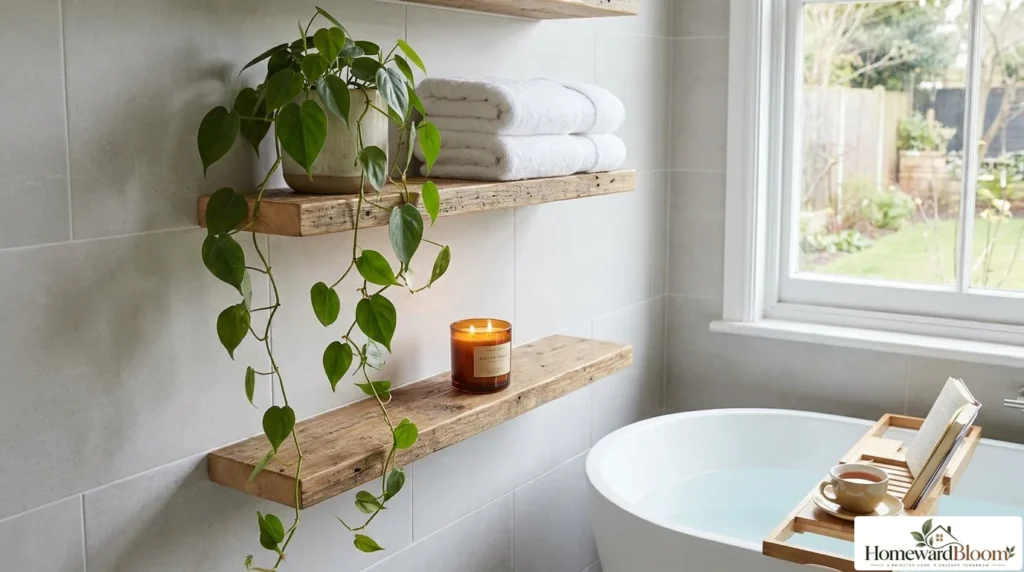
A single well-placed plant breaks up cold tile, mirror glass, and metal fixtures. Placing one vibrant pothos or peace lily beside the tub or vanity introduces immediate visual warmth without cluttering the room.
2. Style Floating Shelves Above the Toilet
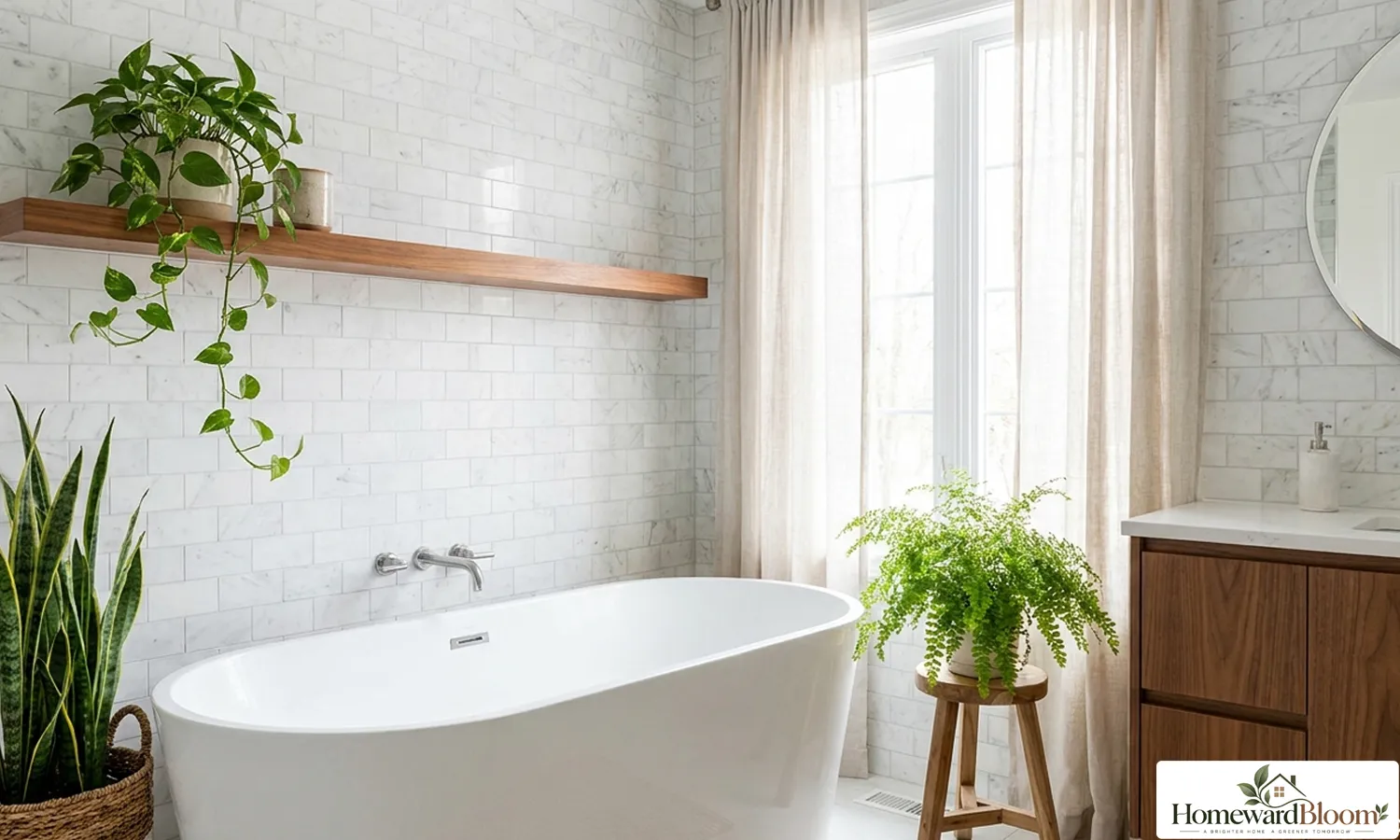
Unused vertical space above the toilet tank is ideal for plant styling. Position a trailing vining plant like heartleaf philodendron on the upper shelf so its leaves cascade downward naturally alongside rolled hand towels.
3. Create an Organized Vanity Tray Display
Keep small vanity plants organized by placing a compact ZZ plant or air plant onto a wooden or marble tray alongside your soap dispenser and facial serums.
4. Utilize Vertical Space with Hanging Planters
When counter and floor space are limited, suspend lightweight ceramic or macramé hanging pots near windows or room corners. Boston ferns and spider plants look dramatic hanging overhead.
5. Hang Eucalyptus Bundles and Moisture-Loving Ferns Near the Shower
Suspend fresh eucalyptus branches or humidity-loving ferns near the showerhead. The warm steam releases invigorating aromatic oils while providing natural moisture to the foliage.
6. Frame Your Bathroom Mirror with Trailing Vines
Position a trailing pothos or English ivy on an adjacent ledge or shelf, guiding its vines gently along the mirror frame to soften sharp glass edges.
7. Turn an Awkward Empty Corner into a Green Focal Point
Transform empty bathroom corners using a tall, upright snake plant or cast iron plant set in an elevated planter stand.
8. Mount Sleek Wall Planters to Save Counter Space
Install modern wall-mounted pots near mirrors or towel racks to display small air plants or compact ferns without taking up vanity surfaces.
9. Curate a Spa-Inspired Retreat with Natural Textures
Combine soft-textured maidenhair ferns and orchids with natural bamboo bath mats, wooden trays, woven storage baskets, and waffle-weave towels.
10. Introduce Tropical Statement Foliage Beside the Tub
If you have a spacious bathroom, place a large Swiss cheese plant (Monstera deliciosa) or peace lily in a decorative planter next to a freestanding soaking tub for a luxurious jungle feel.
11. Maintain Clean Modern Minimalist Accent Placement
In modern bathrooms with monochrome tile and black fixtures, stick to restraint. A single sculptural snake plant housed in a matte black or smooth concrete planter creates a striking visual accent.
12. Maximize Small Bathrooms with Compact Vertical Options
In tiny powder rooms, utilize compact vertical plants like air plants, mini snake plants, or small ZZ plants placed on narrow ledges.
13. Brighten Windowsills with Humidity-Loving Species
Utilize narrow bathroom windowsills by displaying light-loving tropicals like aloe vera or blooming orchids where they receive gentle indirect sunlight.
14. Add Air Plants to Wall Holders or Driftwood Mounts
Since air plants do not require potting soil, mount them onto decorative wall displays, wooden boards, or sea shells where they absorb steam effortlessly.
15. Elevate Floor Space with Layered Plant Stands
Use multi-tiered wooden or metal plant stands to group plants of varying heights in bright bathroom corners.
16. Implement Renter-Friendly Hooks and Freestanding Shelving
Apartment renters can use damage-free suction hooks, over-the-toilet tension shelving, or freestanding ladder racks to display greenery without drilling into tile.
17. Refresh Your Decor on a Budget with Water Cuttings
Propagate pothos or heartleaf philodendron cuttings in clear glass jars filled with water. Position them on windowsills or vanity ledges for budget-friendly decor.
18. Incorporate Realistic Faux Greenery in Dark Powder Rooms
For dark basement bathrooms or guest powder rooms without natural light, style high-quality artificial ferns or eucalyptus stems in ceramic vases.
19. Group Plants to Form a Humid Microclimate
Clustering multiple houseplants together on a shared tray creates a localized humid microclimate, helping delicate ferns stay lush.
20. Always Verify Pet Safety Before Selecting Foliage
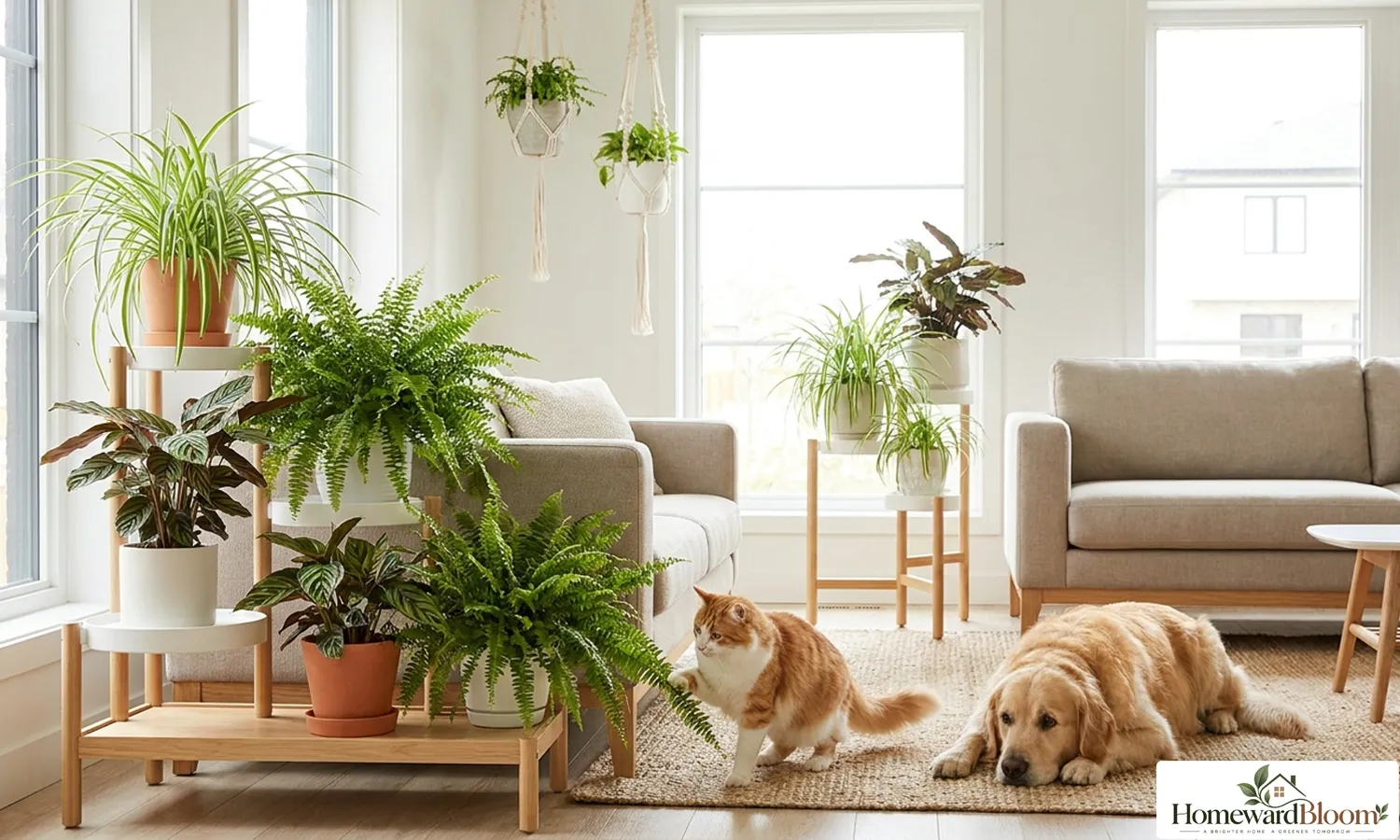
Before placing new houseplants in accessible areas, verify toxicity. According to the ASPCA toxic and non-toxic plant list, species like Boston ferns and spider plants are non-toxic, whereas peace lilies and snake plants should be kept out of reach of pets.
How Do You Care for Bathroom Plants and Prevent Soil Mold?
To care for bathroom plants successfully, check soil moisture before watering, maintain proper pot drainage, ensure adequate airflow, and treat surface mold using natural fungicides like ground cinnamon.
Because bathroom air remains humid, potting mix dries out more slowly than in drier living areas. Overwatering is the most common cause of plant failure. Always feel the top 1 to 2 inches of soil before adding water; if moisture is present, postpone watering. Ensure every pot features functional drainage holes, or keep plants in plastic nursery liners nested inside decorative outer containers.
High humidity combined with low light and stagnant air can cause a harmless white, fuzzy growth on potting soil known as saprophytic fungus. While saprophytic mold does not directly attack plant tissue, it indicates excess moisture.
| Step | Action | Details & Instructions |
|---|---|---|
| Step 1 | Identify Surface Mold | Confirm the white, fuzzy growth on the soil is harmless saprophytic fungus caused by persistent moisture and low airflow. |
| Step 2 | Scrape Away Affected Soil | Gently remove the top 1 inch of moldy soil using a clean spoon or garden trowel and discard safely. |
| Step 3 | Apply Natural Antifungal | Dust the freshly exposed soil surface lightly with ground cinnamon (contains natural cinnamaldehyde to inhibit fungal spores). |
| Step 4 | Adjust Moisture & Airflow | Allow the top 1–2 inches of soil to dry out completely between waterings and increase room air circulation with a small fan. |
To eliminate soil mold, gently scrape off the affected top layer of soil. Dust the fresh soil surface with ground cinnamon, which contains cinnamaldehyde—a natural antifungal compound that halts fungal spore germination. Improve soil aeration by repotting with perlite, pumice, or orchid bark, and switch to peat-free potting compost to protect natural peatlands.
Additionally, monitor foliage for common indoor pests:
- Mealybugs: Fuzzy white insects in leaf joints. Dab directly with a cotton swab dipped in rubbing alcohol every 3 days for 9 days.
- Spider Mites: Webbing on leaf undersides. Spray foliage twice weekly with organic insecticidal soap for 3 to 4 weeks.
- Fungus Gnats: Larvae in damp soil. Allow the top 2 inches of soil to dry completely and place yellow sticky traps near the pot base.
- Thrips: Cause blotchy leaf discoloration. Treat weekly with insecticidal soap and prune damaged foliage.
Feed tropical bathroom plants during spring and summer using an organic balanced fertilizer with an NPK ratio of 3-3-3 or lower. For comprehensive ventilation and air quality recommendations, refer to the EPA indoor air quality guidance.
Frequently Asked Questions About Bathroom Plant Decor
Live plants cannot survive permanently in complete darkness without artificial light. In a windowless bathroom, install a full-spectrum LED grow light strip running on a timer for 12 to 14 hours daily, or choose realistic matte-finish artificial plants.
Watering frequency depends on soil dryness rather than a fixed calendar schedule. Because bathroom humidity slows evaporation, check the soil weekly and water only when the top 1 to 2 inches feel dry to the touch.
White fuzzy soil mold is a saprophytic fungus caused by constant moisture, low light, and low airflow. Scrape away the visible surface layer, dust the fresh soil with antifungal ground cinnamon, and allow the top soil layer to dry.
Safe, non-toxic bathroom plants include Boston ferns, spider plants, and maidenhair ferns. Species like peace lilies, snake plants, and ZZ plants are toxic to cats and dogs if ingested and should be kept out of reach.
While plants transpire and absorb tiny amounts of ambient moisture, they do not replace proper bathroom ventilation. Installing a functional exhaust fan and managing plumbing leaks are the primary methods for controlling bathroom humidity and mold.
Pothos (Epipremnum aureum) is widely considered the best overall bathroom plant. It tolerates fluctuating humidity, handles low light gracefully, trails beautifully from shelves or hanging pots, and forgives occasional care mistakes.
Conclusion
Successfully styling your bathroom with live greenery depends on matching shade-tolerant, humidity-loving species to your room’s actual light conditions and space.
By selecting resilient houseplants like snake plants, ZZ plants, pothos, and Boston ferns—and maintaining simple moisture controls—you can transform any cold bathroom into a fresh, soothing, and spa-like green retreat.