Creating a peaceful, elevated sanctuary at home does not require an expensive full-scale renovation. Applying smart cozy bedroom ideas allows you to transform any standard sleeping space into a high-end boutique hotel experience by optimizing texture, lighting, organization, and sensory details.
A truly restful bedroom supports physical well-being and circadian rhythms while lowering evening stress levels. Grounding research from a Naturepedic study of 2,000 U.S. adults reveals that 76% of people experience higher quality sleep when they feel cozy before turning off the lights.
Key Takeaways
- Layer textiles strategically: Combine high-quality sheets, plush duvets, structured quilts, and a centered lumbar pillow to build depth.
- Control your light spectrum: Swap cool-white bulbs for 2700K soft white LEDs and dim to 2400K candle-warm tones during evening wind-down hours.
- Eliminate visual friction: Use high-mounted drapes, multi-functional furniture, and concealed under-bed storage to keep surfaces clear.
- Scent for relaxation: Diffuse pure essential oil blends like bergamot and eucalyptus or lavender and eucalyptus to mimic luxury hotel atmospheres.
1. Bedding & Mattress Foundation Ideas
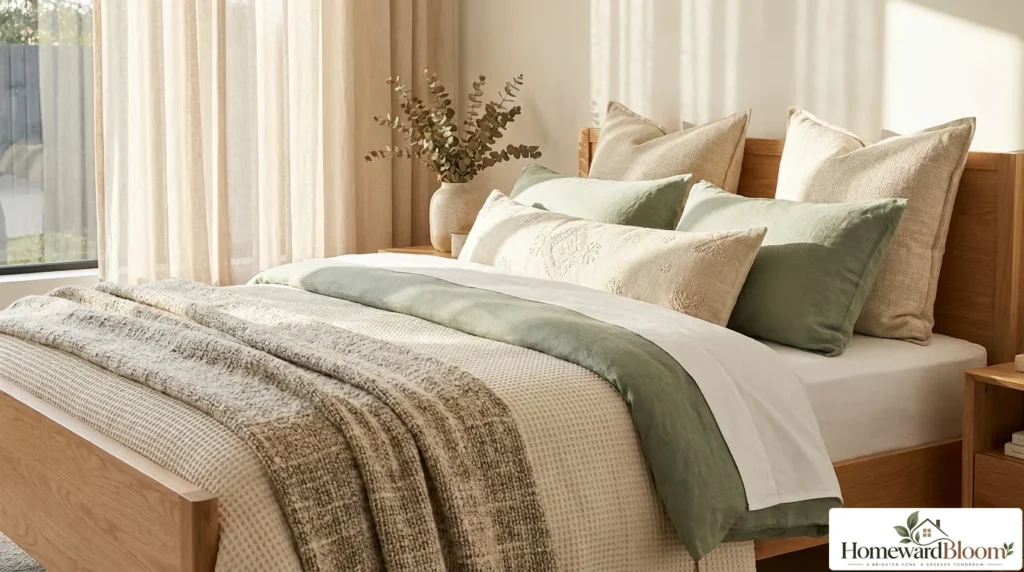
Building a cozy bedroom starts with the bed because it serves as the visual anchor and functional foundation for your sleep quality. Combining supportive mattress technology with a structured bedding formula creates an inviting, five-star hotel aesthetic.
How Do You Layer Bedding Like an Interior Designer?
Layering bedding like a designer requires building four to five distinct tiers of fabric, starting with fitted sheets and topping off with a folded quilt and accent pillows. This structure adds visual weight, tactile richness, and temperature flexibility without creating messy clutter.
- Invest in a High-Performance, Antimicrobial Mattress The foundation of any elevated bedroom is a supportive mattress. Upgrading to a Copper Flex memory foam mattress by Brooklyn Bedding provides antimicrobial protection that reduces bacteria and allergens while actively regulating temperature for hot sleepers.
- Build a 5-Step Designer Layering Formula Designers structure high-end beds using five distinct layers: a fitted and flat sheet base, a main duvet cover with insert, a folded quilt across the middle or foot, a draped throw blanket, and propped pillows.
- Arrange 4 to 6 Sleeping Pillows with Euro Shams For king and queen beds, four to six sleeping pillows paired with two or three large Euro shams propped against the headboard create boutique hotel height and softness.
- Anchor the Bed Architecture with a Centered Lumbar Pillow Place one long rectangular lumbar pillow horizontally in front of your sleeping pillows to serve as a visual punctuation mark that ties your color scheme together.
- Adopt the Scandinavian Two-Duvet Sleep Method Using an oversized duvet—or two separate individual duvets on a single bed—eliminates nighttime blanket tug-of-war while creating a draped, cloud-like bed presentation.
Percale vs. Sateen: Which Bedding Fabric Suits Your Sleep Style?
Crisp cotton percale features a breathable matte weave ideal for warm sleepers, whereas luxe cotton sateen offers a silky, smooth finish with subtle sheen. Mixing a percale duvet cover over smooth sateen flat sheets creates sophisticated texture contrast without introducing conflicting visual patterns.
2. Essential Cozy Bedroom Ideas for Lighting & Atmosphere
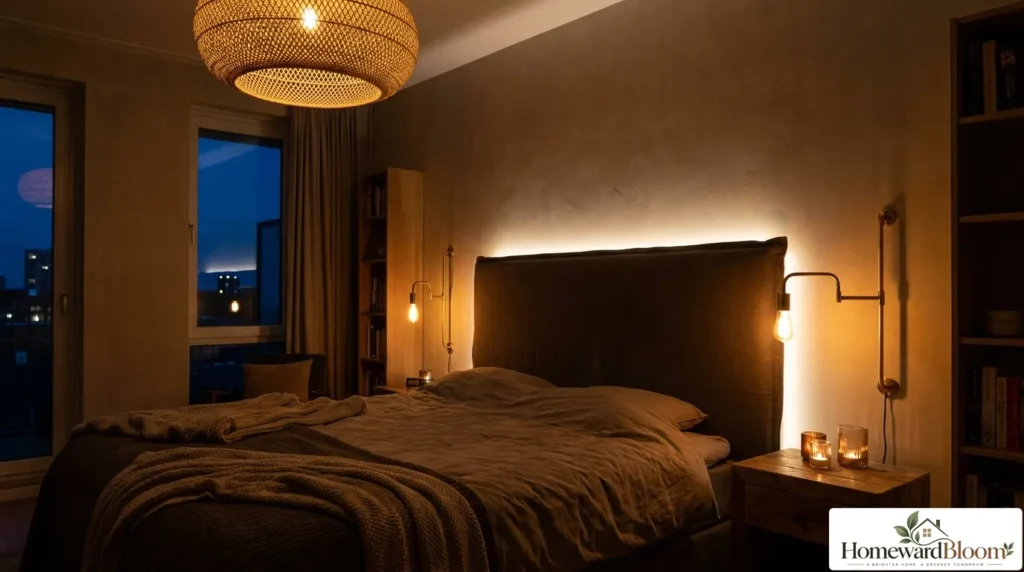
Proper bedroom lighting flexes from bright morning utility down to dim, melatonin-friendly evening warmth. Overhead fixtures often flood spaces with harsh glare, while layered warm sources create calm depth and architectural elegance.
What Is the Best Lighting Spectrum for Bedroom Sleep Quality?
The best lighting spectrum for bedroom sleep quality is 2700K soft white for general evening use, dimming down to 2400K or warm amber in the hour before bed. Exposure to cool-white bulbs above 4000K suppresses melatonin production, actively delaying your body’s natural sleep transition.
- Implement a Dimmable 4-Layer Lighting Plan Structure your room with four functional layers: dimmable ambient ceiling lighting (40–50% of total lumens), bedside task lighting (25–35%), architectural accent lights (10–20%), and low-glow night lights (5–10%). For standard 150 sq ft bedrooms, aim for 1,500 to 3,000 total lumens across all fixtures.
- Shift Bulbs to 2700K Soft White and 2400K Evening Tones Replace harsh cool bulbs with 2700K soft white LEDs. According to clinical guidance from the American Academy of Pediatrics, low-intensity warm lighting in the hour before sleep prevents melatonin suppression and supports natural circadian rhythms.
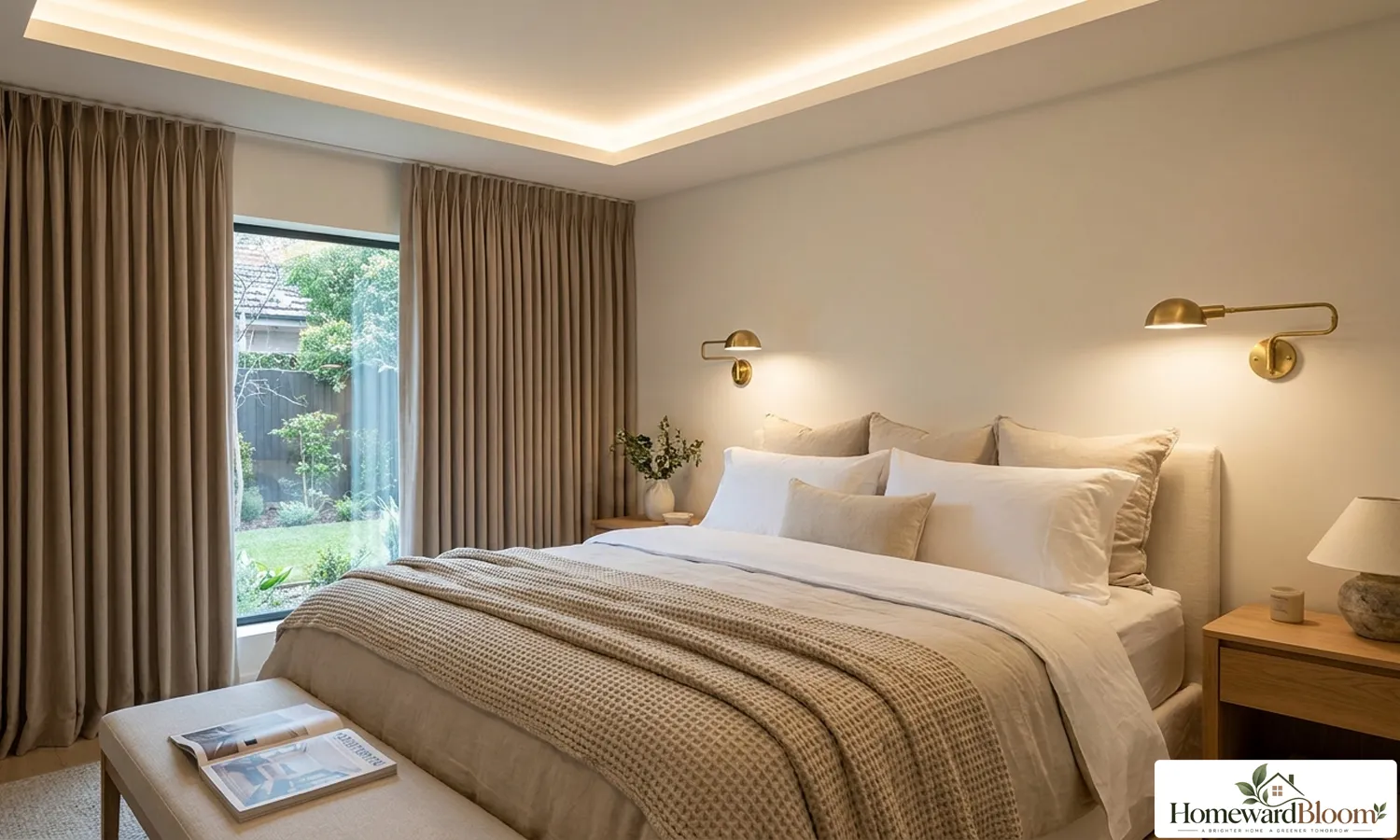
- Install Wall-Mounted Bedside Sconces Mounting battery-operated or hardwired sconces 60 to 66 inches from the floor frees up nightstand surfaces while adding symmetry and targeted reading light.
- Add Indirect LED Backlighting Behind Headboards and Coves Hide 2700K LED strip lights behind your headboard or inside ceiling crown molding to cast a soft, indirect glow upward for a modern spa feel.
- Use Melatonin-Safe Amber and Red Night Lighting For overnight bathroom paths, use low-intensity 2200K amber lights or red LEDs. Shift-work research highlighted by the CDC Sleep Guidance confirms that red light wavelengths (620–700nm) do not disrupt circadian rhythms or suppress melatonin.
3. Smart Space-Saving & Storage Solutions
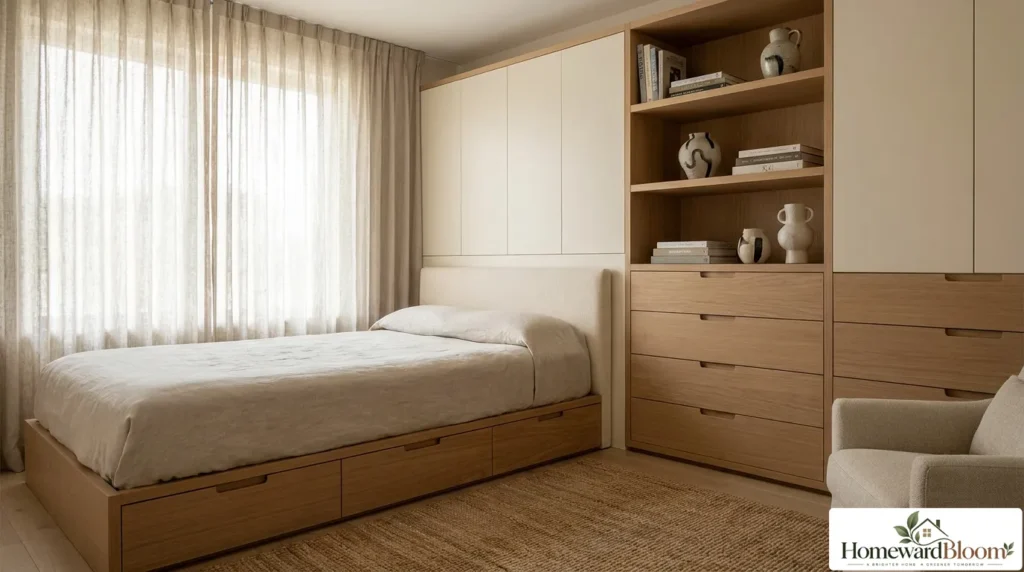
Effective storage and vertical proportion maximize small layouts while reducing visual stress. Eliminating surface clutter allows your mind to disengage from visual stimulation, reinforcing feelings of security and rest.
How Can You Maximize Storage in a Compact Bedroom?
You can maximize small bedroom storage by utilizing built-in wall units, low-profile under-bed containers, and multi-functional furniture with closed drawers. Concealing everyday items keeps floor space open and surfaces clear, making compact rooms feel spacious.
- Install Floor-to-Ceiling Drapes Near the Ceiling Mount curtain rods near the ceiling line and let blackout or linen-look French pleat drapes extend all the way to the floor. This vertical line draws the eye upward, making low ceilings feel taller.
- Build a Multi-Functional Storage Wall System Combine wide storage drawers, closed cabinets, and open display shelves into a cohesive wall unit (such as a 136-inch system) to house books, extra bedding, and media equipment seamlessly.
- Utilize Low-Profile Under-Bed Storage Drawers Turn the area under your bed into storage by using rolling drawers or zippered fabric bins for seasonal clothing, extra sheets, and extra luggage.
- Select Dual-Purpose Storage Furniture Choose furniture that works twice as hard, such as a padded storage ottoman at the foot of the bed for seating and blanket storage, or bedside tables equipped with deep drawers.
- Adopt Daily 5-Minute Bedroom Tidy Rituals Practice brief morning bed-making and evening turn-down routines to keep nightstands clear, corraling daily items like reading glasses on small decorative trays.
4. Hotel-Style Fragrances & Sensory Decor
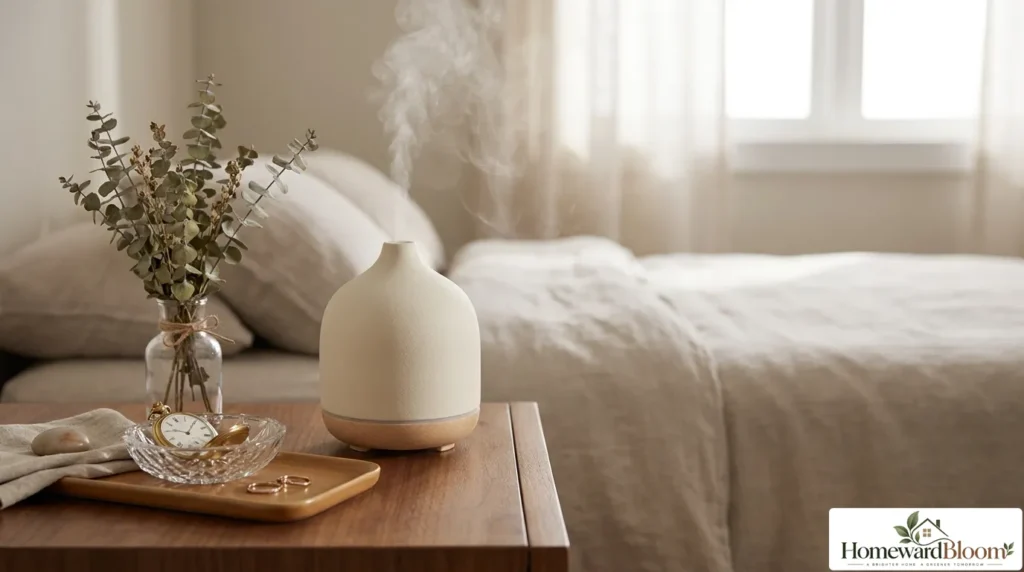
Sensory bedroom design engages sight, touch, and smell to create a cohesive atmosphere of calm luxury. Luxury hotels rely on scent layering and warm natural materials rather than heavy synthetic fragrances or high-contrast patterns.
How Can You Make a Small Bedroom Smell Like a Hotel?
Make a bedroom smell like a hotel by diffusing clean top notes like bergamot over fresh eucalyptus or warm frankincense using an ultrasonic diffuser. Hotels combine light background scent diffusion with clean fabrics rather than spraying overwhelming synthetic fragrances.
- Diffuse White Tea and Linen Scent Blends Recreate lobby fragrance by diffusing 2 drops of bergamot essential oil and 2 drops of eucalyptus essential oil per 100ml of water in an ultrasonic diffuser.
- Establish Nighttime Lavender and Eucalyptus Protocols To support deep relaxation, diffuse 3 drops of lavender oil (rich in linalool, which acts on the brain’s limbic system) with 1 drop of eucalyptus oil on intermittent mode before sleep. Clinical synthesis from the Sleep Foundation notes that inhaled lavender supports perceived sleep quality in adults.
- Decorate with a Grounding, Nature-Inspired Palette Paint walls and select fabrics in calm neutrals like warm cream, beige, taupe, greige, or muted sage green to give the eyes visual rest.
- Combine Warm Organic Wood and Tactile Fibers Incorporate clear-coated oak or walnut furniture paired with organic cotton, chunky wool throws, or waffle-weave blankets to engage touch naturally.
- Position a Large Mirror Opposite Natural Light Leaning a full-length mirror or hanging a large framed mirror opposite a window reflects natural sunlight, doubling visual depth in tight spaces.
5. Personal Sanctuary & Tech-Free Habits
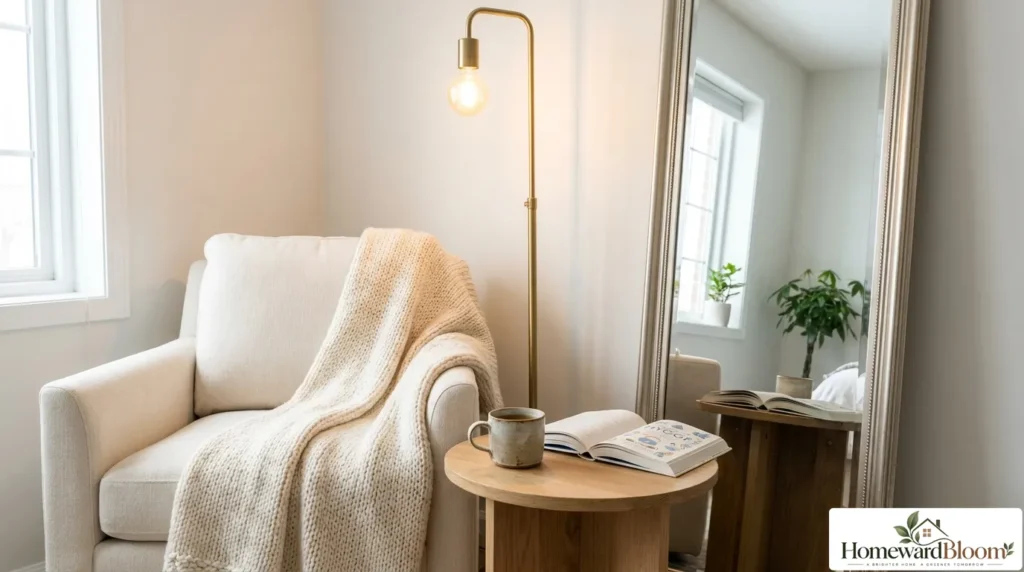
Designing a personal sanctuary involves creating spaces for quiet analog routines while eliminating digital distractions. Establishing clear boundaries around technology protects your sleep environment from blue light and mental stress.
How Do You Create a Personal Retreat in Your Bedroom?
Create a personal retreat by setting up a dedicated hyggekrog (cozy reading nook) equipped with comfortable seating, soft lighting, and a side table. This provides a quiet space for screen-free wind-down activities like reading or drinking herbal tea.
- Carve Out a Dedicated Reading Nook (Hyggekrog) Place a comfortable white wicker or upholstered accent chair in an unused corner alongside a small table and lamp to establish a cozy nook separate from your bed.
- Display Sentimental Heirloom Accents on Nightstand Trays Personalize your space by displaying meaningful items—such as a vintage jewelry dish, an antique pocket watch, or framed family photos—corralled neatly on a nightstand tray.
- Establish a Completely Tech-Free Sleep Sanctuary Remove televisions, laptops, and smartphones from the bedroom, charging devices in another room overnight to eliminate blue light and disruptive notifications.
- Automate Circadian Rhythms with Smart Lighting Schedules Integrate smart lighting systems like Lutron Caséta or Philips Hue to schedule automated 20-minute sunrise wake simulations and sunset-triggered evening dimming.
- Incorporate Soft Acoustic Buffers and Natural Botanicals Buffer background noise using quiet fans or air purifiers, and add natural life with dried botanicals, fresh herbs, or indoor plants in clay pots.
Frequently Asked Questions
Replacing cool-white bulbs with 2700K soft white LEDs and installing dimmers is the most budget-friendly update. Adding a layered bed arrangement with a plush duvet and accent throw instantly elevates room comfort without requiring new furniture.
A standard 150 sq ft bedroom requires 1,500 to 3,000 total lumens at full brightness, distributed across ambient, task, and accent lighting. During evening wind-down hours, fixtures should be dimmed to roughly 30% to 40% of full output.
Cool-white bulbs above 4000K emit blue light wavelengths that suppress melatonin production for 30 to 60 minutes after exposure. This tricks your brain into daytime alertness, making it significantly harder to fall asleep naturally.
For an ultrasonic diffuser, use 3 to 4 drops of pure essential oil per 100ml of water. A proven hotel blend is 2 drops of bergamot with 2 drops of eucalyptus for daytime freshness, or 3 drops of lavender with 1 drop of eucalyptus for nighttime sleep prep.
Hanging curtain rods near the ceiling line and letting fabric drop to the floor creates long vertical lines. This visual trick draws the eye upward, making ceilings appear higher and giving compact rooms a custom architectural appearance.
Conclusion
Transforming your room with smart cozy bedroom ideas comes down to balancing warm 2700K layered lighting, tailored bedding tiers, and clutter-free organization to build a serene personal sanctuary.
Also Read:
27 Small Living Room Ideas That Make Your Space Look Bigger and Better