Key Takeaways
- Boost Garden Diversity: Interplanting compatible crops mimics natural ecosystems, reducing pest outbreaks and eliminating single-crop vulnerability.
- Deter Pests Naturally: Aromatic herbs and floral trap crops repel or distract destructive insects like hornworms, flea beetles, and cabbage loopers.
- Enhance Soil Fertility: Legumes naturally capture atmospheric nitrogen to nourish heavy-feeding neighbors like corn and squash.
- Avoid Toxic Pairings: Certain plant combinations, such as alliums near beans or fennel near tomatoes, inhibit growth and stunt crop development.
What Is Vegetable Companion Planting?
Vegetable companion planting is the intentional practice of growing different plant species together in close proximity to enhance crop health, deter pests, and increase harvest yields. By pairing plants that complement each other’s physical growth habits, chemical exudates, or nutrient demands, gardeners can create a resilient micro-environment without relying on synthetic chemicals.
Historical records reveal that companion planting has been practiced for over two thousand years. Ancient Greek and Roman agricultural texts document beneficial plant pairings, while Chinese farmers utilized mosquito ferns in flooded rice paddies to fix nitrogen and suppress weeds. Similarly, Indigenous agricultural traditions across North America developed the famous Three Sisters system, interplanting corn, beans, and squash to maintain soil productivity for generations.
Modern research from institution extensions like Utah State University Extension confirms that plant polycultures significantly outperform single-crop monocultures in pest resistance and soil health. When plants interact beneficially, they share soil nutrients, attract predatory insects, provide physical support, and shield vulnerable foliage from extreme sun or wind.
| Mechanism | Primary Function & Garden Examples |
|---|---|
| Symbiotic Nitrogen Fixation | Legumes convert airborne nitrogen into root-accessible soil nutrients for neighboring crops. |
| Trap Cropping | Sacrificial crops lure pests away from high-value main vegetables. |
| Biochemical Pest Suppression | Plant exudates or aromatic scents repel insects or disrupt pest egg-laying. |
| Physical & Spatial Support | Tall crops act as natural trellises while low ground cover conserves moisture and suppresses weeds. |
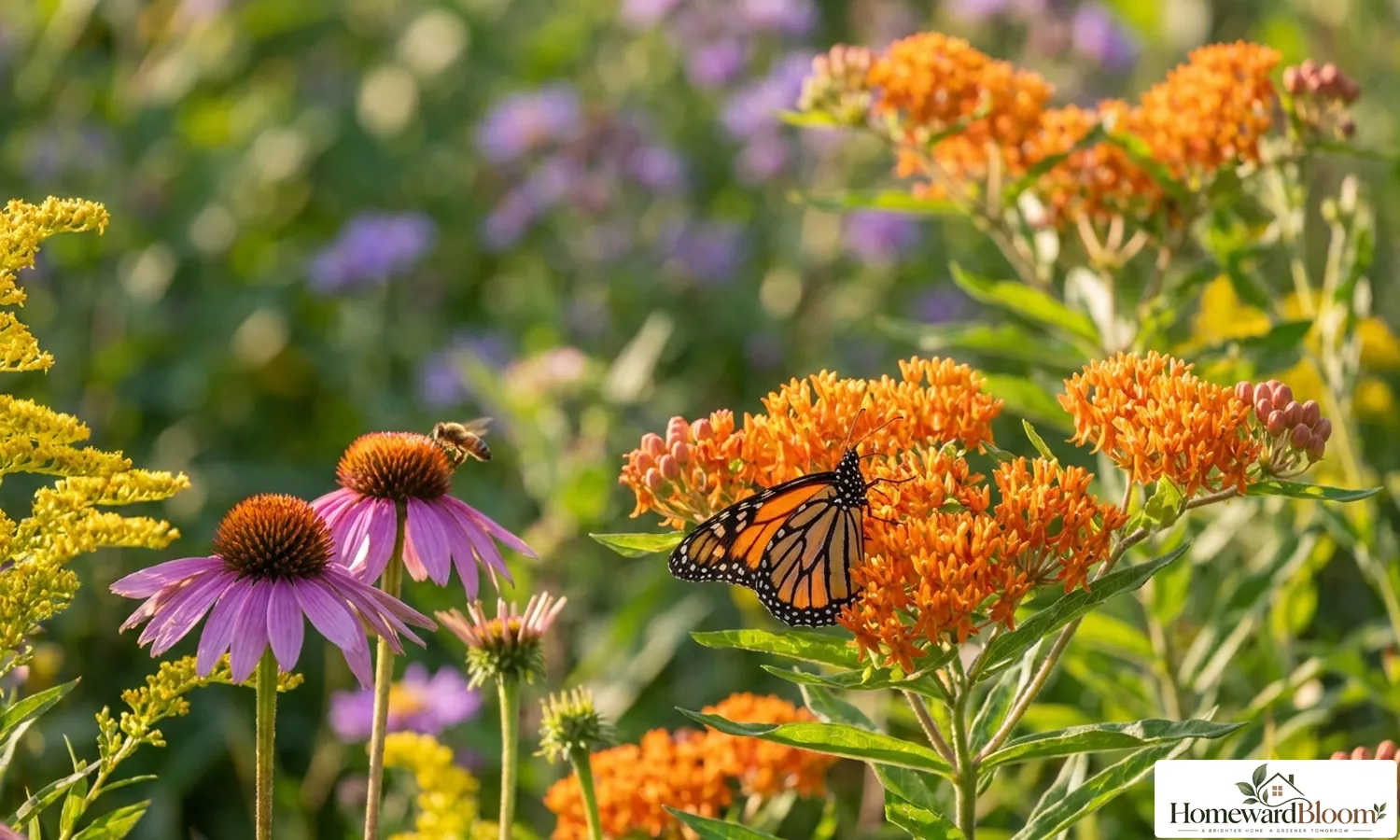
| Beneficial Insect Habitat | Nectar-rich blooms sustain ladybugs, hoverflies, and parasitic wasps that consume garden pests. |
How Does Companion Planting Work to Protect Your Garden?
Companion planting protects crops through four distinct biological mechanisms: nitrogen fixation, trap cropping, biochemical suppression, and physical shading. Understanding these natural processes allows home gardeners to design deliberate, high-yielding bed layouts.
1. Symbiotic Nitrogen Fixation
Legumes—including bush beans, pole beans, green peas, and clover—possess root nodules inhabited by beneficial Rhizobium bacteria. These bacteria extract nitrogen gas from the atmosphere and convert it into a bioavailable form that enriches the surrounding soil. When heavy-feeding vegetables like sweet corn, brassicas, or leafy greens are planted alongside legumes, they draw upon this steady supply of natural fertility, reducing the need for synthetic fertilizers.
2. Trap Cropping and Pest Distraction
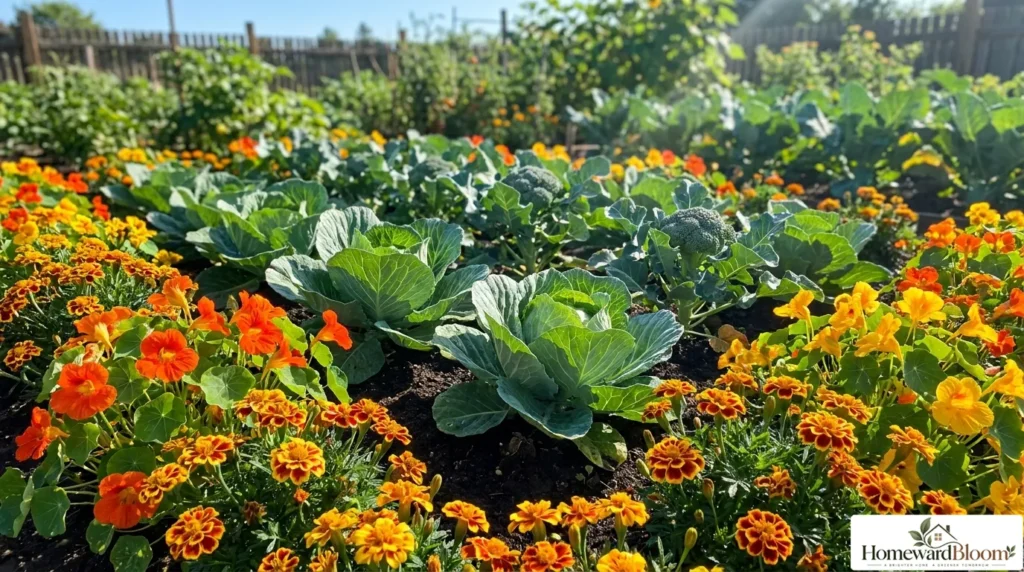
Trap cropping involves interplanting sacrificial plant species that are highly attractive to specific garden pests. Pests cluster on the trap crop rather than attacking the primary vegetable crop. For example, research published by Iowa State University Extension demonstrates that planting bright nasturtiums alongside zucchini and cabbage attracts aphids, squash bugs, and flea beetles away from the main harvest. Similarly, radishes planted early near eggplant seedlings draw away hungry flea beetles, allowing the eggplants to mature safely.
3. Biochemical Pest Suppression and Scent Masking
Many aromatic herbs and flowers secrete volatile organic compounds or root exudates that mask the scent of host plants or directly repel harmful insects. French and African marigolds (Tagetes species) produce alpha-terthienyl through their root systems, a biochemical compound toxic to destructive root-knot nematodes. Furthermore, essential oils produced by oregano (such as carvacrol and thymol) act as natural insecticides, increasing pest mortality and disrupting feeding behaviors.
4. Physical Support and Microclimate Creation
Vertical plant structures offer physical benefits by acting as natural trellises, windbreaks, or living mulches. Taller crops like sweet corn or giant sunflowers provide living poles for climbing pole beans and cucumbers. Simultaneously, broad-leaved ground plants like pumpkins, winter squash, or sweet potatoes blanket the surrounding soil surface. This dense foliage lowers soil temperatures, retains critical moisture during summer heat spikes, and physically prevents weed seeds from germinating.
What Are the Best Vegetable Companion Plant Pairings?
Choosing the right vegetable companions requires matching plants with complementary root structures, growth rates, and pest-repelling properties. The following field-tested combinations represent the most effective companion pairings for home gardens.
1. Tomatoes, Basil, and Marigolds
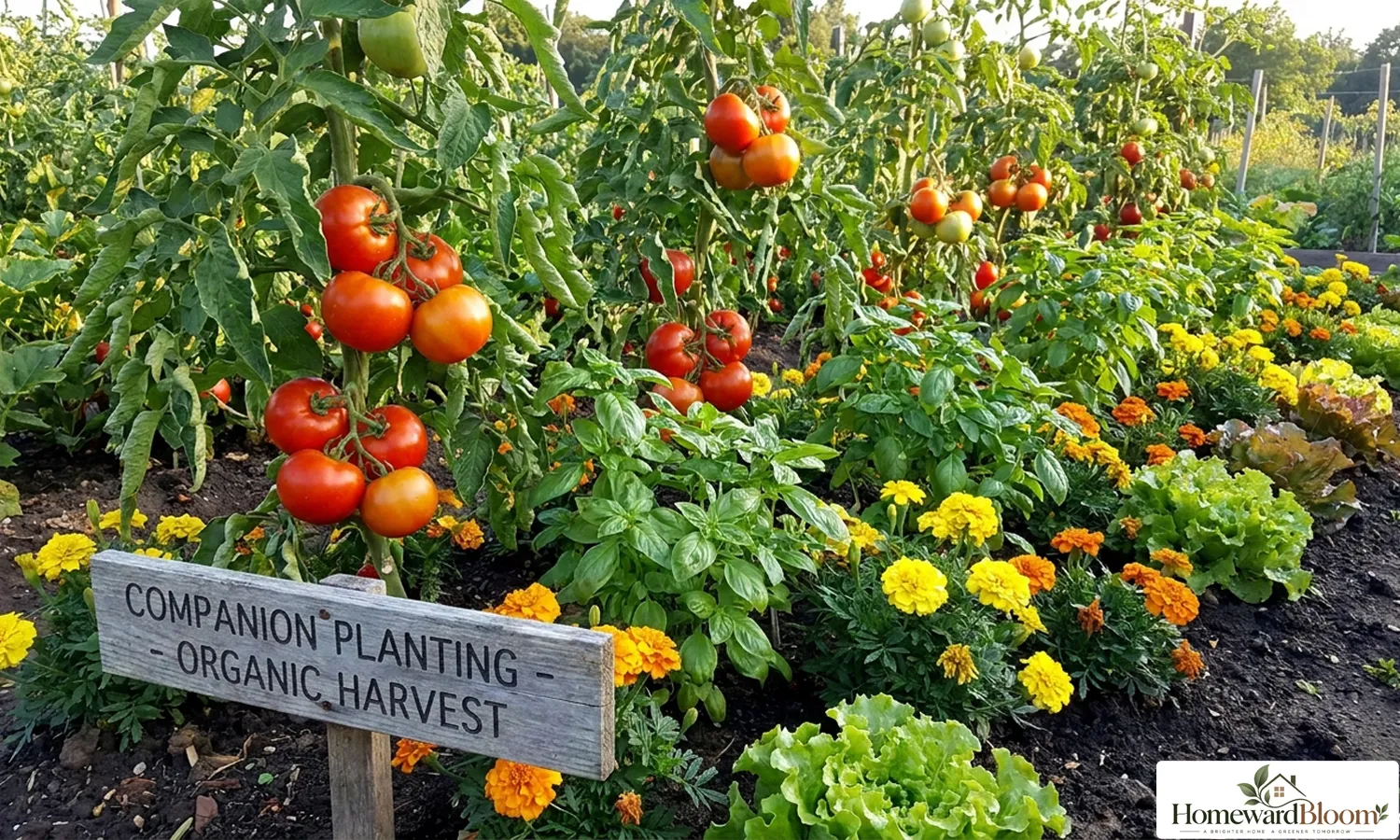
Tomatoes (Solanum lycopersicum) are famously compatible with sweet basil (Ocimum basilicum) and marigolds. Studies conducted at the Iowa State University Armstrong Research Farm revealed that tomato plots interplanted with basil and thyme exhibited the lowest rate of fruit damage from yellowstriped armyworms (Spodoptera ornithogalli). Basil masks tomato foliage odors, deterring thrips and tomato hornworms while enhancing fruit flavor and growth. Marigolds planted around tomato borders repel whiteflies and suppress soil-borne nematodes.
2. The Three Sisters: Corn, Pole Beans, and Squash
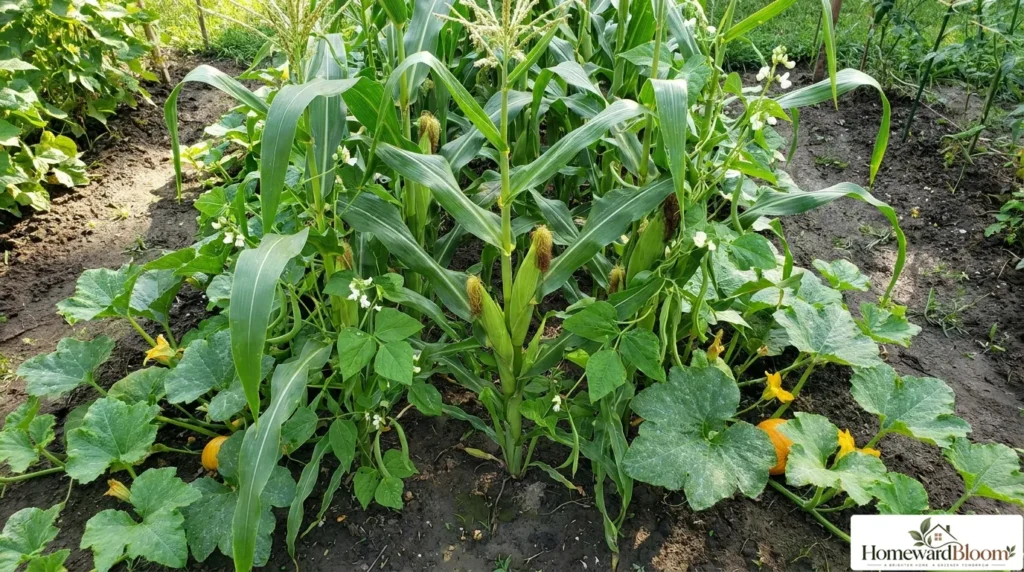
The traditional Three Sisters combination is a classic example of spatial and nutrient synergy. Sweet corn grows tall and sturdy, serving as a natural support pole for pole beans. The pole beans climb the corn stalks and pull atmospheric nitrogen into the root zone, feeding both the corn and the squash. Meanwhile, prickly squash vines sprawl across the soil bed, shading out weed growth, insulating soil moisture, and deterring small mammalian pests.
3. Brassicas, Thyme, and Nasturtium
Members of the brassica family—including cabbage, broccoli, cauliflower, and kale—are highly vulnerable to cabbage loopers (Trichoplusia ni) and imported cabbageworms (Pieris rapae). Field experiments from Iowa State University showed that interplanting brassicas with thyme, onions, and nasturtiums provided superior resistance against cabbage worm defoliation compared to unplanted control plots. Aromatic herbs like thyme, sage, and rosemary emit strong scents that confuse egg-laying moths, while nasturtiums trap aphids and flea beetles.
4. Carrots, Onions, and Lettuce
Carrots and members of the allium family (onions, chives, and leeks) form an exceptionally effective underground and odor-masking partnership. Pungent onion scents mask the presence of carrots from destructive carrot rust flies (Psila rosae), while carrot foliage helps shade out weeds around shallow-rooted onions. Interplanting loose-leaf lettuce between carrot rows maximizes bed density, keeps root zones cool, and tenderizes radishes grown nearby.
| Target Crop | Ideal Companions (Friends) | Incompatible Plants (Foes) |
|---|---|---|
| Tomatoes | Basil, Marigolds, Carrots, Parsley, Onions, Garlic, Borage, Bee Balm | Fennel, Kohlrabi, Potatoes, Walnuts, Mature Dill |
| Corn | Pole Beans, Squash, Cucumbers, Peas, Melons, Sunflowers, Soybeans | Tomatoes |
| Bush/Pole Beans | Corn, Cucumbers, Potatoes, Radishes, Carrots, Summer Savory, Strawberries | Onions, Garlic, Leeks, Shallots, Fennel |
| Cabbage Family (Brassicas) | Thyme, Sage, Rosemary, Nasturtiums, Onions, Celery, Beets, Chamomile | Strawberries, Pole Beans, Tomatoes |
| Carrots | Onions, Chives, Leeks, Peas, Lettuce, Rosemary, Sage, Tomatoes | Dill |
| Cucumbers | Beans, Corn, Peas, Radishes, Sunflowers, Nasturtiums, Dill | Potatoes, Sage, Rue |
Which Plants Should You Never Grow Together?
Certain plant pairings exhibit negative interactions, known as antagonism or allelopathy, where one plant actively inhibits the growth or health of another. Avoiding these destructive pairings is just as vital as choosing beneficial companions.
- Alliums vs. Legumes: Onions, garlic, leeks, and shallots should never be planted alongside bush beans, pole beans, or peas. Allium root exudates secrete antibacterial properties that disrupt the nitrogen-fixing Rhizobium bacteria on legume roots, severely stunting bean growth.
- Tomatoes vs. Potatoes and Fennel: Tomatoes and potatoes are both members of the nightshade (Solanaceae) family and share susceptibility to late blight (Phytophthora infestans) and early blight fungal pathogens. Planting them in close proximity allows fungal spores and Colorado potato beetles to spread rapidly between crops. Additionally, fennel emits chemical compounds that suppress the growth of almost all garden vegetables, particularly tomatoes and peppers.
- Brassicas vs. Strawberries: Cabbage, broccoli, and cauliflower should be kept far away from strawberry beds. Strawberries attract fungal pathogens and webspinning pests that impair brassica development, while brassica plants stunt strawberry runner formation.
- Black Walnut Toxicity: Black walnut trees (Juglans nigra) produce juglone, a potent natural herbicide that leaches into the surrounding soil. Juglone causes irreversible wilting, stunting, and death in nightshades, including tomatoes, peppers, eggplants, and potatoes. Keep vegetable beds at least 50 feet away from black walnut driplines.
Companion Planting vs. Monoculture: What Is the Difference?
The fundamental difference between companion planting and traditional monoculture lies in plant diversity, pest vulnerability, and soil resource utilization.
In a conventional single-crop monoculture, vegetables are planted in long, uniform rows of a single species. While monocultures simplify mechanical harvesting, they create an open feast for specialized insect pests. When pests land on a monoculture bed, they move effortlessly from plant to plant, triggering rapid infestations that frequently necessitate synthetic chemical sprays.
In contrast, companion planting creates a biodiverse polyculture that mimics natural ecological landscapes. Intermingling different foliage textures, heights, and scents creates physical and chemical barriers that confuse searching insects. Additionally, companion gardens provide continuous nectar and pollen sources for beneficial predatory insects like ladybugs, lacewings, syrphid flies, and parasitic wasps, establishing a natural biological control system.
| Feature | Monoculture | Companion Planting Polyculture |
|---|---|---|
| Crop Diversity | Single species | Diverse species mix |
| Pest Vulnerability | High pest spread | Reduced infestation rates |
| Chemical Dependency | Frequent sprays | Organic IPM approach |
| Soil Nutrient Dynamics | Rapid depletion | Balanced uptake/fixation |
| Beneficial Insect Support | Minimal habitat | Rich food and shelter |
How to Design an Effective Companion Planting Layout
Designing a functional companion garden requires thoughtful spatial planning, crop rotation, and seasonal scheduling. Extension specialists from UMass Extension recommend starting small and focusing on specific, measurable goals.
- Map Your Garden Beds by Plant Families: Group crops according to their family classifications (Solanaceae, Cucurbitaceae, Brassicaceae, Fabaceae, Allium). Avoid placing heavy feeders of the same family together to prevent nutrient depletion and soil-borne disease accumulation.
- Incorporate Flowering Perimeter Borders: Surround vegetable beds with long-blooming flowers and aromatic herbs like sweet alyssum, French marigolds, cosmos, and borage. These borders attract beneficial pollinators and parasitoids early in spring before pest numbers spike.
- Stagger Planting Dates for Trap Crops: Plant sacrificial trap crops (such as radishes or Hubbard squash) 2 to 3 weeks ahead of your primary main crop. This ensures trap plants are fully grown and attractive when insect pests emerge in early summer.
- Practice Annual Crop Rotation: Shift plant families to different bed sections every year. Overwintering soil pests that emerge in spring will fail to find their preferred host plants, naturally disrupting pest life cycles.
Frequently Asked Questions
Sweet basil is widely considered the best companion plant for tomatoes. Basil emits aromatic organic compounds that deter tomato hornworms, thrips, and yellowstriped armyworms while enhancing tomato vigor and fruit flavor. Adding French marigolds along bed borders provides additional protection against root-knot nematodes.
Companion plants repel garden pests by releasing strong olfactory scents that mask host foliage or secrete natural biochemical repellents. Essential oils in plants like oregano, thyme, and mint disrupt insect chemical receptors. Other flowers act as trap crops, attracting destructive pests away from valuable main vegetables.
You should never plant beans near onions or garlic because allium species secrete root exudates containing potent antibacterial properties. These compounds destroy beneficial Rhizobium bacteria residing on legume roots, shutting down symbiotic nitrogen fixation and severely stunting bean plant development.
Companion planting significantly reduces pest populations and minimizes reliance on synthetic pesticides as a core pillar of Integrated Pest Management (IPM). However, during severe environmental outbreaks, companion planting works best when combined with mechanical row covers, organic insecticidal soaps, regular handpicking, and annual crop rotation.
Beneficial companion plants should generally be planted within two to three rows or within 12 to 24 inches of one another to maximize scent masking and root interactions. Conversely, incompatible plants (foes) should be separated by at least three rows or placed in completely separate garden beds to prevent growth inhibition.
Trap cropping is a companion planting technique where sacrificial plants are interplanted to lure pests away from cash crops. Pests concentrate on the sacrificial plants, such as nasturtiums or radishes, protecting primary crops like zucchini, cabbage, or eggplant from devastating insect damage.
Conclusion
Vegetable companion planting is a proven, science-backed organic gardening strategy that transforms single-crop beds into thriving, biodiverse ecosystems. By pairing complementary plants like tomatoes and basil, organizing Three Sisters plots, and avoiding destructive combinations like alliums and beans, home gardeners can naturally eliminate pest damage, nourish soil fertility, and enjoy abundant harvest yields season after season.